




























Vacation Rentals in New Buffalo, Michigan: A Property Owner’s Guide to Responsible Adult-Use Policies
A practical guide for New Buffalo vacation-rental owners and adult guests covering smoke-free policies, secure storage, property protection, public-use restrictions, and responsible transportation.

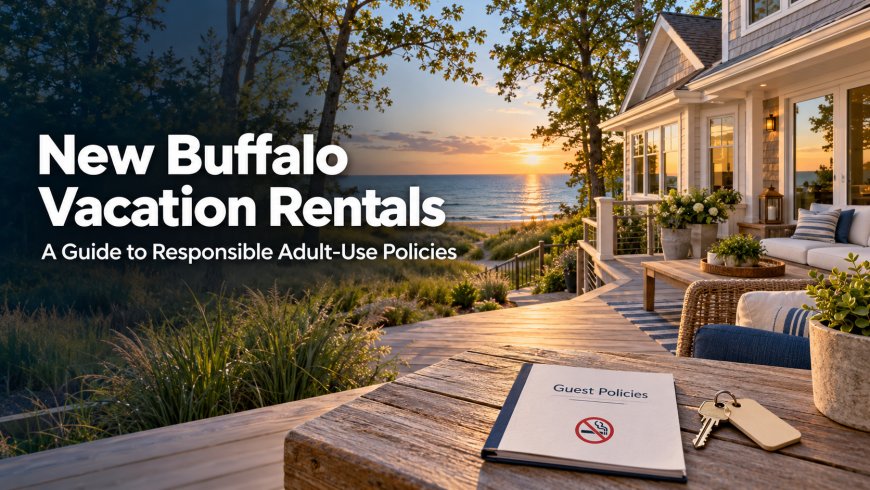
New Buffalo has become a popular Southwest Michigan destination for beach weekends, family getaways, seasonal travel, and short stays near Lake Michigan. Its combination of natural scenery, restaurants, independent businesses, and convenient road access makes the city attractive to both vacationers and property investors.
This active visitor economy also creates responsibilities for vacation-rental owners. A well-managed rental needs more than attractive photographs and a convenient location. Owners must communicate occupancy limits, parking instructions, noise standards, smoking restrictions, pet policies, and other rules that protect the home and surrounding neighborhood.
Adult-use cannabis deserves a place in that conversation.
Michigan permits adults who are 21 or older to possess and consume cannabis under defined conditions. However, legal access does not make cannabis use acceptable in every rental home, public space, vehicle, or shared area. Property owners may establish certain rules, while guests remain responsible for complying with state law and the terms of their reservation.
Clear policies can reduce confusion, prevent property damage, protect neighbors, and help adults make responsible decisions. This guide explains the main issues New Buffalo vacation-rental owners and guests should consider.
This article offers general educational information, not legal advice. Property owners should consult qualified legal and insurance professionals when creating or changing rental policies.
Why Adult-Use Policies Matter in New Buffalo
New Buffalo receives visitors from across Michigan and nearby states. Some travelers may not understand Michigan cannabis law, while others may assume that legal adult use gives them unrestricted permission to consume at a vacation property.
That assumption can create problems.
A guest may not know whether a “no smoking” rule applies to cannabis. Another visitor might believe an outdoor balcony or backyard counts as an approved consumption area. A group could also misunderstand rules involving shared spaces, children, vehicles, or products brought from another state.
Vague policies leave owners, property managers, guests, and neighbors with different expectations. A direct written policy gives everyone the same starting point.
The goal is not to make moral judgments about lawful adult behavior. The goal is to protect the property, explain its boundaries, and help guests follow the law.
Michigan Law and Private-Property Rules Are Different
Michigan law permits adult-use cannabis for people who are at least 21, but it includes important limits. Public consumption, providing cannabis to anyone under 21, and operating a vehicle while impaired remain prohibited.
Private-property owners may also regulate or prohibit certain cannabis-related activities on their property. This means a guest cannot rely only on state law when deciding what is allowed inside a rental.
The reservation agreement, house rules, building policies, homeowners’ association requirements, and local regulations may all apply.
For example, a property owner may operate a smoke-free vacation rental. That rule can protect furnishings, indoor air quality, neighboring units, and future guests. A person who can legally possess cannabis under Michigan law must still respect the property’s smoking policy.
Owners should avoid using unclear language such as “please be considerate” when they actually intend to prohibit smoking. A stronger policy explains:
-
Whether smoking is allowed anywhere on the property
-
Whether the restriction includes cannabis and tobacco
-
Whether vaping is also prohibited
-
Whether patios, balconies, garages, or yards are included
-
Whether possession or only consumption is restricted
-
What happens when a guest violates the rule
Specific language reduces the chance of disagreement.
Keep Short-Term Rental Rules Up to Date
New Buffalo regulates short-term rental activity, and property owners should review current municipal requirements before advertising or hosting a unit. The city provides applications, forms, fee information, and other resources through its official short-term rental department.
Local requirements can address matters such as permits, inspections, occupancy, parking, responsible contacts, and property operations. Owners should not assume that a rule from a different Michigan community also applies in New Buffalo.
Cannabis policies should become part of the property’s larger compliance process. When an owner updates an occupancy rule, rental agreement, insurance policy, or guest handbook, it is also a useful time to review smoking and adult-use language.
A host should keep copies of the current policy in several places:
-
The online property listing
-
The booking agreement
-
The pre-arrival message
-
The printed or digital house manual
-
Any signs placed in relevant areas
Guests should receive the information before completing the reservation whenever possible. Disclosing an important restriction only after check-in can lead to frustration and enforcement difficulties.
Define What “No Smoking” Means
“No smoking” may appear straightforward, but guests can interpret it in different ways.
Some people read the phrase as a ban on cigarettes only. Others believe it covers smoking inside but not on a balcony. A guest may assume vaping is exempt because it does not produce traditional smoke.
Property owners should remove that uncertainty.
A complete smoke-free rule might state that smoking or vaping tobacco, cannabis, or any other substance is prohibited inside the home and in specified outdoor areas. If the rule covers the entire parcel, the agreement should say so.
Owners should also identify whether the property shares walls, entrances, ventilation systems, hallways, or outdoor areas with other residents. Smoke and vapor can move between units, creating complaints even when the guest remains outside their booked space.
The wording should match what the owner can legally and practically enforce. Owners who are uncertain about the limits of a rental restriction should obtain professional advice before publishing it.
Address Odor and Property Condition
Smoke is not the only property-management concern. Strong odors can remain in curtains, bedding, upholstered furniture, rugs, vehicles, and ventilation systems.
Even without indoor smoking, poorly stored products can create a noticeable smell. This concern is especially relevant with dried Cannabis Flower, which may have a distinct aroma when a package is left open.
A practical house rule can require guests to keep any legally possessed cannabis in its original sealed package and store it securely. The policy can also prohibit activities that leave a persistent odor or require specialized cleaning.
Owners should avoid promising that every trace of odor will result in a fixed penalty unless the booking agreement, platform rules, and applicable law support that statement. Instead, explain that guests may be responsible for documented cleaning or damage costs caused by a violation.
Documentation matters. If an owner reports a problem, dated photographs, cleaning invoices, written complaints, and maintenance records provide stronger evidence than a general statement.
Hosts should also distinguish between ordinary cleaning and exceptional remediation. A fair policy protects the property without treating every minor concern as damage.
Balconies, Patios, Yards, and Shared Areas
Outdoor space often causes the greatest confusion.
A guest may believe that a private balcony creates an automatic exception to a no-smoking policy. However, smoke can travel into neighboring units or reach people using shared walkways, pools, courtyards, and entrances.
Property owners should list each relevant outdoor area rather than relying on the word “outside.”
The policy might address:
-
Private balconies and decks
-
Front porches
-
Backyards
-
Garages
-
Driveways
-
Shared courtyards
-
Pool areas
-
Building entrances
-
Rooftop spaces
-
Sidewalks near the property
Guests must also recognize the difference between private property and a public place. New Buffalo’s beaches, parks, sidewalks, streets, and other community spaces should not be treated as alternative consumption locations.
Michigan law prohibits cannabis consumption in public. A guest whose rental prohibits consumption cannot simply move the activity to a public beach or parked vehicle.
Create a Safe Policy for Children and Pets
Vacation rentals often host families, and some properties permit pets. Owners should therefore include secure-storage guidance in their rules.
Cannabis products should remain inaccessible to children, teenagers, pets, visitors, and anyone else who is not legally allowed to possess them. Original packaging helps identify the contents, while a locked container provides stronger protection.
Edible products require particular care because they may resemble ordinary candy, chocolate, baked goods, or drinks. Guests should never leave them on kitchen counters, bedside tables, outdoor furniture, or open refrigerator shelves.
A useful rental guideline can ask adults to:
-
Preserve the original label and packaging
-
Keep packages fully closed
-
Use a locked container
-
Separate cannabis from ordinary food
-
Avoid leaving products in shared rooms
-
Never provide products to anyone under 21
-
Remove every product before checking out
Owners may also consider providing a small lockable storage box if permitted by their legal and insurance advisers. However, supplying a box does not transfer responsibility away from the guest.
If accidental ingestion occurs, the adult should contact an appropriate professional immediately. Poison Control can be reached at 1-800-222-1222 for human exposure, while pet exposure requires prompt veterinary advice.
Explain the Rules for Visitors and Gatherings
The person who books a vacation rental is not always the only person who enters it. Friends, relatives, event guests, and temporary visitors may also use the property.
The primary guest should understand that house rules apply to everyone in the group. A visitor’s conduct can still result in complaints, cleaning costs, platform action, or termination of the stay.
Rental agreements should explain:
-
Whether unregistered visitors are allowed
-
The maximum number of occupants
-
Quiet hours
-
Rules for parties or events
-
Age requirements for booking
-
Responsibility for guest behavior
-
Smoking and cannabis restrictions
-
Consequences for providing cannabis to minors
A person who is 21 or older must not purchase or share cannabis with an underage guest. Being inside a private rental does not remove the minimum-age requirement.
Large gatherings create additional risks because the booking guest may not know every attendee’s age or behavior. Owners who prohibit parties should state the rule clearly and enforce it consistently.
Encourage Purchases From Licensed Retailers
A property owner does not need to recommend cannabis use. Still, educational guest information can explain that adults who choose to purchase cannabis should use a retailer licensed by the State of Michigan.
Licensed retailers operate within Michigan’s regulated system, which includes rules for product testing, labeling, tracking, and age verification. Buying from an unknown or unlicensed source may expose a consumer to products with unclear strength, ingredients, or origin.
Adults seeking official location details can consult JARS Cannabis – New Buffalo US-12 before making travel plans. Visitors should verify current hours and identification requirements directly with the retailer.
The link belongs in a responsible-planning section rather than a promotional paragraph. Access to a licensed retailer does not alter a rental’s house rules or create permission to consume in public.
Guests should also avoid asking a host, cleaner, property manager, or underage member of the group to purchase cannabis for them.
Transportation Must Be Planned in Advance
New Buffalo’s location near major roads makes driving an important part of many visits. It also means guests need a clear transportation plan.
Michigan prohibits driving while under the influence of cannabis. The restriction also applies to operating other covered vehicles, including motorboats, snowmobiles, and off-road recreational vehicles.
The Michigan State Police cannabis-and-driving guidance also explains that drivers may not consume cannabis while operating a vehicle and passengers may not smoke within the passenger area of a vehicle on a public way.
A responsible plan may involve:
-
Choosing a sober driver
-
Using a taxi or rideshare service
-
Walking only when the route is safe and lawful
-
Completing all driving before consuming
-
Remaining at an approved private location
-
Waiting until fully sober before operating a vehicle
There is no single waiting period that guarantees every person is safe to drive. Effects vary based on the individual, product, amount, and other factors. When uncertain, the guest should not drive.
Property owners can reinforce this message in the house manual without attempting to provide medical or legal advice.
Do Not Cross State Lines With Cannabis
New Buffalo is close to Indiana, and visitors frequently travel between states. This geography creates an important legal concern.
Cannabis purchased legally in Michigan must remain in Michigan. Taking it into Indiana or across any other state line is prohibited under federal law, even if another destination has legalized some form of cannabis.
Guests should review their route before buying or transporting anything. A traveler returning to another state should not assume the product can legally go home with them.
Cannabis also cannot be taken into Canada. Border rules apply regardless of where the product was purchased or whether the traveler has medical authorization.
Rental hosts should not store leftover products for guests, mail them, transport them across a border, or dispose of them casually where another person could retrieve them.
Protect Neighbors and the Wider Community
Vacation-rental policies affect more than owners and guests. Nearby residents may share property lines, entrances, parking areas, or ventilation systems with a short-term rental.
Persistent odors, smoke, loud gatherings, and unsafe driving can reduce neighborhood trust. These issues may also contribute to complaints about vacation rentals generally.
Owners can support good community relationships by providing a local contact who can respond to urgent concerns. Guests should know whom to contact when they have a question about the property instead of guessing.
Respectful behavior includes:
-
Following quiet hours
-
Keeping smoke and vapor away from neighbors
-
Avoiding public consumption
-
Using assigned parking spaces
-
Disposing of waste safely
-
Following beach and park rules
-
Never driving while impaired
A responsible guest experience protects the home and helps preserve New Buffalo’s appeal as a welcoming travel destination.
Use Clear and Neutral Policy Language
Property rules are easier to follow when they are direct, calm, and consistent.
Owners should avoid language that insults guests or makes unsupported legal claims. A neutral policy focuses on behavior and property protection.
For example:
This is a smoke-free property. Smoking and vaping tobacco, cannabis, or any other substance are prohibited inside the home and in all designated smoke-free outdoor areas. Michigan law prohibits public consumption and impaired driving. Adults 21 and older remain responsible for securing legally possessed products, preventing underage access, and following all property rules.
The final wording should reflect the specific property, booking platform, local requirements, insurance coverage, and legal advice.
Hosts should also apply the rule consistently. Selective enforcement can create confusion and weaken trust.
A Checklist for New Buffalo Property Owners
Before accepting the next reservation, a vacation-rental owner can review the following questions:
-
Does the agreement clearly define smoking and vaping?
-
Are balconies, patios, garages, and yards addressed?
-
Does the policy discuss odors and exceptional cleaning?
-
Are guests told to secure products from children and pets?
-
Does the booking guest accept responsibility for visitors?
-
Are public consumption and impaired driving mentioned?
-
Is the policy visible before the reservation is completed?
-
Do the house manual and online listing use matching language?
-
Have local short-term rental requirements been reviewed?
-
Has a legal or insurance professional checked any uncertain terms?
Completing this review can prevent many disputes before they begin.
A Checklist for Adult Guests
Adults staying in a New Buffalo vacation rental should ask:
-
Am I at least 21?
-
What does the property’s smoke-free rule cover?
-
Is consumption prohibited throughout the entire property?
-
Are outdoor areas private, shared, or public?
-
Can I store products securely?
-
Are children, teenagers, or pets present?
-
Have I selected a sober driver?
-
Will my route cross a state or international border?
-
Have I checked out without leaving any product behind?
-
Am I respecting neighbors and other visitors?
If any answer remains unclear, the guest should contact the host before acting.
Clear Rules Create Better Stays
Adult-use legalization has not removed the need for property rules. It has made clear communication even more important.
New Buffalo vacation-rental owners should explain their expectations before check-in, especially concerning smoking, vaping, odors, secure storage, outdoor areas, visitors, and cleaning. Guests should respect those policies while following Michigan’s age, public-consumption, transportation, and impaired-driving restrictions.
A strong policy does not need to be aggressive or complicated. It needs to be visible, specific, consistent, and appropriate for the individual property.
When owners communicate early and guests plan responsibly, both sides benefit. Homes remain cleaner, neighbors experience fewer disruptions, travelers avoid preventable problems, and New Buffalo can continue welcoming visitors without sacrificing the comfort of its residential community.
What's Your Reaction?