




























UK Peanut Butter Market Size, Share, Growth & Analysis Report 2026-2034
The UK peanut butter market grew from USD 151.5 Million in 2025 to USD 159.9 Million in 2026 and is projected to reach USD 224.4 Million by 2034, at a CAGR of 4.32%.

Market Overview
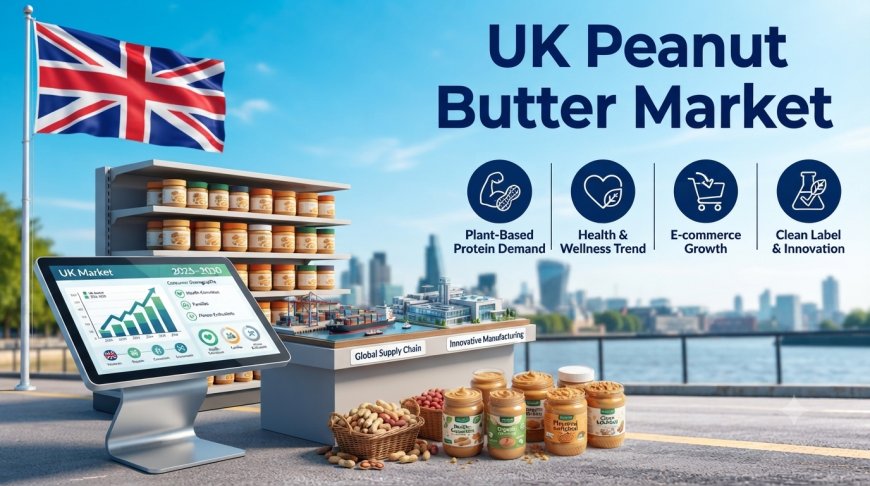
The UK peanut butter market is growing steadily, helped by rising demand for plant-based protein and healthy snacking. New flavors, sugar-reduced and craft-style recipes, and wider supermarket and online distribution are drawing in both traditional and niche shoppers. Private-label products and brand collaborations add variety and strengthen competition. The market grew from USD 151.5 million in 2025 to USD 159.9 million in 2026 and is forecast to reach USD 224.4 million by 2034, a CAGR of 4.32% over 2026-2034. It covers crunchy peanut butter, smooth peanut butter, and other types.
Request a Sample Report for In-Depth Market Insights: https://www.imarcgroup.com/uk-peanut-butter-market/requestsample
Market Summary
- Consumers are moving toward reduced-sugar, no-added-sugar, and low-salt peanut butter and are reading nutrition labels more closely.
- Manufacturers are reformulating traditional recipes with natural sweeteners such as stevia or fruit extracts, and cutting added sugar and sodium without losing flavor.
- Retailers are stocking premium options in both mainstream aisles and specialist health sections, while direct-to-consumer brands promote clean ingredients and transparent sourcing online.
- Shoppers are drawn to artisan, organic, and creatively flavored products, including chocolate-infused, spicy, and mixed-nut varieties.
- Premium ranges are winning more shelf space in large retailers and independent shops, which builds brand loyalty.
- The market is segmented by product type, distribution channel, and region, with forecasts for 2026-2034.
Market Growth Drivers
Growth of Reduced-Sugar and Low-Salt Variants
Consumer preferences are shifting toward healthier spreads, including reduced-sugar, no-added-sugar, and low-salt options. More shoppers check nutrition labels and choose cleaner, minimally processed products that fit lower-calorie and lower-sodium diets. Manufacturers are responding by reformulating classic recipes with natural sweeteners and trimming sugar and sodium. In July 2025, Wilkin and Sons launched its first Tiptree Nut Butter range, with smooth and crunchy peanut butter and an almond butter. The products have no artificial colors, flavorings, palm oil, or added sugar, and suit vegans. These products appeal especially to fitness-minded and health-conscious people.
Artisan, Organic, and Flavored Innovations
Interest is growing in premium products that go beyond traditional flavors, with natural ingredients, small-batch production, and bold options such as chocolate-infused or spicy blends and almond-peanut or hazelnut-peanut mixes. In November 2024, Whole Earth added a Salted Caramel Drizzler to its squeezy peanut butter range, pairing an indulgent taste with a golden roasted peanut butter base and healthier ingredients. Organic certifications and short ingredient lists appeal to health-conscious and ethically minded buyers. Brands support this with attractive packaging, sourcing stories, and stronger flavor experiences, and the premium categories are gaining shelf space in large and independent stores.
Expanding Distribution and Product Variety
Wider availability through supermarkets, convenience stores, and online channels, together with private-label offerings, brand collaborations, and new formats, is reaching more consumers. In March 2024, Whole Earth launched Whole Earth Protein Crunch, a high-protein variant with crunchy pea protein pieces, as part of its partnership with Team GB for the Paris 2024 Olympics.
Porter's Five Forces Analysis
Competitive Rivalry: Moderate to High
- Established brands, specialty producers, and private-label offerings compete on flavor, health credentials, and price.
- Innovation in flavors, sugar reduction, and protein content is a main point of differentiation.
- Brand collaborations and premium ranges compete for shelf space.
Supplier Power: Moderate
- Producers depend on peanut suppliers and on other inputs such as sweeteners, nuts, and packaging.
- Palm-oil-free and clean-label formulations narrow the choice of ingredient suppliers.
- Organic and artisan ranges rely on certified or specialist sourcing.
Buyer Power: Moderate to High
- Supermarkets and hypermarkets negotiate on price, shelf space, and private-label terms.
- Consumers can switch easily among brands and are increasingly selective about labels and ingredients.
- Online channels make price and product comparison easy.
Threat of Substitutes: Moderate
- Other spreads, such as almond or other nut butters, chocolate spreads, and jams, compete for the same use.
- Protein bars and other snacks, such as Barebells' peanut butter bar, compete for the healthy snacking occasion.
- Peanut butter's role in plant-based protein diets and its broad appeal limit substitution.
Threat of New Entrants: Moderate
- Craft and direct-to-consumer brands can enter with niche, premium products.
- Retail relationships, brand recognition, and scale favor established players.
- Health and flavor trends create openings for new products.
Market Segmentation
Product Type Insights
- Crunchy Peanut Butter
- Smooth Peanut Butter
- Others
Distribution Channel Insights
- Supermarkets and Hypermarkets
- Convenience Stores
- Online Stores
- Others
Regional Insights
- London
- South East
- North West
- East of England
- South West
- Scotland
- West Midlands
- Yorkshire and The Humber
- East Midlands
- Others
Regional Analysis
London: A large, diverse, and health-conscious population, together with many specialty stores and online options, supports demand for premium and flavored products.
South East: Strong supermarket access and higher household spending support steady demand across standard and premium ranges.
North West: Broad retail availability and growing interest in healthy snacking sustain demand.
East of England: Established supermarket and convenience store networks keep peanut butter widely accessible.
South West: Interest in natural, artisan, and locally minded foods supports demand for craft and organic products.
Scotland: Wide retail coverage and growing interest in healthier options support steady consumption.
West Midlands: Mainstream retail channels and value-conscious shoppers drive volume demand.
Yorkshire and The Humber: Strong supermarket and convenience store presence supports everyday consumption.
East Midlands: Expanding access through large retailers and online channels is broadening the customer base.
Others: Remaining regions contribute to national demand as products become easier to find.
Competitive Landscape
Established peanut butter brands, specialty and artisan producers, private-label suppliers, and retailers all shape the market, sometimes competing and sometimes collaborating. Their activity is influenced by demand for plant-based protein, healthier formulations, flavor innovation, and wider supermarket and online distribution. The full report examines market structure, the positioning of key players, leading strategies, a competitive dashboard, and a company evaluation quadrant, along with profiles of the major companies.
Key players include:
- Whole Earth
- Wilkin and Sons (Tiptree)
- Meridian Foods
- Barebells
Recent Industry Developments
November 2026: Pip & Nut partnered with gut-health brand Bio&Me to launch a co-branded Peanut Butter Granola exclusively across 803 Tesco stores from 16 November. The product combines roasted peanuts, peanut butter, oats, seeds and other plant-based ingredients, delivering 9g of fibre and 13g of protein per 60g serving.
September 2026: UK nut butter brand Pip & Nut reported its first-ever operating profit after revenue increased by 50% to £26.4 million in 2025. Its expansion into cereal and protein bars contributed to growth, with these products accounting for 20% of company sales, alongside its established peanut butter range.
June 2026: Whole Earth expanded its 100% Nuts peanut butter range by introducing new 1kg smooth and crunchy tubs. Made exclusively with roasted Argentine peanuts, the larger format was developed for families and frequent consumers seeking natural peanut butter without added salt or sugar. The products were scheduled to launch at Morrisons in July.
June 2026: Whole Earth introduced its 100% Nuts range in smooth and crunchy variants, containing only roasted peanuts. The launch responded to growing demand for simple ingredient lists and natural sources of protein and fibre. The brand supported the introduction through its Breakfast Better marketing campaign across digital, social and outdoor channels.
Key Aspects Required for the UK Peanut Butter Market
- Market Performance: The market grew from USD 151.5 million in 2025 to USD 159.9 million in 2026 and is expected to reach USD 224.4 million by 2034, driven by demand for plant-based protein and healthy snacking.
- Market Outlook: A CAGR of 4.32% over 2026-2034 points to steady growth, supported by new flavors, sugar-reduced and craft formulations, and broader distribution.
- Growth Drivers: Growth of reduced-sugar and low-salt variants; artisan, organic, and flavored innovations; expanding distribution and product variety.
- Competitive Landscape: Brands such as Whole Earth, Tiptree, and Meridian Foods are launching new formats and formulations alongside private-label and collaboration products.
- Industry Trends: Reduced-sugar and no-added-sugar spreads; palm-oil-free and clean-label products; high-protein variants; premium and flavored ranges; online and direct-to-consumer sales.
- Strategic Recommendations: Invest in reduced-sugar, low-salt, and clean-label products; develop premium and flavored lines; add high-protein and plant-based variants; strengthen supermarket and online distribution.
Note: If you need specific information that the report does not currently cover, customization is available as part of the report.
Speak to an analyst: https://www.imarcgroup.com/request?type=report&id=40085&flag=C
Frequently Asked Questions
1. What is the size of the UK peanut butter market?
It grew from USD 151.5 million in 2025 to USD 159.9 million in 2026 and is forecast to reach USD 224.4 million by 2034.
2. What is the expected growth rate of the UK peanut butter market?
It is projected to grow at a CAGR of 4.32% over 2026-2034.
3. What is driving the growth of the UK peanut butter market?
Growth comes from demand for plant-based protein and healthy snacking, reduced-sugar and low-salt products, artisan, organic, and flavored innovation, private-label and brand collaborations, and wider supermarket and online distribution.
What's Your Reaction?