






























How Can Automated Appointment Reminders Improve Customer Attendance and Scheduling Efficiency?
The consequences of missing appointments and cancellations at the last minute might disrupt the operations of a business because of time wastage, schedule disruption, and financial losses. Handling bookings manually via phone, email, and spreadsheets will also generate additional workload for employees.
This is where the appointment booking software comes into play, since it automates reminders and confirms bookings to customers. This will decrease manual follow-up and motivate customers to show up at their scheduled time.
Why Are Missed Appointments a Challenge for Service-Based Businesses?
Missed appointments are made when the customer does not show up for the scheduled meeting, not giving enough advance notice. While the occurrence itself may not be of great significance, too many missed appointments could have an effect on the company's efficiency and resource planning.
In companies where customer meetings are planned, every appointment is seen as allocated time and effort.
Some common challenges include:
-
Lost productive hours: Employees can still be available for appointments that customers do not come for.
-
Disruption of schedule: Missed appointments may lead to disruption of schedules.
-
Loss of sales: The missed slots may result in loss of chances to serve other customers.
-
Extra paperwork: The employees may spend extra time contacting the customers regarding their appointments.
-
Communication problems with customers: The customers may forget about the appointment dates or times.
For instance, a maintenance firm that makes multiple visits to different customers on a daily basis is likely to have problems due to the fact that several of its customers are likely to fail to show up for their appointments.
A structured reminder process can help businesses address these issues before they affect daily operations.
7 Ways Automated Appointment Reminders Improve Customer Attendance and Scheduling Efficiency
1. Send Timely Notifications Before Scheduled Appointments
Reminding clients of upcoming appointments is one of the easiest methods to avoid missed appointments.
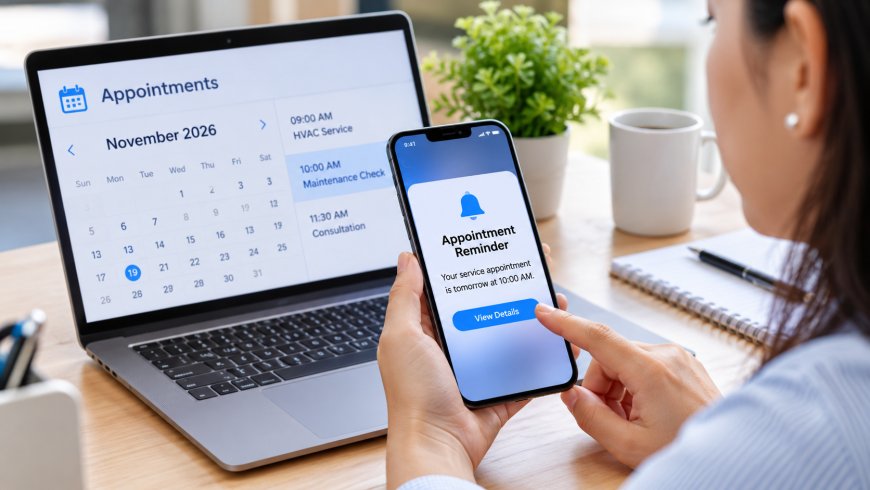
Through automated reminders, the company will be able to remind customers about their appointments at scheduled intervals before the actual appointments. The company will not have to depend on its staff to remind each client of their booking.
For example, a business may send:
-
Confirmation at the time of scheduling an appointment.
-
A reminder one day before the actual appointment date.
-
A last-minute reminder a few hours before visiting for service.
The timing can depend on the type of service and customer preferences.
These reminders will allow customers to be reminded about their responsibilities and get prepared for the scheduled appointments. Also, customers get a chance to contact the business for any amendments that are required.
Utilization of an automated reminder system with appointment scheduling software allows maintaining consistent communication without adding to the workload of the business.
2. Provide Clear Booking Confirmations to Customers
A booking confirmation makes the customer sure that their appointment has been made successfully.
If there is no confirmation, then the customer will not know if their request for an appointment has been accepted or not.
Automated confirmations can provide important appointment information, including:
-
The name of the client and the booking reference.
-
The type of service selected.
-
The date and time confirmed.
-
The contact details of the business.
-
The location where the service will be provided.
-
Steps for rescheduling and/or cancellation.
For example, when a customer books an equipment maintenance appointment online, an immediate confirmation message can communicate the scheduled visit details.
Providing this information reduces confusion and helps customers keep track of their bookings.
It also creates a more organised communication process, particularly for businesses managing multiple appointments every day.
3. Make Appointment Rescheduling Easier
The customer may sometimes have to reschedule their appointment due to unforeseen obligations or travel delays.
However, if businesses don’t offer any facility for rescheduling the appointment, then the customer might not turn up for the appointment.
It is therefore important for businesses to create an efficient system for booking that will facilitate communication regarding scheduling.
Businesses can use different options depending on the facilities offered by the available platform.
This helps businesses:
-
Be informed in advance of any change in an appointment.
-
Release any time slots that become available after cancellations.
-
Make available slots to other clients.
-
Adjust employee schedules if needed.
-
Avoid late scheduling hassles.
When appointment changes are communicated early, businesses have more opportunities to manage their daily schedules effectively.
4. Reduce Manual Follow-Ups and Administrative Work
Manual reminders to all customers about their upcoming appointments may be time-consuming, particularly for businesses that deal with multiple bookings daily.
The employees will have to make phone calls, send out messages, and enter the appointment details each time.
Such repetitive tasks are minimized through automated notifications, as the process handles the communication regarding the appointments automatically through predefined steps.
This makes it easier for the support staff to concentrate on tasks that cannot be performed through automation, like dealing with enquiries, booking problems, and taking care of the specific needs of the customers.
SMEs with fewer administrative resources can benefit from automated appointment reminders.
However, businesses should still maintain a process for handling customers who do not respond to reminders or require additional assistance.
5. Improve Daily Scheduling and Employee Productivity
The problems with missed appointments not only affect clients but can disturb the schedule of workers and create unnecessary gaps in working time.
For companies that have technicians, consultants, or service workers visiting clients in several places, keeping an orderly schedule of appointments is crucial.
Reminders will allow customers to know about the appointed date, while centralized planning will allow the managers to keep an eye on future appointments.
For instance, a company that provides its services to clients through field services can organize booking data in order to arrange the visit of clients and get their workers ready for work.
The provision of timely reminders to clients will make it possible for businesses to keep a steady schedule of appointments.
6. Keep Customers Informed About Appointment Changes
At times, there may be a need for adjustments to the previously scheduled appointments due to various factors, including unavailability of the technicians, delays, and other factors.
Not informing the customers about such changes can cause chaos and negatively impact their experience.
Automated notifications may assist businesses in communicating changes through different software communication capabilities.
Examples include:
-
Changes to appointment dates or times.
-
Booking cancellation notifications.
-
Technician arrival updates.
-
Confirmation of rescheduled appointments.
-
Important service instructions.
Keeping customers informed helps set clear expectations and reduces unnecessary calls to customer support teams.
It is important to ensure that appointment updates are accurate and sent through communication channels customers can access easily.
7. Use Appointment Data to Improve Scheduling Decisions
Missed appointment reminders may also help businesses make proper scheduling decisions by looking at their booking and attendance.
Rather than looking at every missed appointment in isolation, managers can analyze patterns and find reasons for missed appointments.
Useful information to review includes:
-
Number of appointments made.
-
Frequency of cancellations made.
-
Attendance patterns of customers.
-
Rescheduling request.
-
Appointment slots that are frequently missed.
-
Appointment bookings by day.
For instance, when there is a problem with missed appointments at certain times, the business managers can evaluate the reminder time and communication strategy of the business.
The above knowledge can be used by businesses to improve their appointment scheduling.
What Should Businesses Look for in Appointment Reminder Software?
Not every appointment scheduling platform offers the same communication capabilities. Businesses should evaluate whether the available features match their booking requirements and customer expectations.
Here are some important capabilities to consider:
|
Feature |
How It Helps |
|
Automated Reminders |
Sends notifications before scheduled appointments. |
|
Booking Confirmations |
Provides customers with confirmed appointment details. |
|
Online Booking |
Allows customers to request appointments conveniently. |
|
Appointment Calendar |
Helps employees and managers organise bookings. |
|
Rescheduling Support |
Makes it easier to manage appointment changes. |
|
Customer Information Management |
Keeps relevant customer and booking details organised. |
|
Scheduling Reports |
Helps businesses review booking and attendance patterns. |
|
Mobile Accessibility |
Allows staff to access appointment information while working remotely. |
Selecting software with practical booking and communication features can help businesses create a more organised appointment management process.
How Does Genic Teams Support Online Appointment Management?
It becomes harder for a business to manage appointments as the number of bookings increases. A business must have an organized system to handle bookings, scheduling, and communication with customers.
Genic Teams offers field service management software that enables businesses to organise and manage their services through one centralized platform.
The Online Booking feature from Genic teams can support customers when it comes to the booking process.
An organized online booking process for service-based businesses can bring many benefits, including:
-
Online Appointment Scheduling: Facilitate customers in scheduling their service appointments.
-
Appointment Scheduling Optimization: Maintain the scheduling process organized in one place.
-
Customer Convenience: Offer customers a convenient means of arranging their service appointments.
-
Centralized Service Management: Link appointment scheduling with other field service processes.
By combining online booking with structured job management, businesses can improve how they organise customer appointments and service activities.
Explore Genic Teams Online Booking to learn more about its appointment management capabilities.
Final Thoughts
Automated booking reminders have a significant role in assisting service-based businesses in managing their customers' bookings and organising their daily schedule. Reminders for upcoming appointments, confirmation of bookings, and easy rescheduling procedures will not only remind customers of their appointments but will also assist in minimising administrative tasks.
This will be particularly useful for small and medium-sized enterprises, which could benefit from such software in managing their employees' schedules.
Using appropriate appointment scheduling software will enable businesses to manage booking processes more efficiently and will increase overall communication during the booking process.
What's Your Reaction?