

























How Special Purpose Machines Boost Industrial Efficiency
Learn how to maintain Special Purpose Machines, prevent unexpected downtime, inspect critical components, and improve industrial equipment reliability.
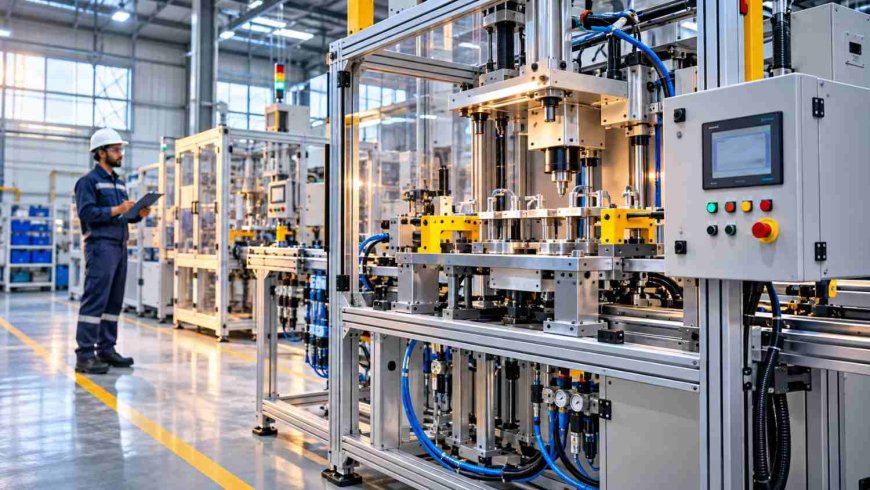
Manufacturing companies constantly look for ways to increase production speed, maintain quality, and reduce unnecessary manual work. However, standard equipment cannot always meet the requirements of complex industrial operations. Every factory has different production needs, component designs, and operating conditions.
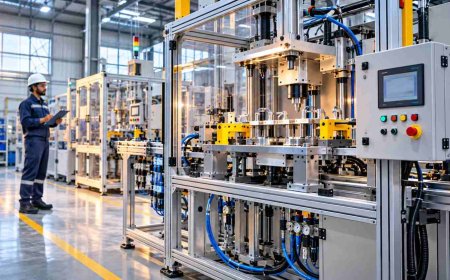
This is where Special Purpose Machines become valuable. These machines are designed to perform specific industrial tasks with greater control and consistency. They help manufacturers manage repetitive operations, improve process accuracy, and support efficient production planning.
From automotive assembly to component inspection, customized machinery plays an important role in modern manufacturing. Understanding its applications and selection requirements helps businesses make better equipment investments.
What Are Special Purpose Machines in Manufacturing?
A special purpose machine (SPM) is a customized industrial machine developed to perform a particular manufacturing operation or a defined sequence of tasks. Unlike general-purpose equipment, it is designed around specific production requirements.
For example, an automotive component manufacturer may need a machine that drills multiple holes in a component during a single operating cycle. A customized drilling system can perform this operation with controlled positioning and repeatable results.
These machines may combine mechanical assemblies, pneumatic systems, hydraulic components, sensors, and electrical controls.
Their design depends on the product, operating conditions, required accuracy, and production volume.
How Do Customized Machines Improve Production Efficiency?
Industrial efficiency depends on more than machine speed. Manufacturers must consider operating time, product quality, material handling, and equipment availability.
An experienced Special Purpose Machines Manufacturer examines these requirements before developing a suitable machine concept.
1. Reduce Repetitive Manual Operations
Many manufacturing processes involve repetitive tasks such as drilling, pressing, positioning, and component loading. Customized equipment can automate selected operations and reduce the need for repeated manual adjustments.
This allows operators to focus on monitoring production, maintaining equipment, and checking product quality.
2. Improve Manufacturing Accuracy
Consistent positioning is essential when producing components with defined dimensional requirements. Proper machine design, rigid structures, accurate locating systems, and controlled operating sequences help reduce variation.
Manufacturers may also use Jig and Fixture Design Services to support component positioning and repeatable machining operations.
3. Support Faster Production Cycles
A machine designed for one operation can eliminate unnecessary setup activities and combine compatible production steps. For example, a customized assembly station may position, clamp, and inspect components within a coordinated sequence.
Actual cycle-time improvements depend on product design, process complexity, and equipment performance.
Major Industrial Applications of Special Purpose Machines
Different industries use customized manufacturing equipment to solve specific production challenges.
Automotive Manufacturing
Automotive manufacturers require reliable processes for component assembly, drilling, pressing, and dimensional inspection.
Customized stations help maintain repeatable operations across large production batches.
Electronics Manufacturing
Electronics production involves delicate components and controlled assembly requirements.
Specialized equipment can support component positioning, testing, and handling while reducing unnecessary manual contact.
General Engineering Industries
Engineering companies use dedicated machines for operations such as fastening, material transfer, machining, and product inspection.
A reliable Special Purpose Machine Manufacturer in India should understand the required operation, component characteristics, and factory conditions before recommending a machine design.
Industrial Assembly and Testing
Customized assembly and testing stations help manufacturers follow defined operating sequences. Sensors and control systems may verify component presence, correct positioning, or completion of specific operations.
However, testing accuracy depends on proper calibration, suitable instruments, and validated inspection methods.
Important Factors to Consider Before Selecting an SPM
Choosing industrial equipment requires careful planning. A machine that performs well in one factory may not suit another production environment.
Manufacturers should evaluate the following factors.
Production Capacity
Determine the required output per hour or shift. Consider operating time, loading requirements, planned maintenance, and expected production growth.
Component Design and Dimensions
Provide accurate drawings, material specifications, tolerances, and sample components wherever possible.
Businesses can use Product Design Services to develop or refine component designs before finalizing equipment requirements.
Automation Requirements
Decide which operations require automation and which should remain operator-controlled.
Complete automation is not always the most economical choice. Semi-automatic equipment may offer better value for certain production volumes.
Safety and Maintenance
Review machine guarding, emergency stops, safe access, maintenance requirements, and operator training.
Safety measures should match the hazards identified through a proper machine risk assessment.
How Does Machine Development Work?
Developing customized industrial equipment requires coordination between design engineers, manufacturing teams, and production personnel.
The process generally includes:
-
Requirement analysis: Identify the operation, production targets, component specifications, and available factory space.
-
Concept development: Prepare a machine layout and select suitable operating mechanisms.
-
Engineering design: Develop mechanical structures, control systems, and detailed manufacturing drawings.
-
Fabrication and assembly: Manufacture machine parts and integrate the necessary components.
-
Testing and validation: Check machine functions, operating sequences, safety features, and performance against agreed requirements.
During development, Proto Part Manufacturing may help engineers assess component fit and practical design requirements before final production.
How to Choose the Right Machine Manufacturing Partner
A reliable manufacturing partner should offer more than equipment fabrication. Businesses should evaluate engineering capabilities, application knowledge, technical documentation, and support arrangements.
When comparing a Special Purpose Machines Manufacturer, ask about previous machine applications, design procedures, inspection methods, and acceptance testing. Request a clear proposal covering machine functions, expected cycle time, utilities, safety requirements, and installation responsibilities.
Also discuss spare parts availability, operator training, maintenance instructions, and warranty conditions. These details help buyers compare solutions based on practical operating requirements rather than purchase price alone.
Special Purpose Machine Manufacturing at Integrated Solutions
Integrated Solutions provides customized machine development for industrial manufacturing applications.
The company focuses on understanding production requirements and developing equipment for operations such as assembly, inspection, testing, and material handling. Its engineering capabilities also cover machining, tooling, and component manufacturing.
Businesses exploring customized production equipment can review the company's Special Purpose Machine Manufacturing services. A detailed discussion of component specifications, production targets, and operating conditions is the starting point for developing a suitable solution.
Frequently Asked Questions
1. What is the main purpose of an SPM?
Its main purpose is to perform a specific manufacturing operation or group of operations with controlled accuracy, repeatability, and efficiency.
2. Which industries commonly use customized machines?
Automotive, electronics, engineering, assembly, packaging, and other manufacturing industries use customized equipment for specialized production requirements.
3. Can an SPM reduce manufacturing costs?
It may reduce operating costs by improving cycle times, reducing repetitive manual work, and limiting process variation. Actual savings depend on production volume, investment costs, and machine utilization.
4. What information is required for machine development?
Manufacturers generally need component drawings, material specifications, production targets, tolerance requirements, process details, and available installation space.
5. How long does it take to manufacture a customized machine?
Development time varies with machine complexity, component availability, automation requirements, fabrication work, and testing procedures.
Conclusion
Customized industrial equipment helps businesses improve production consistency, simplify repetitive tasks, and support efficient manufacturing operations. However, successful implementation requires proper engineering, realistic production targets, and careful machine selection.
Before investing, manufacturers should define their process requirements and compare technically suitable solutions. Integrated Solutions supports industrial businesses with customized engineering and manufacturing services designed around specific production applications.
What's Your Reaction?