































Predictive Maintenance Software Explained for Plant Managers: Data, Costs and First Steps
Most of what you read about predictive maintenance makes it sound like magic. Fit a few sensors, and the system tells you exactly when every machine will fail.
The reality is more ordinary, and more useful. Predictive maintenance software watches a few readings on your key machines and warns you when something starts drifting from normal. This guide explains how that works, what you need to start, and where it isn't worth the money.
How a Machine Warns You Before It Fails
Think of how a doctor reads a fever. A temperature only means something because the doctor knows what normal looks like for you. Failure prediction works the same way, in three steps.
Baseline
First, the system records readings while the machine is healthy, usually over a few weeks of normal running. This becomes the machine's "normal", and it is different for every machine, even two identical pumps.
Drift
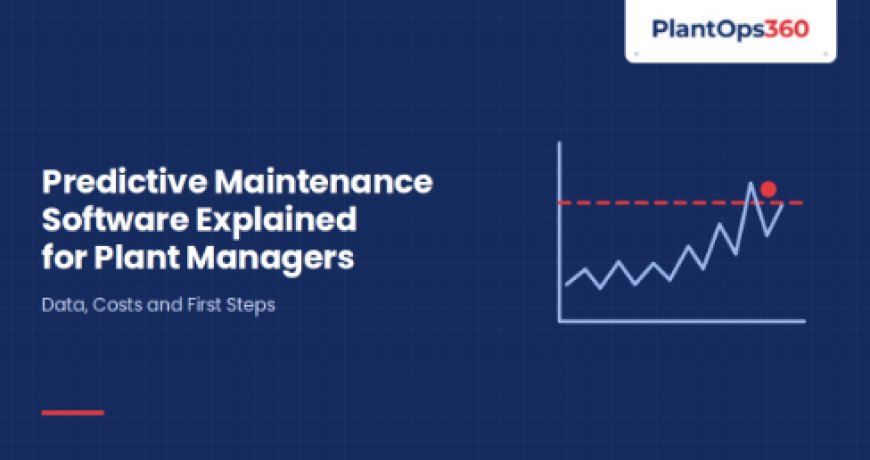
Most mechanical failures don't happen suddenly. A bearing starts wearing, alignment slips, or lubrication breaks down, and the readings creep away from the baseline over days or weeks.
Alert
When a reading crosses a limit set above the baseline, the system raises an alert. That gives you time to plan the repair, order the part and stop the machine at a convenient moment instead of mid-shift.
Three Readings That Tell You the Most
Take a dairy plant in Maharashtra. Its ammonia refrigeration compressors keep milk and products cold around the clock, so a surprise failure can mean spoiled stock, not just lost hours. For machines like these, three signals do most of the work.
Vibration
Vibration is the best early warning for rotating machines. Rising vibration points to problems such as imbalance, misalignment, looseness or bearing wear, often well before anyone can hear a change.
Temperature
Bearings, motor windings and gearboxes get hotter as friction rises or lubrication fails. Temperature usually rises later than vibration, but it's cheap to measure and easy for everyone to understand.
Runtime
Running hours and the number of starts and stops show how hard a machine is really working. They help you plan wear-related jobs by actual use, and they explain changes in the other two readings. A compressor that started twice as often this week may run hotter for a good reason.
Other methods, such as oil analysis or motor current analysis, can come later. Start with these three.
Picking Ten Machines for Your First Trial
Don't start with the whole plant. Ten machines are enough to learn how the system behaves, without drowning your team in alerts.
Pick machines that meet most of these tests:
-
Their failure stops a line or spoils product, and there's no standby.
-
They are rotating equipment, such as motors, pumps, fans, compressors and gearboxes.
-
They have failed before in ways that build up slowly, like bearing or alignment problems.
-
Repairs are costly, or spares take weeks to arrive.
-
They run for long stretches, so there's enough data to build a baseline.
In the dairy, a sensible first ten might include both ammonia compressors, the homogenizer, the cream separator, the main CIP pumps, the boiler feed pump and an effluent treatment blower. Sit with production to agree on the list, because they know which stoppages hurt most.
Sensors, Network and an Honest Timeline
You need three things in place before the first alert means anything: sensors on the machines, a way to get readings off the floor, and a team that expects a learning period.
Wireless sensors that measure vibration and temperature together are the simplest starting point. Runtime can often come from existing machine controls or a simple hour meter. Before installing anything, walk the floor and test network coverage at each machine, because cold rooms, steel structures and basements often block signals.
Be honest about the timeline. Building baselines takes weeks, and the first few months bring false alarms while limits are tuned. Prediction will reduce surprise breakdowns, not remove them.
Use this checklist before the pilot starts:
-
Ten machines agreed with production, with a reason for each
-
Last two years of failure history pulled for each machine
-
Sensor mounting points chosen, cleaned and approved
-
Network signal checked at every mounting point
-
Baseline period agreed before any alerts go live
-
One named person per shift to review alerts
-
A written rule for turning alerts into work orders
-
A 90-day review date, with what you'll count as success: real problems caught, false alarms and breakdowns avoided
Making Sure Every Alert Leads to Action
An alert that nobody acts on is just noise. Within weeks, people start ignoring all of them, including the one that mattered.
Set two levels. A warning creates an inspection job for the next planned round, and a critical alert creates a priority job for the current shift. The job should be created automatically, with the reading, trend and machine details attached, so the technician knows what to look for before reaching the machine.
Close the loop every time. The technician records what they found, with a photo, and marks whether the alert was a real problem or a false alarm. Review the false alarms weekly and adjust the limits, which is how the system gets more accurate over time.
Where Prediction Doesn't Pay Its Way
Here's the part most vendors skip. Predictive maintenance is a good tool for some machines, and a waste of money on others.
It rarely pays off on cheap, non-critical equipment with a standby, where a breakdown costs less than the sensor. It also struggles with failures that happen without warning, such as electronic cards, fuses and control faults, because there's no drift to catch.
Machines that run only a few hours a month don't build a reliable baseline. And an asset you plan to replace next year may not justify the setup effort.
Most importantly, no predictive maintenance software can help a plant where basic PM is still being skipped. If lubrication, cleaning and simple checks aren't happening, fix that first. Prediction works best as a layer on top of a working PM program, not as a replacement for one.
Start Narrow, Prove It, Then Grow
Pick ten machines, give the baseline time to settle, and make sure every alert becomes a job with an owner. If the 90-day review shows real problems caught early, expand to the next group of critical machines.
PlantOps360 offers predictive maintenance software that raises alerts from vibration, temperature and runtime data and turns them into predictive work orders, so warnings land with a named technician instead of a forgotten inbox.
Frequently Asked Questions
What is the difference between preventive and predictive maintenance?
Preventive maintenance follows a fixed trigger, such as a date or a set number of running hours, whether the machine needs it or not. Predictive maintenance acts on actual readings, so work is done when the machine shows signs of wear. Most plants use both.
Is condition monitoring the same as predictive maintenance?
They are closely linked. Condition monitoring is the act of measuring readings like vibration and temperature. Predictive maintenance uses those readings, compared against a baseline, to decide when to act before a failure.
How long does predictive maintenance take to show results?
Expect a few months. The first weeks go into building baselines, and the next few into tuning alert limits. Clear results usually show up once the system has caught a few real problems on your critical machines.
.
What's Your Reaction?