





























Legal Translation Services Dubai: Notary & Document Attestation Guide
Looking for legal translation services in Dubai? Discover how to prepare contracts, Power of Attorney documents, court records, and business agreements for official use in the UAE. Learn about certified legal translation, notary services in Dubai, Arabic language requirements, document attestation, and common translation errors to avoid. Poa Plus assists clients with Power of Attorney and related documentation requirements, helping them understand the procedures and supporting documents needed for their specific situation.

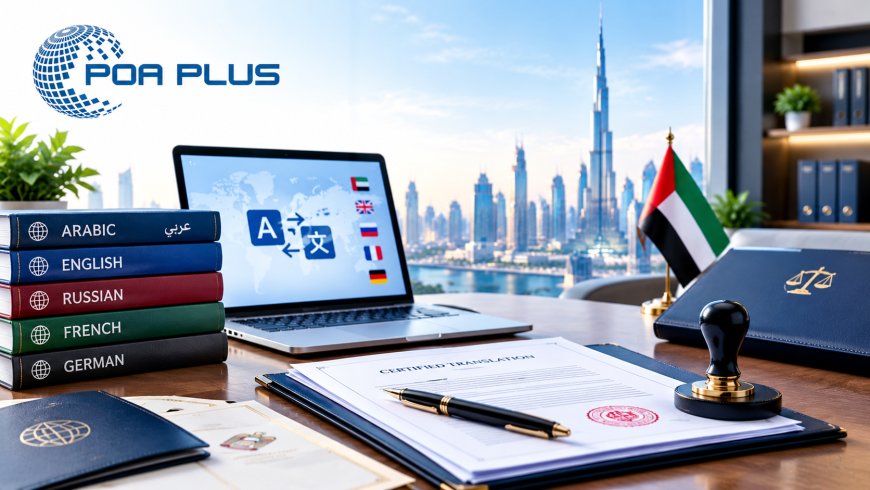
Legal Translation and Notary Services in Dubai
Legal documents must communicate the same meaning across languages and legal systems. A contract, court document, power of attorney, or company agreement can create complications if the translation changes an obligation, misrepresents a name, or omits an important clause. Accuracy matters because authorities and other institutions rely on the information presented to them.
People handling official paperwork in the UAE should identify the document's purpose before arranging translation. A document intended for a government department may have different language requirements from one prepared for a private business transaction.
Knowing When Certified Translation Becomes Necessary
Not every document requires a certified legal translation. The receiving authority determines whether an ordinary translation is sufficient or whether the applicant must use a translator who meets specific recognition requirements.
Legal translation services Dubai can help individuals and businesses prepare documents for official use. Before proceeding, applicants should confirm the required language, accepted translator credentials, and whether the original document needs notarization or attestation.
Identifying Documents That Need Translation
Legal translation can apply to a wide range of personal and commercial records. The exact requirements depend on the document and the organization receiving it.
Common examples include:
● Contracts and commercial agreements
● Powers of attorney and legal declarations
● Court judgments and supporting evidence
● Birth, marriage, and other civil certificates
● Company documents and corporate resolutions
● Immigration, employment, and educational records
Applicants should check requirements individually rather than assume that every document follows the same procedure.
Preserving Meaning Across Different Languages
Legal translation requires more than replacing words with their equivalents. Legal terms often carry specific meanings, and a phrase that appears straightforward in one language may have no direct equivalent in another.
Translators must preserve names, dates, amounts, defined terms, and the responsibilities described in the source document. They should also maintain consistent terminology throughout the text. This approach helps readers understand the translated document without changing its original intent.
Understanding The Purpose of Notarization
Notarization serves a different purpose from translation. Depending on the applicable procedure, a notary may verify a person's identity, witness a signature, or perform another legally recognized act. Notarization does not automatically confirm that every statement in a document is factually correct.
Applicants should determine what the receiving institution actually requires. A translated document may need notarization in some circumstances, while another document may require authentication or attestation instead.
Choosing Appropriate Notary Assistance
People arranging notary services Dubai should first establish the type of document and the legal act involved. Requirements can vary according to the document, the signatories, and the relevant authority.
Before booking an appointment or submitting paperwork, clarify:
● Which identification documents must be presented?
● Must the signatories attend in person?
● Does the document require witnesses?
● Is a specific language or format necessary?
● Will the receiving institution accept the completed document?
These questions help applicants prepare the correct materials before starting the process.
Preparing Documents Before Signing
Applicants should review a document carefully before signing it. Incorrect names, incomplete clauses, missing attachments, or inconsistent dates can create avoidable delays.
A practical review should cover the following details:
● Full names match the relevant identification documents.
● Dates and identification numbers appear consistently.
● The document clearly states its purpose.
● Every required page and attachment is included.
● The signatories understand the obligations they accept.
If the document contains unfamiliar legal language, applicants should seek appropriate clarification before signing.
Recognizing Cross-Border Documentation Requirements
Documents issued outside the UAE may need additional authentication before local authorities accept them. The process depends on the issuing country, document type, and intended use.
Some cases involve authentication by authorities in the country of origin, followed by further procedures through the relevant UAE authorities. Applicants should confirm the current requirements for their specific document rather than rely on a standard checklist for every country.
Avoiding Common Translation Errors
Small inconsistencies can cause significant problems in official paperwork. A translated name might differ from a passport, a date might follow the wrong format, or a legal term might lose its intended meaning.
Applicants can reduce these risks by checking:
● Spelling against the original identification documents
● Consistency of dates, figures, and addresses
● Completeness of every translated page
● Correct treatment of stamps, seals, and handwritten notes
● Alignment between the source document and translation
A final comparison can reveal issues before submission.
Managing Business Documents with Care
Businesses often handle documents that affect financial obligations, ownership, authority, and contractual relationships. Translation errors in these materials can create confusion between partners, suppliers, clients, or government departments.
Companies should establish consistent terminology across related documents and maintain clear records of approved versions. When a document requires notarization or authentication, the business should confirm the sequence of procedures before arranging signatures.
Understanding Arabic Language Requirements
Arabic plays an important role in official documentation in the UAE, but the language requirements depend on the relevant authority and transaction. Some organizations may accept documents in other languages, while others may require Arabic translations prepared under specific rules.
Applicants should verify the required language before commissioning a translation. This prevents unnecessary expense and helps ensure that the completed document meets the receiving institution's requirements.
Keeping Personal Information Secure
Legal documents often contain sensitive details, including passport numbers, addresses, financial information, and signatures. Applicants should consider how providers receive, process, store, and return these records.
Before sharing documents, ask about confidentiality practices and whether the provider needs the complete file. Use appropriate channels for transmitting sensitive information, and retain copies of important documents and receipts where practical.
Planning Time and Costs Realistically
Translation, notarization, and attestation may involve separate fees and processing times. The total depends on document length, language pair, required formalities, issuing country, and the procedures of the relevant authorities.
Applicants should request a clear breakdown of charges and confirm expected timelines before committing. They should also ask whether additional steps could become necessary if an authority requests corrections or further evidence.
Finding Support for Documentation Needs
Handling several formalities can become complicated when a document involves different languages, multiple signatories, or overseas institutions. Clear guidance can help applicants understand which services they need and which steps they must complete themselves.
Poa Plus assists clients with power of attorney and related documentation requirements. Applicants should discuss their specific circumstances and confirm the scope of the requested service before proceeding.
Reviewing Requirements Before Final Submission
A successful submission begins with understanding the receiving authority's expectations. Translation, notarization, and attestation address different requirements, so applicants should not treat them as interchangeable services.
Confirm the document format, language, signatures, authentication steps, and supporting materials before submission. Taking time to verify these details helps individuals and businesses manage legal paperwork more confidently and reduces the risk of preventable delays.
1. What are legal translation services in Dubai?
Legal translation services convert legal documents from one language to another while preserving their meaning, terminology, and details. Depending on the intended use, the receiving authority may require a certified legal translation from an appropriately recognized translator.
2. When is certified legal translation required in Dubai?
Certified legal translation may be required for contracts, Power of Attorney documents, court records, civil certificates, and business documents submitted to official authorities. Requirements depend on the document type and the organization receiving it.
3. Is Arabic translation mandatory for legal documents in the UAE?
Arabic translation is required for certain official procedures, but the rules vary by authority and transaction. Applicants should confirm the accepted language and translator requirements before arranging translation.
4. What is the difference between notarization and legal translation?
Legal translation converts a document into another language while preserving its meaning. Notarization involves a legally recognized act, such as witnessing a signature or verifying identity, depending on the procedure. Some documents may require both services, while others may need additional attestation.
5. Do foreign legal documents need attestation for use in Dubai?
Some foreign documents require authentication or attestation before they can be accepted in the UAE. The process depends on the issuing country, document type, and intended use. Applicants should confirm the required steps with the relevant authority before submission.
What's Your Reaction?