































Instant Tea Manufacturing Plant Setup, Feasibility Study 2026: Cost Breakdown, CapEx/OpEx, ROI, Raw Materials
The instant tea manufacturing industry is expected to maintain steady growth through 2026, driven by increasing consumer preference for convenient beverage solutions, rapid urbanization, busy lifestyles, and the expanding ready-to-drink and powdered beverage segments

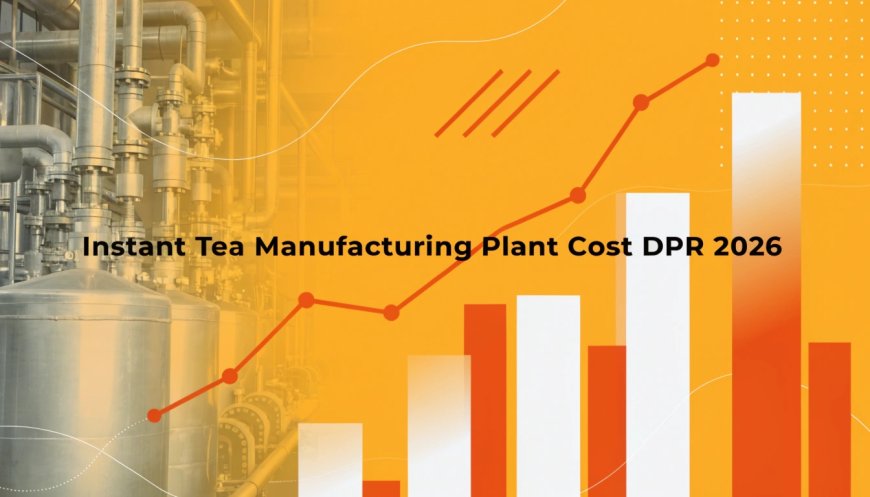
Setting up an instant tea manufacturing plant involves a series of controlled production stages, including tea leaf selection and cleaning, hot water extraction, filtration, concentration, aroma recovery, spray drying or freeze drying, blending, sieving, and packaging. The facility typically requires specialized equipment such as extraction vessels, filtration systems, vacuum evaporators, aroma recovery units, spray dryers or freeze dryers, blending machines, sieving systems, and automated packaging equipment. As instant tea is a food-grade beverage product, maintaining stringent hygiene and sanitation standards, implementing robust quality control procedures, and complying with applicable food safety regulations are essential. A detailed assessment of the instant tea plant setup cost is therefore important for determining capital investment, machinery requirements, operating expenses, production efficiency, and long-term profitability.
The instant tea manufacturing industry is expected to maintain steady growth through 2026, driven by increasing consumer preference for convenient beverage solutions, rapid urbanization, busy lifestyles, and the expanding ready-to-drink and powdered beverage segments. Rising demand for soluble tea extracts across domestic and international markets is further supporting industry growth. The growing popularity of café-style beverages and the increasing incorporation of soluble tea extracts into innovative beverage formulations are creating additional opportunities for manufacturers. Instant tea also serves as a versatile ingredient in packaged beverages, vending solutions, foodservice products, and flavoring applications, supporting its continued demand across diverse end-use sectors.
IMARC Group's report, titled "Instant Tea Manufacturing Plant Project Report 2026: Industry Trends, Plant Setup, Machinery, Raw Materials, Investment Opportunities, Cost and Revenue," provides a complete roadmap for setting up an instant tea manufacturing plant. It covers a comprehensive market overview to micro-level information such as unit operations involved, raw material requirements, utility requirements, infrastructure requirements, machinery and technology requirements, manpower requirements, packaging requirements, transportation requirements, etc.
Request for a Sample Report: https://www.imarcgroup.com/instant-tea-manufacturing-plant-project-report/requestsample
Instant Tea Industry Outlook 2026
Growing consumer preference for convenient beverage solutions is a key driver of market expansion. Tea remains one of the most widely consumed beverages globally, and rising demand for cold beverages in warm climates alongside increasing café-style consumption at home is supporting market growth. Beverage manufacturers are incorporating soluble tea extracts into innovative ready-to-drink formulations and health-oriented drinks, broadening the industry's scope beyond traditional powdered mixes. Technological improvements in extraction efficiency, aroma recovery, and drying systems are enhancing product quality and flavor retention. Expansion of vending machine networks and e-commerce beverage distribution channels is further strengthening demand across developed and emerging regions.
However, challenges such as tea leaf price volatility tied to weather and crop yields, high initial capital investment for extraction and drying machinery, energy-intensive concentration and drying processes, and evolving food safety regulations may influence production costs and strategic investment decisions for new plant setups.
Key Insights for Setting Up an Instant Tea Manufacturing Plant
Detailed Process Flow
• Product Overview
• Unit Operations Involved
• Mass Balance and Raw Material Requirements
• Quality Assurance Criteria
• Technical Tests
Project Details, Requirements and Costs Involved:
• Land, Location and Site Development
• Plant Layout
• Machinery Requirements and Costs
• Raw Material Requirements and Costs
• Packaging Requirements and Costs
• Transportation Requirements and Costs
• Utility Requirements and Costs
• Human Resource Requirements and Costs
Capital Expenditure (CapEx) and Operational Expenditure (OpEx) Analysis:
Project Economics:
• Capital Investments
• Operating Costs
• Expenditure Projections
• Revenue Projections
• Taxation and Depreciation
• Profit Projections
• Financial Analysis
Profitability Analysis:
• Total Income
• Total Expenditure
• Gross Profit
• Gross Margin
• Net Profit
• Net Margin
Key Cost Components
• Raw Materials: The primary cost driver, including black, green, and specialty tea leaves used for extraction, accounting for roughly 70-80% of total operating expenses.
• Energy Costs: Instant tea manufacturing is energy-intensive, particularly for vacuum concentration and spray or freeze drying, requiring significant amounts of electricity and steam, contributing an estimated 15-20% of operating expenses.
• Machinery and Equipment: Capital investment in extraction vessels, filtration systems, vacuum evaporators, aroma recovery units, spray dryers or freeze dryers, and blending and packaging systems, along with ongoing maintenance costs.
• Labor: Includes salaries, training, and benefits for skilled and unskilled workers involved in plant operation, extraction, drying, and quality control.
• Utilities: Costs for water, steam, compressed air, and other utilities essential for continuous, hygienic production.
• Packaging and Transportation: Expenses related to packaging, storing, and distributing finished instant tea powder to beverage manufacturers, distributors, or export markets, including logistics infrastructure.
• Depreciation and Financing: Depreciation of fixed assets and interest or repayment obligations for loans or capital investment in plant setup.
• Compliance and Safety: Investment in food safety compliance, hygiene monitoring, effluent treatment, and quality certification processes.
• Overheads: Administrative costs such as insurance, office operations, licensing, marketing, and general plant management.
Economic Trends Influencing Instant Tea Plant Setup Costs 2026
Tea Leaf Price Volatility: As black, green, and specialty tea leaves are the primary raw material for instant tea manufacturing, fluctuating global tea prices tied to weather patterns and crop yields directly impact both capital and operating costs. Higher leaf prices raise production expenses, making sourcing efficiency and supplier diversification more critical.
Energy Price and Drying Technology Trends: Since vacuum concentration and spray or freeze drying are energy-intensive steps, movements in electricity and steam costs, along with adoption of more efficient drying technologies, significantly affect operating costs and shape the economics of new plant setups.
Inflation & Interest Rates: Rising inflation inflates the cost of building materials, civil construction, labor, and machinery, while higher interest rates increase the cost of loans and financing needed for plant construction, equipment procurement, and commissioning of extraction and drying lines.
Government Subsidies & Stimulus: Policies supporting agro-processing, value-added exports, and domestic beverage manufacturing, especially in tea-producing and export-oriented economies, can reduce setup costs through grants, low-interest loans, or tax incentives aimed at instant tea plant investments.
Technological Advancements: Innovations in extraction efficiency, aroma recovery systems, and advanced spray-drying or freeze-drying technology can increase upfront CapEx but offer significant productivity gains, better flavor retention, and lower per-unit costs, enhancing long-term ROI.
Supply Chain Localization: Efforts to process tea closer to growing regions and reduce dependence on imported bulk tea or finished soluble extracts are incentivizing in-country investment in extraction and drying equipment. This may increase initial costs where domestic processing infrastructure is limited but improves supply chain resilience and delivery turnaround.
Labor Market Considerations: Shortages in skilled labor for operating extraction, evaporation, and drying equipment can drive up wages or necessitate investment in operator training and retention programs, raising both initial setup and ongoing operational expenses.
Speak to an Analyst for Customized Report: https://www.imarcgroup.com/request?type=report&id=12658&flag=C
Challenges and Considerations for Investors
• Feedstock Price Volatility: Instant tea manufacturing heavily depends on tea leaf harvests, which are sensitive to weather, seasonality, and crop yields. Fluctuations in global tea prices can significantly impact production costs and profit margins.
• High Capital Intensity: Establishing an instant tea plant requires substantial investment in extraction vessels, vacuum evaporators, and spray or freeze drying systems. Long payback periods can deter risk-averse investors.
• Flavor and Aroma Retention: Maintaining the characteristic taste and aroma of brewed tea through the drying process is technically demanding and requires precise process control to meet consumer expectations.
• Food Safety Compliance: Stringent food safety and quality regulations require additional investment in hygiene monitoring, effluent treatment, and certification processes.
• Market Competition: The global instant tea market is competitive, with several established multinational players and diverse regional producers. Investors must focus on operational efficiency or niche flavor differentiation to remain viable.
• Logistics and Distribution: Transporting bulk instant tea powder to beverage manufacturers and export markets requires reliable infrastructure and storage facilities. Poor logistics can lead to distribution bottlenecks and increased delivery costs.
• Technological Barriers: Staying competitive requires adopting advanced, energy-efficient extraction and drying technologies. Outdated systems lead to higher operational costs and reduced product quality.
• Policy and Regulatory Risks: Changes in government agricultural policies, import/export duties on tea, or food safety regulations can alter market dynamics abruptly and affect investment outcomes.
About Us:
IMARC Group is a global management consulting firm that helps the world's most ambitious changemakers to create a lasting impact. The company excels in understanding its client's business priorities and delivering tailored solutions that drive meaningful outcomes. We provide a comprehensive suite of market entry and expansion services. Our offerings include thorough market assessment, feasibility studies, company incorporation assistance, factory setup support, regulatory approvals and licensing navigation, branding, marketing and sales strategies, competitive landscape, and benchmarking analyses, pricing and cost research, and procurement research.
Contact Us:
IMARC Group
134 N 4th St. Brooklyn, NY 11249, USA
Email: sales@imarcgroup.com
Tel No: (D) +91 120 433 0800
United States: (+1-201-971-6302)
What's Your Reaction?