




























The Home Maintenance System That Actually Survives a Busy Month
Skip the maintenance checklist that gets ignored by week three a practical system for tracking home tasks tied to triggers you'll actually notice.
Most home maintenance advice assumes you'll remember to change the furnace filter, check the smoke detector batteries, and clean the gutters, all on schedule, without a reminder system. That assumption falls apart the moment life gets busy, which is most of the time for most people. This piece isn't another list of tasks to do it's a system for actually tracking them so nothing quietly slides for two years until something breaks.
Why Task Lists Alone Don't Work
A maintenance checklist pinned to the fridge works for about three weeks. After that, it becomes wallpaper present, ignored, and eventually forgotten entirely until something actually breaks and reminds you it exists. The problem isn't the list itself; it's that a static list has no mechanism for surfacing the right task at the right moment. You need to remember to check the list, which is exactly the kind of remembering that busy months make impossible.
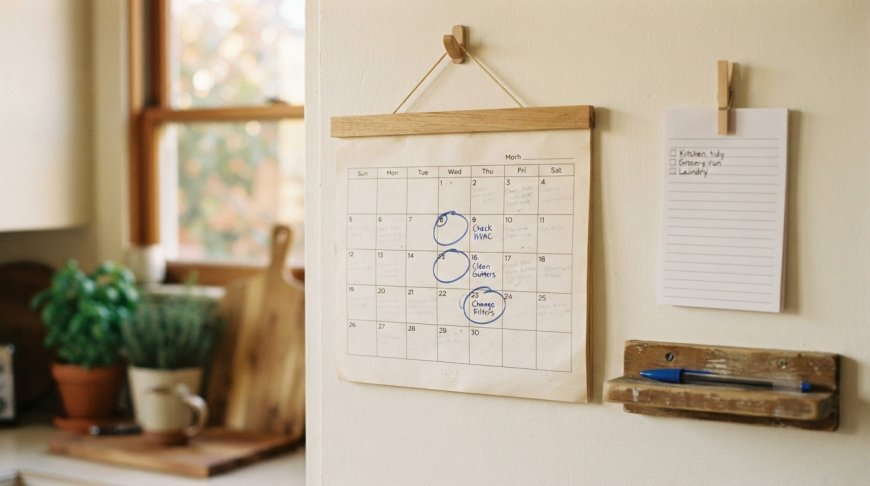
A better system ties tasks to something that already demands your attention regularly, rather than relying on a separate list you have to remember to consult. Pairing a maintenance task with a bill you already pay monthly, or a calendar event you already check, borrows an existing habit instead of asking you to build a brand new one from nothing.
Group by Frequency, Not by Room
Most home maintenance guides organize tasks room by room kitchen tasks, bathroom tasks, exterior tasks which sounds intuitive but actually works against you. A far more useful grouping sorts by how often something needs attention: monthly, seasonal, and annual. This matters because your brain doesn't need to know "what does the kitchen need" nearly as often as it needs to know "what's due this month."
Monthly tasks are usually quick and low-effort checking HVAC filters, testing smoke and carbon monoxide detectors, running water in rarely-used drains to prevent sewer gas smells. Seasonal tasks cluster around weather transitions gutter cleaning before winter, AC servicing before summer, checking weatherstripping before the first cold snap. Annual tasks are the ones easiest to forget entirely because a full year passes between reminders water heater flushing, dryer vent cleaning, chimney inspection if you have a fireplace. Sorting this way means you're never trying to remember everything at once, just what's actually due in the current window.
Attach Tasks to a Trigger You Won't Miss
The single most effective trick for actually following through is tying a maintenance task to something you're already guaranteed to notice. Daylight saving time changes are the classic example most people already have some awareness of the clock shift twice a year, which makes it a natural trigger for the smoke detector battery check that otherwise gets forgotten indefinitely.
Bill due dates work the same way for other tasks. If your HVAC filter needs monthly changing, tie it to whichever monthly bill you're most reliably aware of a mortgage payment, a subscription renewal, whatever already has your attention on a fixed schedule. The task rides along on a habit you've already built rather than requiring you to build an entirely new one just to remember it.
Keep a Running Log, Not Just a Task List
A task list tells you what to do. A log tells you what you've actually done, and that distinction matters more than people expect. Without a log, "did I already service the water heater this year?" becomes a guessing game every single time the question comes up, and guessing wrong in either direction costs you either an unnecessary service call or a skipped one that leads to a bigger problem down the line.
A simple running log date, task, and a one-line note on what was actually found or done turns that guesswork into something you can check in ten seconds. It also builds a genuinely useful record over time: noticing that a specific appliance has needed repair three years running tells you something a fresh memory never will, and it's exactly the kind of pattern that's invisible without a written record to compare against.
Build In a Buffer for the Tasks You'll Actually Skip
Be honest about which tasks you're realistically going to blow off, and build a buffer into the system rather than pretending you'll execute everything on schedule every single time. If gutter cleaning consistently slips two weeks past when you planned it, schedule it two weeks earlier than the "ideal" date so the inevitable slip still lands inside a safe window instead of past it.
This isn't giving up on discipline it's designing a system around how you actually behave instead of how you wish you behaved. A maintenance schedule that assumes perfect follow-through fails the first time life gets busy, which for most households is more often than not. A schedule with intentional slack survives real life instead of just looking good on paper.
Final Thoughts
A home maintenance system that actually works isn't built on willpower or a better checklist it's built on grouping by frequency instead of by room, attaching tasks to triggers you're already guaranteed to notice, and keeping a log instead of relying on memory. Build in realistic slack for the tasks you know you'll delay, and the system survives contact with an actual busy month instead of falling apart by week three. For more practical home maintenance strategies and seasonal task breakdowns, Dr. Homey's home maintenance tips covers additional ground worth exploring.
What's Your Reaction?