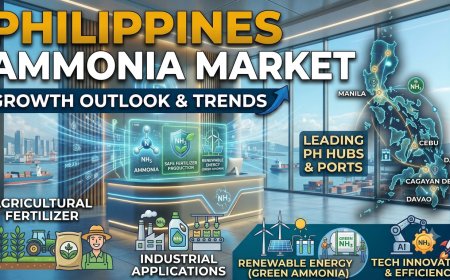


























Philippines Ammonia Market Projected to Reach USD 2,476.56 Million by 2034
Discover the Philippines ammonia market, projected to reach USD 2,476.56 million by 2034, driven by fertiliser demand, agricultural growth, mining and emerging energy applications.

Market Overview
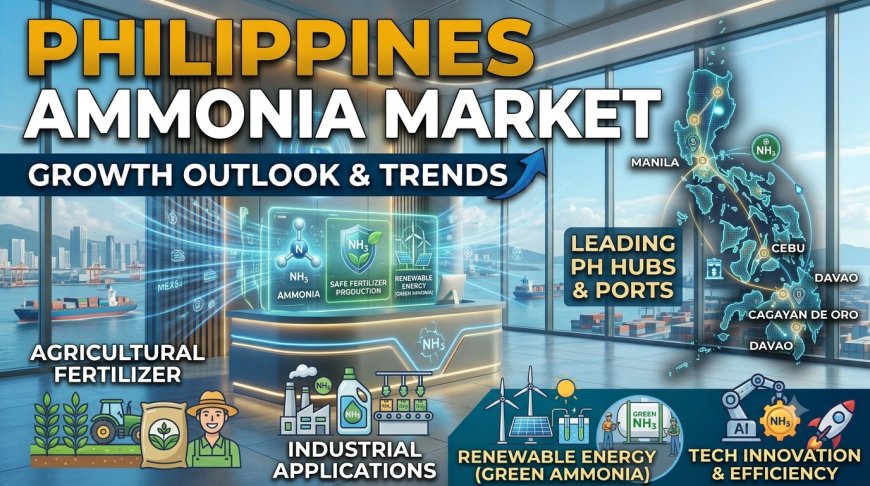
The Philippines ammonia market is expanding, driven by growing agricultural activity that requires nitrogen-rich fertilisers to raise crop yields and support food security. The government’s commitment to agricultural modernisation through policy support and infrastructure investment keeps ammonia consumption steady, while industrial applications in the mining sector add further demand. The market size reached USD 1,733.75 Million in 2025 and is projected to reach USD 2,476.56 Million by 2034, registering a compound annual growth rate (CAGR) of 4.04% during 2026-2034. Rising fertiliser use, mining and quarrying demand, refrigeration applications, and the emerging role of ammonia as an energy carrier are shaping the Philippines ammonia market share and outlook through 2034.
Market Summary
- Ammonia is a basic chemical used to make nitrogen fertilisers such as urea, ammonium nitrate, ammonium sulphate, and MAP and DAP, as well as nitric acid, explosives, refrigerants, and a range of industrial and pharmaceutical products.
- Nitrogenous fertilisers are essential inputs for rice, the staple food crop, and the Department of Agriculture’s campaigns for hybrid seeds and appropriate fertiliser regimens are lifting yields in regions such as Central Luzon, Cagayan Valley, and Western Visayas.
- Government fertiliser distribution programmes, together with private sector supply chains, keep fertilisers accessible to the smallholder farmers who form the backbone of Philippine agriculture.
- Mining and quarrying are expanding, with licences issued across Mindanao and Luzon, which stimulates purchases of ammonium nitrate for blasting in limestone and granite extraction that supplies construction materials.
- Ammonia is also gaining attention as a hydrogen carrier and potential low-carbon fuel, and the Department of Energy’s Hydrogen and Fusion Energy Roadmap positions it as a pivotal energy carrier for decarbonising power generation.
- Refrigeration systems, which use ammonia as an efficient refrigerant in cold storage and food processing, add further industrial demand.
- Artificial intelligence and IoT-enabled monitoring are improving safety and supply chain management, with real-time surveillance of storage and transport, predictive maintenance, and automated leak detection.
- Ammonia’s hazardous status brings strict safety and environmental regulation, and heavy reliance on imports exposes the market to price swings, freight disruption, and currency movements.
- The market is segmented by physical form (liquid, powder, gas), application (MAP and DAP, urea, nitric acid, ammonium sulfate, ammonium nitrate, others), end use industry (agrochemical, industrial chemical, mining, pharmaceutical, textiles, others), and region, with forecasts for 2026-2034.
Market Growth Drivers
Agricultural Intensification and Rising Fertiliser Demand
The Philippines faces mounting pressure to raise agricultural productivity as the population grows and arable land per person declines. Ammonia-based nitrogen fertilisers are essential inputs for rice, and the Department of Agriculture’s work to promote hybrid seeds alongside suitable fertiliser use is producing measurable yield gains in major rice-producing regions. Government distribution programmes and private supply chains ensure that smallholders can buy fertiliser, creating a steady base of demand. Investment in irrigation and farm mechanisation further increases fertiliser use by allowing more intensive cultivation, which anchors the stability of the ammonia market.
Government Infrastructure Investment and Mining Sector Expansion
Industrial ammonia consumption is rising with the expansion of mining and quarrying. The Department of Environment and Natural Resources has issued numerous quarrying licences across Mindanao and Luzon, directly boosting demand for ammonium nitrate used in extracting limestone and granite for construction. These activities align with infrastructure priorities such as transport networks and urban development. Ammonium nitrate-based explosives dominate blasting because of their favourable handling characteristics and storage compliance, and construction linked to renewable energy installations, port expansion, and flood control adds to demand. Industrial growth of this kind helps offset the volatility of the agricultural sector and supports higher-value segments with specialised product specifications.
Energy Transition Initiatives and Green Ammonia Development
Energy transition goals are creating a new strand of demand. As the country seeks to cut emissions and adopt cleaner energy, ammonia is gaining attention as a hydrogen carrier and potential low-carbon fuel for future power systems. This drives interest in renewable-powered ammonia plants, pilot hydrogen-ammonia blending projects, and research partnerships to decarbonise fertiliser and industrial processes. Government emphasis on solar, wind, and geothermal power opens opportunities to integrate these sources into green ammonia production, and global pressure for low-carbon agricultural inputs encourages local producers to consider greener technologies. These trends position ammonia as both a strategic energy vector and an environmentally aligned industrial chemical.
Request a Sample Report for In-Depth Market Insights: https://www.imarcgroup.com/philippines-ammonia-market/requestsample
Porter’s Five Forces Analysis
Competitive Rivalry: Moderate
- Multinational suppliers, regional producers, and domestic distributors compete on price, supply reliability, and logistics, with competition intensifying during planting seasons.
- Procurement relationships, storage and handling capability, regional coverage, and safety credentials are key points of differentiation.
- Distributors compete on logistics efficiency and service rather than product differences, since ammonia is largely a commodity.
Supplier Power: High
- The market depends on imports, and a small number of producers in Malaysia, Indonesia, and China dominate supply channels.
- Global price swings in natural gas, the main feedstock, and in freight and currency affect costs immediately.
- Limited domestic production and few alternative supply sources leave buyers exposed to supplier pricing.
Buyer Power: Moderate
- Large fertiliser manufacturers, mining explosives users, and industrial buyers negotiate on volume and contract terms.
- Smallholder farmers have little bargaining power individually but are supported by government distribution programmes.
- Buyers can source from several importers, although quality, safety compliance, and delivery reliability limit how freely they switch.
Threat of Substitutes: Low to Moderate
- Organic fertilisers and biofertilisers can partly replace nitrogen fertilisers, a shift that agricultural policy increasingly encourages.
- Other refrigerants and blasting agents can substitute for ammonia in refrigeration and mining in some uses.
- Ammonia’s cost-effectiveness, energy efficiency, and nutrient density sustain its role in most applications.
Threat of New Entrants: Low to Moderate
- Ammonia production needs very heavy capital, secure natural gas or renewable power supply, and extensive safety and environmental permits.
- Safety compliance standards and technical expertise in handling hazardous materials protect established participants.
- Distribution and downstream blending businesses have lower barriers, and green ammonia pilots may attract new project developers.
Market Segmentation
Physical Form Insights
- Liquid
- Powder
- Gas
Application Insights
- MAP and DAP
- Urea
- Nitric Acid
- Ammonium Sulfate
- Ammonium Nitrate
- Others
End Use Industry Insights
- Agrochemical
- Industrial Chemical
- Mining
- Pharmaceutical
- Textiles
- Others
Regional Insights
- Luzon
- Visayas
- Mindanao
Regional Analysis
Luzon: The largest island group includes major rice-producing provinces such as those in Central Luzon and Cagayan Valley, along with the main industrial and port hubs, so it leads in fertiliser demand and in the import and distribution of ammonia products.
Visayas: Rice, sugarcane, and corn farming, particularly in Western Visayas, create steady fertiliser demand, and the island geography makes logistics and regional storage important for supply.
Mindanao: Large agricultural plantations and expanding mining and quarrying activity make Mindanao a major consumer of both fertiliser and ammonium nitrate for blasting, supported by quarrying licences issued across the region.
Competitive Landscape
The Philippines ammonia market has a moderately concentrated competitive structure, marked by dependence on international suppliers alongside growing domestic distribution networks. Multinational corporations maintain a strong presence through distribution partnerships and direct sales to agriculture, drawing on research capability, brand recognition, and integrated supply chains in premium fertiliser segments. Import dynamics favour companies with strong procurement ties to producers in Malaysia, Indonesia, and China, which dominate supply. Domestic distributors and wholesalers compete on logistics efficiency, regional coverage, and customer service. Competition intensifies in peak agricultural seasons when demand coincides with planting cycles, and safety standards and certifications create entry barriers for new participants. The report covers market structure, key player positioning, top winning strategies, competitive dashboard, and company evaluation quadrant, along with detailed profiles of all major companies.
Key players include:
- Yara International
- PETRONAS Chemicals Group
- Pupuk Indonesia
- Nutrien
- CF Industries
Recent Industry Developments
Hydrogen and Fusion Energy Roadmap: The Department of Energy’s roadmap, created to support carbon neutrality, positions ammonia as a key energy carrier for decarbonising power generation. It supports interest in green ammonia projects, hydrogen-ammonia blending pilots, and research partnerships in the country.
Mining and Quarrying Expansion: The Department of Environment and Natural Resources has issued numerous quarrying licences across Mindanao and Luzon, directly stimulating demand for ammonium nitrate used in blasting for limestone and granite extraction. The expansion is tied to government infrastructure priorities in transport, urban development, and flood control.
AI-Enabled Safety and Supply Chain Monitoring: IoT-enabled monitoring systems combined with AI algorithms are being used to watch ammonia storage facilities and transport networks in real time, supporting predictive maintenance, leak detection, and automated emergency response. AI-driven precision agriculture platforms are also helping optimise fertiliser application using soil, weather, and crop data.
Key Aspects Required for the Philippines Ammonia Market
- Market Performance: The market reached USD 1,733.75 Million in 2025 and is projected to reach USD 2,476.56 Million by 2034, driven by agricultural demand, mining expansion, and energy transition initiatives.
- Market Outlook: A 4.04% CAGR during 2026-2034 reflects steady expansion supported by balanced fertilisation, precision farming, and growing industrial and energy applications.
- Growth Drivers: Agricultural intensification and rising fertiliser demand; government infrastructure investment and mining sector expansion; and energy transition initiatives and green ammonia development, together shaping long-term demand.
- Competitive Landscape: Suppliers including Yara International, PETRONAS Chemicals Group, Pupuk Indonesia, Nutrien, and CF Industries are competing alongside domestic distributors on price, supply reliability, and logistics.
- Value Chain Analysis: The value chain runs from natural gas and feedstock supply and overseas ammonia production through imports, port storage, and distribution to fertiliser manufacturers and blenders, mining explosives users, refrigeration and industrial customers, and farmers across Luzon, Visayas, and Mindanao.
- Industry Trends: Green and low-carbon ammonia; use of ammonia as a hydrogen carrier; AI and IoT monitoring for safety; precision agriculture; and growth of ammonium nitrate use in mining and quarrying.
- Strategic Recommendations: Secure diversified long-term import supply and strategic storage; invest in safety, monitoring, and compliance systems; explore green ammonia pilots linked to renewable energy; support SME training and technology adoption; and partner with agriculture and mining customers on tailored product supply.
Note: If you need any specific information that is not covered currently within the scope of the report, we will provide the same as a part of customization.
Speak to an analyst: https://www.imarcgroup.com/request?type=report&id=44451&flag=C
Frequently Asked Questions
1. What is the size of the Philippines ammonia market?
The market reached USD 1,733.75 Million in 2025 and is projected to reach USD 2,476.56 Million by 2034.
2. What is the expected growth rate of the Philippines ammonia market?
The market is projected to grow at a CAGR of 4.04% during 2026-2034.
3. What is driving the growth of the Philippines ammonia market?
Growth is driven by expanding fertiliser demand from agriculture, growth in industrial applications such as mining, food security initiatives, increasing use in refrigeration systems, and greater investment in chemical manufacturing capacity to support domestic supply and reduce import dependence.
About Us
IMARC Group is a global management consulting firm that helps the world’s most ambitious changemakers to create a lasting impact. The company provides a comprehensive suite of market entry and expansion services. IMARC offerings include thorough market assessment, feasibility studies, company incorporation assistance, factory setup support, regulatory approvals and licensing navigation, branding, marketing and sales strategies, competitive landscape and benchmarking analyses, pricing and cost research, and procurement research.
Contact Us
IMARC Group
134 N 4th St., Brooklyn, NY 11249, USA
Email: sales@imarcgroup.com
Tel No: (D) +91 120 433 0800
United States: +1-631-791-1145
What's Your Reaction?