
































US and Mexico Strike Last-Minute Water Deal to Avert Trump’s Tariff Threat
The US and Mexico have reached a critical agreement to release 202,000 acre-feet of water to Texas farmers, temporarily averting threatened tariffs.
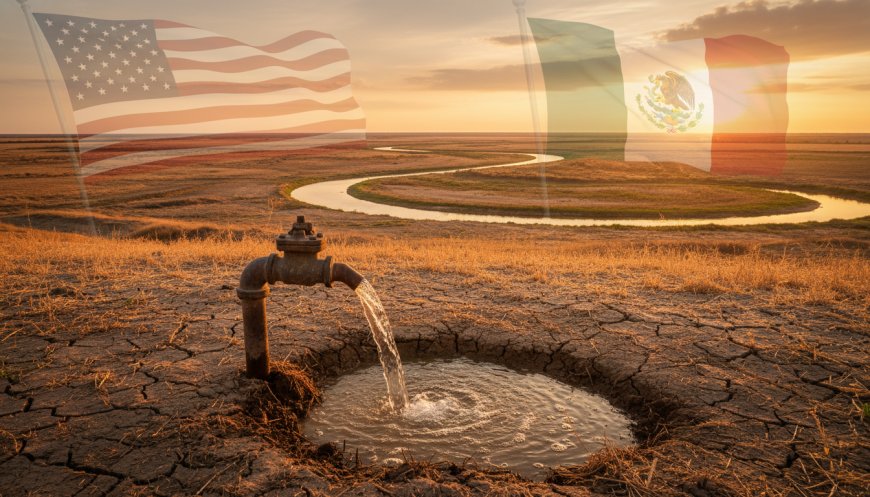
In a significant diplomatic breakthrough that temporarily de-escalates rising tensions along the southern border, the United States and Mexico have reached a crucial agreement regarding water deliveries under the 1944 Water Treaty. The deal, announced early this week, comes just days after President Donald Trump threatened to impose a punitive 5% tariff on all Mexican imports if the neighboring nation failed to meet its water debt obligations by the end of the year. According to the U.S. Department of Agriculture (USDA), the new understanding will see Mexico immediately release 202,000 acre-feet of water to the United States, with deliveries scheduled to commence as early as this week. This immediate infusion of resources is intended to provide critical relief to farmers and ranchers in the Rio Grande Valley of Texas, who have been grappling with severe water shortages that have threatened their livelihoods and crop yields for consecutive seasons. **A Race Against the Tariff Clock** The agreement was forged under intense pressure. President Trump had set a firm deadline of December 31 for Mexico to address what the U.S. administration described as a massive deficit in water deliveries. The President’s ultimatum was clear: deliver the water or face immediate economic consequences in the form of escalating tariffs. The threat rattled markets and placed immense pressure on diplomatic channels to find a resolution before the New Year. "This agreement is a step in the right direction," said U.S. Agriculture Secretary Brooke Rollins in a statement released shortly after the deal was finalized. However, Rollins maintained a cautious tone, warning that the administration remains vigilant. "President Trump continues to put American farmers first. We are finally holding our international partners accountable," she noted, implying that the threat of tariffs remains on the table if Mexico fails to follow through on this commitment or future obligations. **The Terms of the Deal** While the immediate release of 202,000 acre-feet provides a necessary stopgap, it represents only a fraction of the total water debt. U.S. officials estimate that Mexico is still short approximately 865,000 acre-feet of water required under the current five-year cycle of the treaty. To address this broader deficit, both governments have agreed to continue high-level negotiations, with a target to finalize a comprehensive long-term distribution plan by the end of January 2026. The 1944 Water Treaty is a cornerstone of binational relations, stipulating that Mexico must deliver 1.75 million acre-feet of water from the Rio Grande to the United States over a five-year period. In exchange, the U.S. delivers 1.5 million acre-feet annually to Mexico from the Colorado River. However, inconsistent rainfall and severe drought conditions in Northern Mexico have made compliance increasingly difficult, leading to accumulating deficits that have frustrated Texas agricultural producers. **Mexican Response and Drought Realities** Mexican President Claudia Sheinbaum’s administration has consistently pushed back against accusations of willful non-compliance, citing "extraordinary drought" conditions that are accounted for within the treaty's framework. Mexican officials have emphasized that the country is not violating the treaty but rather managing an unprecedented hydrological crisis that affects water users on both sides of the border. In a statement from Mexico's Foreign Ministry, officials confirmed the commitment to the 202,000 acre-foot transfer, framing it as a measure to "strengthen water management in the Rio Grande basin." The statement also highlighted that Mexico has continued to make deliveries despite the environmental challenges, seeking to balance the needs of its own drought-stricken populace with its international obligations. **Impact on Texas Agriculture** For the agricultural communities in South Texas, the news brings a sigh of relief, though anxiety about the future remains. The Rio Grande Valley is a vital agricultural hub, producing a significant portion of the nation's citrus, vegetables, and cotton. The persistent water uncertainty has forced some sugar mills to close and left thousands of acres of farmland fallow. "Water is our lifeblood," said a representative for the Texas Farm Bureau. "While this release helps us plan for the immediate upcoming season, we need a permanent solution. We cannot farm on promises and last-minute deals every five years." **Looking Ahead to 2026** The focus now shifts to the January 2026 deadline for the broader distribution plan. Diplomatic teams from both nations face the complex task of renegotiating water management strategies in an era of climate unpredictability. If a long-term solution is not reached, the specter of tariffs could return, potentially disrupting the billions of dollars in trade that flow across the U.S.-Mexico border daily. For now, the water will flow, and the trade war is on hold. But as the Rio Grande continues to struggle with drought, the diplomatic channels between Washington and Mexico City will likely remain as fluid and turbulent as the river itself.
What's Your Reaction?