
























Portable LIBS Spectrometer LIS-02, Carbon detection spectrometer
The Portable Laser Spectrometer LIS-02 is a compact and high-precision solution designed for fast and accurate elemental analysis of metals. Engineered for on-site testing, it enables instant material identification without damaging the sample, making it ideal for quality control, inspection, and metal verification applications. Utilizing advanced laser-based spectroscopy technology, the LIS-02 delivers reliable elemental composition results within seconds. Its portable design, intuitive interface, and robust construction make it suitable for both shop-floor and field use, even in demanding industrial environments.

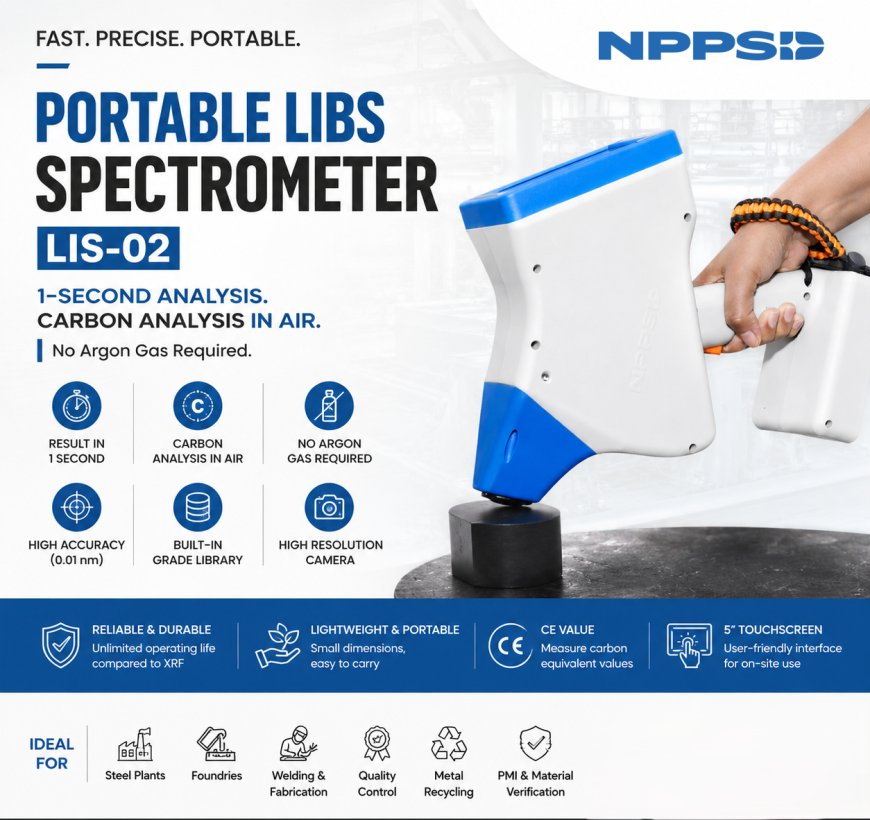
Portable LIBS Spectrometer ROI: What the Numbers Actually Look Like
A portable LIBS spectrometer costs more upfront than sending samples to a lab now and then. That comparison, on its own, tells you nothing useful. The real question is what happens over a year of testing — in time saved, rejects avoided, and disputes prevented. This article works through that calculation in plain terms, so you can judge the investment on real numbers rather than a sales pitch.
Why ROI Questions Get Asked Too Late
Many plants buy testing equipment only after a costly incident — a wrong-grade shipment, a failed weld, a rejected batch. At that point, the cost of not testing has already shown up. A proper ROI look, done before the purchase, avoids that scramble and gives a clearer picture of what the device actually saves.
The Costs a Portable LIBS Spectrometer Replaces
Before calculating savings, list what the device is standing in for. Most plants are currently paying for one or more of these:
- Lab turnaround time. Samples sent out often take a day or more to return results, during which material sits idle or production waits.
- Courier and lab fees. Each sample sent externally carries a direct cost, which adds up across dozens of tests a month.
- Argon gas consumables. If you're using another LIBS device or a method that needs gas purging, that's a recurring line item.
- Rework and scrap from misgraded material. This is often the largest hidden cost, and the hardest to see until it's tallied.
- Radiation licensing overhead, if your current method is XRF-based.
Building a Simple ROI Picture
A rough ROI estimate doesn't need complex financial modeling. Three numbers do most of the work:
1. Time Saved Per Test
If a lab-based carbon check takes a day and a LIBS reading takes about one second, the time difference is the first real gain. Multiply the number of tests per month by the hours saved, and value that time at your team's effective hourly cost.
2. Reduced Rejects and Rework
Estimate how often misgraded material currently causes rework, scrap, or a rejected shipment. Even a small reduction in these incidents — say, avoiding two or three bad batches a year — often covers a meaningful share of the equipment cost on its own.
3. Avoided Recurring Costs
If the device removes an argon gas requirement or licensing overhead tied to XRF, calculate the annual value of that alone. These are costs that continue indefinitely once removed, unlike a one-time equipment purchase.
A Worked Example
This is an illustrative calculation, not a guaranteed outcome. Your actual figures will differ based on volume and current costs.
Consider a mid-sized fabrication shop running 15 material checks a week, currently using an outside lab for carbon-sensitive grades.
| Factor | Current Cost (Estimate) | With Portable LIBS |
|---|---|---|
| Lab fee per test | Ongoing external cost | Eliminated for routine checks |
| Turnaround per test | 1–2 days | About 1 second |
| Annual gas/consumable cost (if using purge-based LIBS or similar) | Recurring | Removed with gas-free carbon detection |
| Rework from misgraded batches | Occasional, costly | Reduced through earlier detection |
Even without exact figures, the pattern is consistent across shops of this size: the biggest gains come from avoided rework and eliminated turnaround delays, not from the device replacing every single lab test.
Where the Payback Period Shortens
Certain conditions make a portable LIBS spectrometer pay for itself faster:
- High test volume. More tests per week mean more accumulated time and cost savings.
- Frequent carbon-sensitive work. Steel grading and weld planning benefit most, since carbon detection is where LIBS has a clear edge.
- Current reliance on external labs. Turnaround delays and per-sample fees add up quickly when eliminated.
- A history of grading disputes. If misgraded material has caused real financial loss before, the device addresses that risk directly.
Where the Payback Period Stretches Out
The investment takes longer to justify when:
- Testing volume is low and infrequent
- Current methods already handle your material types adequately
- The main need is high-precision certified chemistry, which still requires lab methods like spark OES
Being honest about which category your operation falls into avoids disappointment after purchase.
Costs Beyond the Purchase Price
A full ROI picture also accounts for ongoing costs on the LIBS side:
- Training time. Operators need proper training to get consistent results, which takes time away from other work initially.
- Reference samples and calibration checks. Regular verification takes a few minutes per shift but is necessary for reliable data.
- Battery and accessory replacement. Budget for these over the device's working life.
- Occasional service or calibration support. Even reliable equipment needs periodic checks.
None of these are large costs individually, but they belong in an honest calculation rather than being left out.
Non-Financial Returns Worth Considering
Not every benefit shows up cleanly in a spreadsheet:
- Faster decision-making on the shop floor, without waiting on outside results
- Better documentation, since built-in cameras and logging create a record for audits
- Reduced dependence on a single lab's schedule, which matters when turnaround delays affect production planning
- Improved operator confidence, when readings are available immediately rather than after a delay
These factors don't replace a financial calculation, but they're part of why many teams find the equipment worth the cost even when the numeric payback period is moderate.
Questions to Ask Before Calculating Your Own ROI
- How many carbon-sensitive material checks do we run per month?
- What does each external lab test currently cost, including turnaround delays?
- How often has misgraded material caused rework or disputes in the past year?
- Does our current method require ongoing gas or licensing costs?
- What training investment will operators need to use the device effectively?
Frequently Asked Questions
How long does it typically take for a portable LIBS spectrometer to pay for itself?
It depends heavily on testing volume and current costs. High-volume operations with frequent lab dependency often see faster payback than low-volume users.
Does ROI only come from replacing lab tests?
No. Much of the value often comes from avoided rework and rejected batches, which can outweigh direct lab-fee savings.
Are there ongoing costs after buying a portable LIBS spectrometer?
Yes, including training time, reference samples, calibration checks, and eventual battery or accessory replacement.
Does gas-free carbon detection affect the ROI calculation?
Yes. Removing an argon gas requirement eliminates a recurring cost that would otherwise continue indefinitely.
Should low-volume operations still consider a portable LIBS spectrometer?
It depends on the type of testing needed. If precision certification is the main requirement, lab methods may remain more cost-effective at low volumes.
Final Thought
The real value of a portable LIBS spectrometer usually isn't visible in the purchase price comparison alone. It shows up in avoided delays, reduced rework, and fewer disputes over material grade — costs that are easy to overlook until you total them across a year. Run the numbers honestly, including the ongoing costs, and the picture becomes much clearer than any single comparison can show.
What's Your Reaction?