





















Understanding Custom Flags: Types, Materials, Uses and Display Options
Learn about custom flags, including different types, materials, printing methods, uses, bases, and display options for events and businesses in Dubai.
Custom flags are used in many settings, from business entrances and exhibitions to outdoor events, retail locations, hotels, and corporate gatherings. They can help identify a location, communicate a brand message, guide visitors, or add visual structure to an open space.
However, choosing a custom flag involves more than selecting a colour and adding a logo. The shape of the flag, fabric, pole, base, viewing distance, and installation environment all affect how practical the final display will be.
For businesses researching flag printing,understanding the available formats and their typical uses is a useful first step.
What Are Custom Flags?
A custom flag is a fabric flag produced with a specific design, logo, message, colour scheme, or image. Unlike standard decorative flags, custom flags are created according to a particular display requirement.
They can be used for:
-
Business entrances
-
Retail promotions
-
Exhibitions and trade shows
-
Corporate events
-
Real estate projects
-
Hotels and restaurants
-
Sports activities
-
Festivals and public events
-
Roadside advertising
-
Outdoor brand identification
The appropriate design depends largely on where the flag will be positioned and how people are expected to see it.
Common Types of Custom Flags
There are several outdoor flag formats, and each has a different structure.
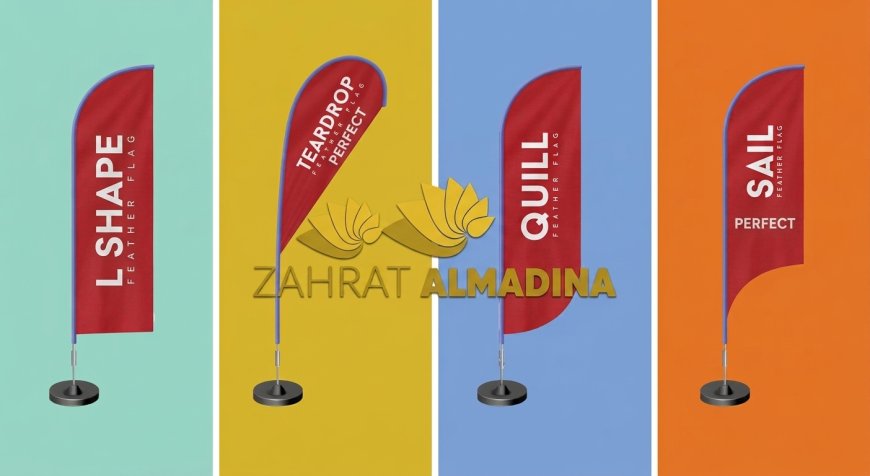
L-Shape Flags
An L-shape flag uses a vertical pole with a horizontal arm at the top. The extended arm helps keep the fabric open instead of allowing it to fold around the pole.
L-shape flags Printing for outdoor business and event displays can be useful at storefronts, entrances, exhibitions, and commercial areas where a clear rectangular message is required.
The shape can make logos and short messages easier to see because the printed fabric remains relatively open. Before selecting this format, consider the available height and the amount of space around the pole.
Sail Flags
Sail flags have a curved top section that creates a tall, flowing profile. The pole follows the upper edge of the fabric, helping maintain the flag's vertical shape.
A custom sail flag for outdoor branding and events can be used at retail locations, events, hotels, property developments, and other open areas.
Sail flags can also have different bottom shapes, including flat, inner curve, and outer curve. These variations mainly change the visual silhouette, so the choice can be based on the desired appearance and surrounding environment.
Teardrop Flags
Teardrop flags have a wider upper section that gradually narrows toward the bottom, creating their distinctive name and appearance.
Teardrop flags Option for outdoor advertising and events are commonly considered for storefronts, exhibitions, entrances, outdoor events, and property displays.
The shape also influences the way artwork should be positioned. Important elements such as a logo or short headline are generally easier to notice when placed in the wider upper portion of the printed area.
Feather Flags
Feather flags have a tall, curved profile and are often used where a lightweight promotional display is needed.
A feather flag for exhibitions, retail and outdoor promotions can be positioned around entrances, exhibition areas, restaurants, sports events, and promotional spaces.
Feather flags can have different bottom profiles, so the final appearance can vary depending on the selected format. For outdoor use, the fabric and base should be selected according to the installation conditions rather than appearance alone.
Telescopic Flags
Telescopic flags use adjustable poles that can be extended or retracted. This makes the display height more flexible than a fixed-height pole.
Telescopic flags dubai with adjustable poles for outdoor displays can be useful for businesses and event organisers that move displays between locations with different space requirements.
Some telescopic systems can extend to heights of up to five metres, depending on the configuration. An integrated or suitable base is also important when using the display outdoors.
Choosing the Right Flag Material
The fabric is another important consideration. Outdoor flags need to handle movement, sunlight, and environmental exposure, while indoor flags may place greater emphasis on colour appearance and finish.
Common considerations include:
Knitted Polyester
Knitted polyester is lightweight and commonly used for single-sided outdoor flag applications. Its construction allows some light to pass through the fabric, which can create a different appearance from the front and reverse sides.
Satin Fabrics
Satin fabrics can provide a different surface appearance and may be considered where a more structured or premium visual finish is required.
For Dubai's outdoor conditions, the intended exposure should be discussed before choosing the material. A flag used continuously in direct sunlight has different requirements from one placed temporarily in a covered exhibition area.
Why Dye-Sublimation Printing Is Commonly Used
Dye-sublimation is widely used for fabric flag printing. During the process, the design is transferred into the fabric using heat.
This printing approach can produce detailed graphics and vibrant colours while allowing the fabric to retain its flexible characteristics. The exact result depends on the selected fabric, artwork, printing settings, and whether the flag is printed on one or both sides.
The artwork should be prepared specifically for the flag's shape rather than simply placing a standard rectangular design onto it.
Selecting the Right Base
A flag cannot be evaluated separately from its base. The base provides stability and should match the surface and environment where the flag will be installed.
Possible base types include:
-
Water-filled bases
-
Cross bases
-
Metal bases
-
Concrete bases
-
Ground spikes
A lightweight base may be suitable for certain temporary indoor applications, while exposed outdoor areas may require a heavier solution.
Soft ground, paved surfaces, exhibition floors, and roadside locations can all present different installation requirements. The base should therefore be selected before production rather than treated as an afterthought.
Designing Artwork for a Custom Flag
Flags are generally viewed from a distance, so simple artwork often works better than a design containing too many details.
A practical design can include:
-
A clearly visible logo
-
One main message
-
Strong colour contrast
-
Simple graphics
-
Large, readable lettering
-
Limited contact information
Avoid placing important information near areas where the fabric curves, narrows, or attaches to the pole.
For example, a teardrop flag naturally becomes narrower toward the bottom, while a feather flag has a curved profile. The artwork should take the physical shape into account.
Indoor vs Outdoor Flag Displays
The intended environment should influence almost every part of the selection.
Indoor displays generally have fewer concerns about wind and weather, so the focus may be on appearance, portability, and ease of setup.
Outdoor displays need more attention to wind exposure, sunlight, ground conditions, pole stability, and fabric durability. Dubai's heat and strong sunlight can also make fabric selection particularly important for displays that remain outside for extended periods.
Where Custom Flags Can Be Used
Custom flags can serve different purposes depending on the setting.
At a retail storefront, they can help identify the entrance or highlight a promotion.
At an exhibition, they can make a booth easier to locate from a distance.
At a real estate project, several flags can help create a visible route toward a sales centre or development site.
At a corporate event, flags can provide consistent visual branding around entrances and gathering areas.
At a hotel or restaurant, outdoor flags can help distinguish the property from surrounding businesses.
The key is to match the flag format with the viewing distance, available space, and purpose of the display.
Planning a Custom Flag Order
Before ordering, it is useful to confirm several details:
-
Where will the flag be installed?
-
Will it be indoors or outdoors?
-
How tall should the display be?
-
What surface will the base stand on?
-
Will it be exposed to direct sunlight?
-
Does the design need to be visible from both sides?
-
Will the flag be transported between locations?
-
How often will it be reused?
For businesses comparing local options, Zahrat Al Madina Printing is one Dubai-based reference that offers multiple custom flag formats, which can be useful when comparing available specifications.
Final Thoughts
Custom flags are available in many shapes, materials, and display configurations, so there is no single format that suits every location. L-shape, sail, teardrop, feather, and telescopic flags each offer different structural and visual characteristics.
The best starting point is to define the purpose of the display, measure the available space, assess the installation environment, and then select the appropriate flag shape, fabric, pole, and base. With those factors considered before printing, a custom flag can become a practical and reusable part of an event, business location, exhibition, or outdoor display.
What's Your Reaction?