




























Portable LIBS Spectrometer LIS-02, Carbon detection spectrometer
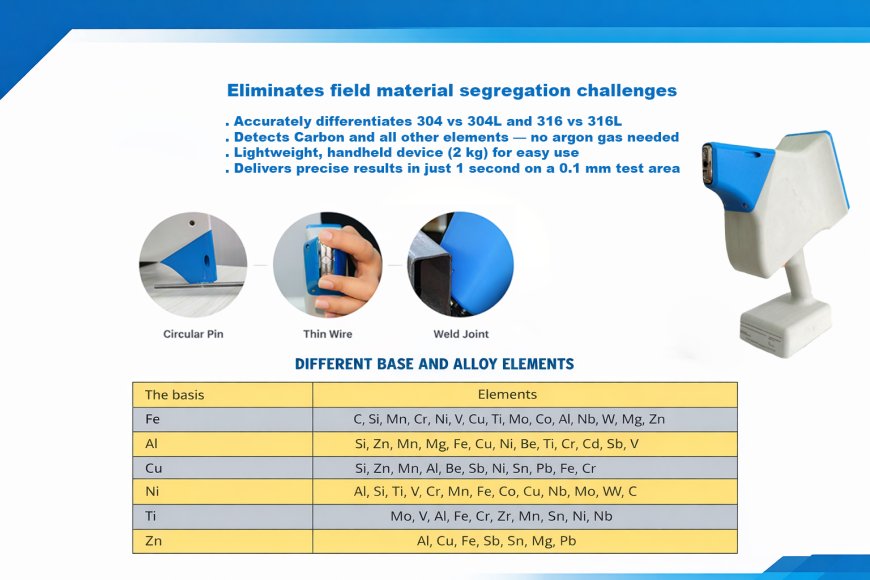
The Portable Laser Spectrometer LIS-02 is a compact and high-precision solution designed for fast and accurate elemental analysis of metals. Engineered for on-site testing, it enables instant material identification without damaging the sample, making it ideal for quality control, inspection, and metal verification applications.

Portable LIBS Spectrometer in Scrap Sorting: A Practical Look
A Portable LIBS Spectrometer solves a problem that scrap yards face daily. Mixed metal streams arrive constantly, and sorting them correctly affects both pricing and downstream processing. This article looks at how that sorting process actually changes once a facility adopts one, based on a metal recycling yard's documented experience.
Why Scrap Sorting Is Harder Than It Looks
Visually, two pieces of scrap metal can look nearly identical. However, their actual composition can differ significantly. A misclassified batch affects pricing accuracy, melt chemistry planning, and sometimes the quality of the final product made from that scrap.
Traditional sorting relies heavily on visual inspection, magnet tests, and operator experience. These methods work reasonably well for obvious cases. Still, they struggle with closely related alloys, particularly where carbon content or specific alloying elements determine the true grade.
Case Study: A Mid-Sized Recycling Yard's Sorting Overhaul
A mid-sized metal recycling facility previously sorted incoming scrap primarily by visual inspection and spark testing. Consequently, pricing decisions relied heavily on operator judgment, which varied from person to person.
After introducing a Portable LIBS Spectrometer LIS-02, the yard began testing a representative sample from each incoming load. Within the first quarter, the sorting team identified several loads containing higher-value alloy grades that had previously been priced and processed as standard scrap.
Additionally, the facility reduced disputes with suppliers over pricing accuracy. Because readings were logged and could be shown directly to a supplier, pricing conversations became more objective, rather than relying on a verbal assessment alone.
"We used to price scrap mostly by eye and experience. Now we have an actual number backing up every decision, and it changed how suppliers view us." — Operations Lead, metal recycling facility
What Changed in Daily Sorting Operations
Several practical shifts emerged after the yard integrated portable LIBS testing into its sorting workflow.
- Higher-value grades got identified correctly. Previously misclassified alloys started getting sorted and priced accurately.
- Sorting speed stayed high. Testing added roughly a second per check, which did not meaningfully slow down the sorting line.
- Supplier disputes decreased. Objective readings reduced disagreements over scrap grade and pricing.
- Melt planning improved. More accurate composition data helped the yard's downstream processing partners plan melt chemistry more precisely.
Before and After: Sorting Accuracy Comparison
The table below summarizes commonly reported changes after adopting portable LIBS-based sorting, based on facility feedback.
| Factor | Visual/Spark Sorting Only | With Portable LIBS Testing |
|---|---|---|
| Grade misclassification | Occurs regularly, hard to quantify | Reduced, backed by actual readings |
| Pricing disputes | Common, based on subjective assessment | Fewer, supported by logged data |
| High-value grade recovery | Some alloys missed or underpriced | Correctly identified and priced |
| Sorting speed | Fast, but less precise | Nearly as fast, more accurate |
| Documentation | Minimal | Logged readings per batch |
As the table shows, sorting speed barely changes. Accuracy, however, improves considerably.
Why Carbon and Alloy Accuracy Matters Here
Scrap sorting often hinges on distinguishing closely related alloys, where carbon content plays a deciding role. Since the LIS-02 measures carbon directly, without requiring argon gas, it identifies these distinctions more reliably than sorting methods relying on visual judgment alone.
This matters financially as well as operationally. Correctly identified high-value scrap commands better pricing, while correctly sorted low-grade material avoids contaminating higher-value batches during processing.
Honest Limitations Worth Noting
Portable LIBS testing does not eliminate the need for experienced sorting staff. Instead, it supports their judgment with objective data. Additionally, testing every single piece in a high-volume yard isn't always practical. Most facilities test a representative sample per batch rather than every item individually.
Consequently, the technology works best as a support tool layered onto existing sorting expertise, not a full replacement for trained personnel.
Frequently Asked Questions
1. How does a Portable LIBS Spectrometer improve scrap sorting accuracy? It provides direct composition readings, including carbon content, which helps correctly identify alloys that visual or spark testing alone might misclassify.
2. Does testing slow down a busy scrap sorting line? Testing adds roughly a second per check, which typically does not meaningfully affect overall sorting speed.
3. Can this technology replace experienced sorting staff? No. It supports staff judgment with objective data rather than replacing the expertise sorting personnel bring to the process.
4. Does accurate sorting affect scrap pricing? Yes. Correctly identified high-value alloys typically receive more accurate pricing than when sorted by visual assessment alone.
5. Do facilities test every piece of scrap individually? Most facilities test a representative sample per batch rather than every individual piece, balancing accuracy with practical sorting speed.
Final Thought
A Portable LIBS Spectrometer changes scrap sorting from a largely subjective process into one backed by actual data. This recycling yard's experience shows a clear pattern: better grade identification, fewer pricing disputes, and stronger supplier relationships, all without meaningfully slowing down daily operations.
Facilities interested in improving their sorting accuracy can reach NPPSD at sales@nppsd.co.in or (+91) 9289924641 for a demo suited to their scrap processing workflow.
What's Your Reaction?