































Why Bolt Quality Matters More Than Size in Industrial Assembly
Bigger isn't always better. Learn why bolt grade and testing matter more than size — from ISO-certified bolt manufacturers since 1985. Get a quote today.

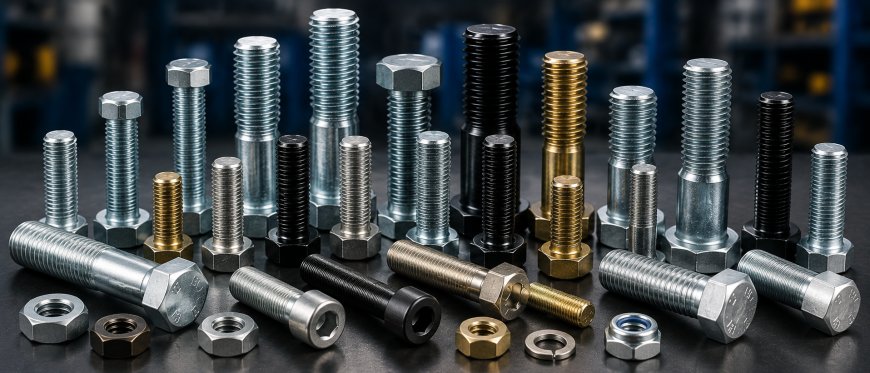
You upsize the diameter because the last one snapped, and somehow that feels like the responsible fix. It isn't. A bolt one size larger with the wrong grade or a bad heat treatment will still fail — it'll just take longer to do it, and cost you more per piece while it lasts. Kiran Industries has been a bolt manufacturer since 1985, and this is the single most common mistake we watch procurement teams make: reaching for size when the actual problem was grade, coating, or a batch that never got tested properly.
Assembly engineers know this. Purchasing departments, more often than not, don't. Somewhere between the engineering drawing and the purchase order, "M10 Grade 8.8" quietly becomes "M12, whatever's cheapest," and nobody flags it until something shears under load.
What Actually Determines Whether a Bolt Holds
Here's the part most spec sheets bury: diameter resists shear, but grade determines how much tensile and yield stress the fastener survives before it deforms permanently. A bolt manufacturers in India comparison sheet will show you dozens of size options and maybe a footnote on grade. That footnote is the section worth reading twice.
Diameter vs. Grade — Two Different Jobs
A larger diameter spreads load across more surface area. A higher grade changes the metallurgy itself. Confusing the two is how buyers end up over-engineering the wrong variable.
Surface Treatment and Fit
Coating thickness changes thread fit by fractions of a millimetre. On a tight-tolerance assembly, that's the difference between a bolt that torques correctly and one that galls halfway through installation.
The Detail Buyers Skip
Nobody asks about batch-to-batch hardness variance. We test it anyway, because a supplier who doesn't is gambling with your assembly line, not theirs.
The Risk You're Actually Managing When You Buy on Grade, Not Size
-
Fewer catastrophic failures. Grade-appropriate fasteners fail predictably under overload, not suddenly.
-
Lower total cost per assembly. Right-sized, right-graded bolts often cost less than oversized ones bought as insurance.
-
Protected margins for bolts wholesalers. Fewer field complaints means fewer credit notes eating into quarterly numbers.
-
Cleaner audits. Buyers working with certified bolt dealers don't scramble for documentation when a client asks mid-year.
-
Faster line assembly. Consistent coating and thread tolerance means fewer rejected pieces at the assembly station itself.
-
Real supplier accountability. A supplier who stakes their claims on grade data, not adjectives, is one you can actually hold to a number.
Manufacturing From Shapar: What Our Location Actually Buys You
Our unit sits in Shapar, Rajkot — inside a forging and fastener belt dense enough that raw steel, heat treatment, and coating vendors are all a short drive away, not a multi-state logistics chain. That matters for bolts wholesalers in India who need consistent restocking, not a six-week wait every time demand spikes. Being close to Mundra port also means export shipments move faster than they would from manufacturers set up further inland, which shows up directly in your delivery dates.
Since 1985, and Still Testing Every Batch Ourselves
We didn't start big. Our first decade was a single forging line and a handful of regional clients who cared more about delivery dates than certificates. That changed once export orders started coming in and buyers wanted documentation we hadn't needed before, so we built a QC process around it instead of outsourcing the problem. We stopped sourcing from one alloy supplier in 2020 after a batch came back with inconsistent Rockwell readings, and we didn't wait for a client complaint to make that call. That's the kind of decision you only make when the batch is actually yours to stand behind.
Tell Us the Grade, We'll Tell You the Price — Same Day
Send your drawing, grade requirement, and coating spec to our team, and you'll have pricing within 24 working hours, not a "we'll get back to you" holding pattern. MOQ starts at 500 pieces per SKU for standard grades; custom grades are quoted case by case once we've confirmed tooling availability. If you're switching from another bolt manufacturer, tell us why — it usually points us straight to the spec that needs attention.
Size Solves Less Than You Think
A bolt that's one size bigger but graded wrong will still let you down, just later and more expensively. Grade, coating, and testing decide whether a bolt holds — size is the variable buyers reach for because it's the easiest one to see on a spec sheet. Get the grade right first, and the size conversation becomes much simpler.
Bolt Quality FAQs
1. Does a larger bolt diameter always mean a stronger assembly?
No. Diameter increases shear resistance, but grade determines tensile strength. A larger, low-grade bolt can still underperform a smaller, correctly graded one.
2. How do I know if a bolt dealer is reselling untested stock?
Ask for batch-specific test certificates, not a generic ISO logo. If they can only provide documentation "on request after dispatch," that's worth pausing on.
3. What's the standard lead time for bulk orders from bolt manufacturers in India?
Standard grades typically ship within 10-15 working days depending on quantity; custom grades take longer due to tooling and heat treatment scheduling.
4. Do bolts wholesalers get different pricing tiers?
Yes, pricing scales with order volume and repeat frequency. We're upfront that first-order pricing is rarely our best price — that comes with a track record.
5. Can bolt suppliers guarantee zero defects in a shipment?
No honest one will. What we guarantee is a documented rejection process and replacement terms, which matters more than an unrealistic zero-defect claim.
6. What information should I send to get an accurate quote?
Grade, diameter, thread pitch, coating requirement, and quantity. Missing even one of these adds a day to turnaround while we follow up.
7. Are ISO-certified bolt dealers automatically more reliable?
Certification confirms process consistency, not perfection. It's a useful filter, not a guarantee — pair it with batch testing records before placing a large order.
What's Your Reaction?