





























Before the Rush Hits: A Simple Checklist for Your Storage and Delivery Plan
Plan storage and delivery before the rush. See how warehousing and distribution services help with peak season, with a simple checklist.

Hannah sells wooden toys. Every year, her orders jump in November. Last year, her shelves held the wrong items, a pallet arrived late, and a big retailer's delivery window passed before her order shipped.
This year, Hannah wants a plan. The good news is that most rush-season problems can be fixed early. This guide gives a simple checklist for storage and delivery, written for brands that expect a busy season.
Why does peak season cause so many problems?
A rush puts pressure on every step at once. Small gaps that go unnoticed in a quiet month turn into big delays.
Common trouble spots include:
- Not enough space for extra stock
- Too few trained workers on the floor
- Carriers that sell out of trucks and slots
- Inventory counts that do not match what is on the shelf
- Retailer rules that get missed in the hurry
How do warehousing and distribution services help in a rush?
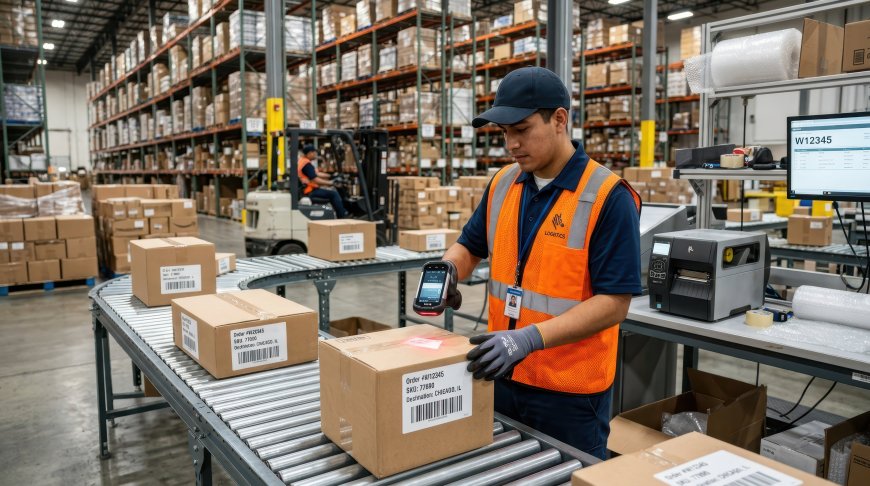
Warehousing and distribution services cover storing your products, picking and packing orders, and getting them onto trucks. In a rush, a good partner adds room, people, and process so orders keep moving.
A strong partner can:
- Hold extra stock in large, organized space
- Add trained staff when volume climbs
- Book carriers and plan pickups ahead of time
- Follow each retailer's delivery and labeling rules
- Share live inventory and order status
Bee Imagine runs more than 500,000 square feet of space across Southern California, which gives growing brands room to expand.
What should you do 60 to 90 days before?
Start early. Here is a simple order of work:
- Forecast. Estimate how many orders you expect, and plan for a range, not one number.
- Send stock early. Move products into the warehouse before the rush so they are counted and shelved.
- Share your sales calendar. Tell the warehouse about promotions, launches, and big retailer orders.
- Confirm retailer rules. Check labels, pallet sizes, and delivery windows for each store.
- Plan packaging. Order boxes, inserts, and gift items before supplies run short. Ask about value added services such as kitting and labeling.
- Prepare for returns. Decide how returned items will be checked and restocked.
Early planning or last-minute fixes: how do they compare?
|
|
Plan early |
Fix at the last minute |
|---|---|---|
|
Stock |
Counted and shelved ahead of time |
Arrives during the rush |
|
Staffing |
Extra workers trained in advance |
Rushed hiring, more errors |
|
Carriers |
Pickups booked early |
Few slots, higher cost |
|
Retailer rules |
Reviewed and built into the process |
Missed, with possible chargebacks |
|
Stress level |
Lower |
High |
How does software help?
A warehouse management system (WMS) is software that tracks every item in the building. It shows what you have, where it sits, and when it ships.
Live data helps you spot low stock early and reorder in time. Bee Imagine offers standard and custom WMS and integrations, so your sales channels and the warehouse stay in sync.
What should you ask your warehouse partner?
Before the rush, ask these questions:
- How much extra space can you offer if my volume doubles?
- How do you add staff during busy weeks?
- Can you follow my retailers' routing guides? Bee Imagine builds routing guides into its process to help clients avoid chargebacks.
- Do you handle both online and store orders? See 3PL fulfilment services California for both order types.
- If I import my products, can they wait in a foreign trade zone warehouse until I need them?
You can also read about the fulfillment services that sit next to storage.
FAQ
When should I send stock to the warehouse? Before the busy season starts. Early arrival gives the team time to count and shelve it.
What if my forecast is wrong? A flexible partner can add or reduce capacity. Ask how quickly that can happen.
Can the warehouse ship to both stores and customers? Yes, many partners handle both and use a different process for each.
How do I know my inventory is accurate? Ask about regular counts and live reporting in the system.
Planning for a busy season? Share your products, expected volume, and key dates to get a plan that fits. Contact Bee Imagine
What's Your Reaction?