






























How to Choose the Right Magnifying Lamp for Precision Electronics Work
A well-selected Magnifying Lamp is a valuable addition to electronics manufacturing, PCB inspection, repair laboratories, and precision assembly workstations.

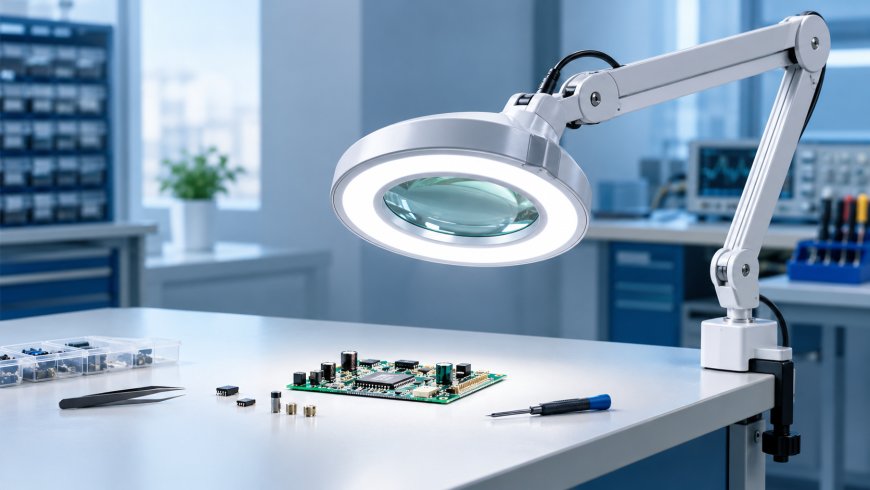
In electronics manufacturing, small details can determine whether a product passes inspection or returns for rework. Solder joints, fine-pitch components, PCB tracks, connectors, and miniature parts often require close visual examination. When ordinary workstation lighting is insufficient, a Magnifying Lamp provides a practical combination of magnification and focused illumination.
For electronics manufacturers, PCB assembly companies, repair technicians, and quality inspection teams, choosing the right lamp can improve visibility and make detailed work more manageable. However, not every magnifying lamp is suitable for every application. Lens quality, magnification level, lighting performance, arm adjustment, and mounting options all influence its usefulness.
This guide explains how to select a magnifying lamp for professional workstations and what buyers should consider when evaluating suppliers in India.
Why Is a Magnifying Lamp Important in Electronics Manufacturing?
Electronics production involves inspection tasks that require operators to identify details that may be difficult to see with the naked eye. A magnifying lamp enlarges the working area while illuminating the component or surface under examination.
This combination is particularly useful during PCB inspection, soldering, component placement, and repair operations.
A suitable lamp can help technicians:
-
Examine solder joints for visible defects, bridging, or incomplete connections.
-
Inspect fine-pitch electronic components and PCB tracks.
-
Identify surface contamination, scratches, and assembly irregularities.
-
Position small components more accurately during manual assembly.
-
Perform detailed repair and rework with improved visibility.
-
Maintain a more comfortable viewing position during repetitive inspection tasks.
That’s where the right workstation equipment makes a difference. Better visibility supports more consistent visual inspection, although magnification alone cannot replace electrical testing, automated optical inspection, or other required quality-control procedures.
Key Features to Check Before Buying a Magnifying Lamp
Before comparing models, identify the inspection tasks the lamp must support. A lamp used for routine component checking may have different requirements from one used for fine-pitch PCB rework.
1. Lens Quality and Magnification
Lens clarity is one of the most important purchasing considerations. A lens with excessive distortion, poor edge clarity, or an unsuitable viewing area can make detailed inspection uncomfortable.
Choose magnification according to the size of the components and the level of detail required. Higher magnification is not automatically better because it can reduce the visible working area and make positioning more demanding.
For general electronics inspection, select a lens that provides a practical balance between image clarity, working distance, and field of view.
2. Lighting Quality
Magnification becomes less useful when the working area is poorly illuminated. Integrated LED lighting can provide focused illumination without requiring a separate desk lamp.
Evaluate the brightness, uniformity, glare, and colour rendering of the light. Good illumination should help technicians distinguish surface features and solder-joint details without creating distracting reflections.
LED models are often preferred for their energy efficiency and long service life, but actual performance depends on the design and quality of the lighting system.
3. Adjustable Arm and Stable Mounting
A flexible arm allows operators to position the lens over different parts of a PCB or workpiece. The lamp should remain stable after adjustment rather than drifting away from the inspection area.
Clamp-mounted models are useful where desk space is limited, while desk-base and floor-standing designs can suit different workstation layouts.
Check the available adjustment range, mounting compatibility, joint strength, and ease of repositioning before purchasing.
4. Build Quality and Maintenance
Industrial workstations need equipment that can withstand regular adjustment and daily use. Inspect the housing, joints, lens protection, mounting hardware, and electrical components.
Also consider whether the lamp can be cleaned easily and whether replacement parts or service assistance are available. These practical details matter when purchasing multiple units for a production facility.
Applications of Magnifying Lamps Across Industries
A professional magnifying lamp can support several inspection and precision-work environments.
PCB assembly and electronics manufacturing: Technicians can use magnification to examine solder connections, component alignment, and visible assembly defects.
Electronics repair and rework: Repair professionals benefit from improved visibility when working with miniature components, connectors, and densely populated circuit boards.
Quality assurance laboratories: Inspection personnel can examine small product features and surface irregularities during manual checks.
Medical device assembly: Certain precision assembly tasks require close visual observation of small parts and connections.
Jewellery and precision engineering: Magnification and focused lighting support detailed finishing, surface inspection, and fine manual operations.
The ideal lamp depends on the specific task, viewing distance, and inspection criteria. Buyers should assess the actual application rather than choosing equipment solely by its advertised magnification.
How to Select the Right Magnifying Lamp for Your Workplace
When comparing models, use a straightforward purchasing checklist.
First, determine the smallest feature operators need to inspect. This helps establish the appropriate magnification level and lens size.
Second, evaluate the lighting conditions at the workstation. Reflective solder joints, metallic components, and glossy surfaces may require careful positioning to minimise glare.
Third, confirm that the lamp can be mounted securely without interfering with tools, fixtures, or production equipment.
Fourth, consider operator comfort. Lens height, arm movement, viewing distance, and workstation layout all influence usability during extended inspection sessions.
Finally, review the supplier's product specifications, warranty terms, availability, and technical assistance. For production facilities purchasing several units, consistency across workstations is also worth considering.
A low purchase price may look attractive, but it should not be the only deciding factor. A lamp that is difficult to adjust or provides an uncomfortable viewing experience can become a poor investment over time.
Choosing Reliable Magnifying Lamp Manufacturers in India
Finding dependable Magnifying Lamp Manufacturers involves more than comparing product photographs and quoted prices. Industrial buyers should examine the product range, technical information, application suitability, and support available after purchase.
When evaluating Magnifying Lamp Manufacturers in India, consider these factors:
-
Product suitability: Confirm that the magnification, lens dimensions, lighting, and mounting arrangement match your application.
-
Technical information: Request accurate specifications instead of relying on broad claims about performance.
-
Build quality: Review the lens, arm mechanism, housing, and mounting system.
-
Procurement support: Check whether the supplier can accommodate your required quantities and delivery schedule.
-
After-sales assistance: Clarify warranty coverage, maintenance guidance, and replacement-part availability.
Reliable Spares & Consumables supports industrial and electronics manufacturing requirements with a range of workstation tools and consumables. Buyers can explore the available Magnifying Lamp range to identify a suitable solution for inspection, repair, and precision work.
For related workstation requirements, explore our Soldering Station solutions and BGA Rework Station range. These tools serve different functions but can complement magnified visual inspection in electronics repair and rework environments.
Common Mistakes to Avoid When Buying a Magnifying Lamp
One common mistake is selecting a lamp based only on maximum magnification. Stronger magnification may be useful for certain tasks, but it can restrict the viewing area and working distance.
Another mistake is ignoring lighting uniformity. Brightness without proper positioning or glare control does not necessarily improve inspection quality.
Buyers should also avoid overlooking mounting requirements. A lamp that cannot be positioned securely may interrupt the workflow or require frequent readjustment.
Finally, do not assume that every supplier offers identical specifications, quality, or service. Verify the model details and confirm important requirements before placing an order.
Conclusion
A well-selected Magnifying Lamp is a valuable addition to electronics manufacturing, PCB inspection, repair laboratories, and precision assembly workstations. The right combination of lens clarity, magnification, illumination, adjustability, and stable mounting helps operators examine small components more effectively.
Businesses evaluating Magnifying Lamp Manufacturers should focus on application requirements, technical specifications, product durability, and supplier support rather than price alone. Working with suitable Magnifying Lamp Manufacturers in India or industrial suppliers can also simplify procurement and ongoing support.
Reliable Spares & Consumables provides industrial electronics tools and workstation solutions for professional applications. Visit the Magnifying Lamp product page to explore the available range and enquire about your requirements.
What's Your Reaction?