
































Industrial Storage and Handling Products Improve Workplace Efficiency
Improve workplace efficiency with custom steel trolleys and steel boxes. Learn how material selection, structural design, and maintenance boost durability.

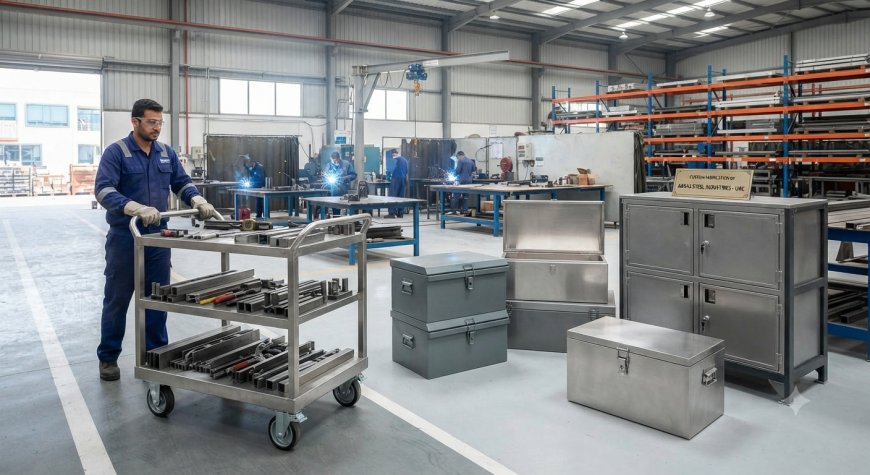
Factories, warehouses, workshops, and commercial facilities depend on equipment that keeps daily operations organised. Workers regularly move tools, components, raw materials, and finished goods between storage areas and workstations. Without suitable handling equipment, these routine tasks can consume valuable time and create unnecessary workplace difficulties.
Metal storage products offer practical solutions for these requirements. Their strength, adaptability, and repair potential make them useful across different operating environments. However, choosing the right design requires more than considering dimensions or appearance. Businesses must evaluate load requirements, material properties, mobility, accessibility, and maintenance before investing in fabricated equipment.
Material Selection Determines Product Service Life
The material used in a storage or handling product affects its performance throughout its working life. Steel offers strength and structural stability, making it suitable for equipment that handles regular loads. Stainless steel provides additional corrosion resistance for applications where moisture and frequent cleaning present concerns.
Manufacturers should consider the intended environment before selecting a material. A workshop storage unit may require different properties from equipment used in food preparation or outdoor facilities.
Important selection factors include:
● Load capacity: Match the material and structure with expected operating loads.
● Corrosion resistance: Consider moisture, chemicals, and environmental exposure.
● Surface finish: Choose suitable finishes for cleaning and appearance.
● Maintenance: Evaluate inspection, repair, and replacement requirements.
Mobile Equipment Supports Better Material Handling
Moving materials between departments can interrupt production when workers lack appropriate equipment. Mobile handling units help organise these movements and reduce the need to carry heavy items manually.
Well-designed steel trolleys serve applications across warehouses, factories, hospitals, workshops, and commercial kitchens. Their configurations can accommodate different handling requirements, depending on the intended load and operating environment.
Common design considerations include:
● Wheel selection and floor compatibility.
● Handle height and operator comfort.
● Platform dimensions and load distribution.
● Brakes and movement control where required.
Storage Enclosures Protect Valuable Equipment
Industrial facilities often store tools, spare parts, electrical components, and maintenance supplies that require organised protection. Open shelving may work for frequently accessed materials, but enclosed storage provides additional protection against dust, accidental contact, and unauthorised access.
Custom steel boxes can accommodate different storage requirements. Manufacturers can adjust their dimensions, compartments, openings, and locking arrangements to suit the intended application. Electrical and utility enclosures may also require appropriate ventilation, environmental protection, and access provisions based on their equipment specifications.
Custom Fabrication Addresses Different Requirements
Standard storage products do not always match the available workspace or operational needs. Some facilities require compact units for restricted areas, while others need larger enclosures for specialised equipment. Custom fabrication allows manufacturers to adapt designs to these conditions.
Abbas Steel Industries offers customised metal fabrication alongside products such as trolleys, storage boxes, cabinets, and other fabricated items. Its manufacturing background spans commercial, industrial, and architectural applications across the UAE and GCC.
Structural Design Influences Load Distribution
A storage or handling product must distribute weight without creating unnecessary stress on individual components. Frame dimensions, material thickness, support arrangements, and joint quality all influence structural performance.
Designers should examine several elements before approving production:
● Frame construction: Provides the main structural support.
● Welded connections: Join components and transfer applied loads.
● Base reinforcement: Helps distribute weight across the structure.
● Edge finishing: Reduces sharp edges and improves handling safety.
Manufacturers must establish appropriate specifications rather than assume that a heavier-looking design automatically offers greater capacity.
Workplace Organisation Improves Operational Flow
Disorganised storage can slow down employees and complicate inventory management. Workers may spend unnecessary time locating tools or moving materials around poorly planned workspaces. Suitable storage equipment helps establish designated locations for frequently used items.
Facilities can improve organisation by separating materials according to their purpose, usage frequency, and handling requirements. Mobile units can support internal movement, while fixed enclosures provide dedicated storage locations.
Stainless Steel Suits Hygiene-Focused Environments
Certain workplaces require equipment that employees can clean regularly without damaging the material. Commercial kitchens, food preparation areas, healthcare facilities, and laboratories often consider stainless steel for this reason.
Its corrosion resistance and cleanable surface make it useful for suitable applications. However, manufacturers must select the correct grade and finish according to exposure conditions and cleaning procedures. Proper fabrication also helps prevent surface defects and difficult-to-clean joints.
Mobility Features Affect Everyday Equipment Use
The mobility of a trolley depends on more than its wheels. Its overall dimensions, centre of gravity, handle placement, and intended load influence how easily workers can move it through a facility.
A practical design should account for:
● Available aisle width and turning space.
● Floor condition and surface transitions.
● Wheel material and bearing requirements.
● Load positioning and movement stability.
These details help businesses select equipment that fits their actual working environment.
Safety Considerations Guide Product Design Decisions
Storage and handling equipment must suit the tasks employees perform. Poorly distributed loads, unstable frames, sharp edges, and unsuitable wheels can create avoidable workplace hazards.
Businesses should establish clear equipment requirements before ordering customised products. They should also consider safe working loads, inspection procedures, operating instructions, and relevant workplace safety requirements.
Maintenance Practices Preserve Equipment Condition
Regular maintenance helps identify problems before they affect daily operations. Even well-fabricated products experience wear through repeated movement, loading, cleaning, and environmental exposure.
A practical maintenance routine should include:
● Checking wheels, brakes, and moving components.
● Inspecting welded joints and structural connections.
● Removing dirt and cleaning exposed surfaces.
● Identifying corrosion, deformation, or damaged finishes.
Prompt repairs can extend service life and reduce the need for premature replacement.
Supplier Evaluation Requires Technical Understanding
Choosing a fabrication supplier involves examining more than the initial quotation. Businesses should understand the manufacturer's material knowledge, production capabilities, customisation options, and quality inspection procedures.
Useful questions include:
● Can the manufacturer follow detailed drawings?
● Does the workshop handle the required materials?
● Can it accommodate specific dimensions and configurations?
● Does it provide relevant inspection documentation?
● Can it support future modifications or replacement requirements?
Clear specifications also help suppliers prepare accurate quotations and realistic production schedules.
Custom Metal Products Support Growing Facilities
As industrial and commercial operations expand, their storage and material-handling requirements often change. Additional workstations, new equipment, and increased inventory can create demand for different product dimensions and configurations.
Well-planned metal fabrication helps businesses address these changes without relying entirely on standard equipment. By evaluating material properties, structural requirements, workplace conditions, and maintenance needs, companies can select products that support practical daily operations.
The most effective solution is not necessarily the largest or most elaborate design. It is the one that performs its intended task safely, fits the available space, and meets the facility's actual operating requirements.
What's Your Reaction?