
































Customer Satisfaction Survey: Measuring Customer Expectations and Improving Business Performance
Discover how Customer Satisfaction Survey research helps businesses measure customer experiences, understand feedback, and identify service improvement opportunities.
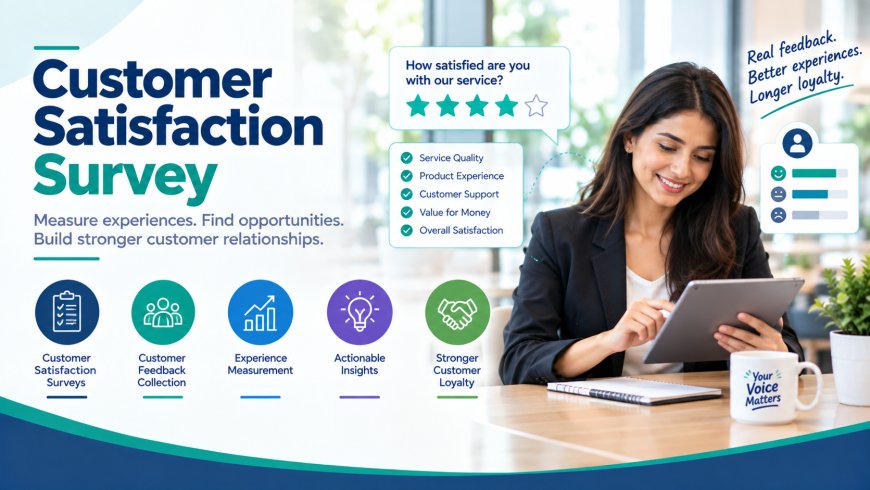
Customer satisfaction is an important indicator of how well a business meets the needs and expectations of its customers. Every interaction, from product selection and purchase to customer support and after-sales service, can influence how customers perceive a brand. When these experiences meet expectations, customers may be more likely to continue their relationship with the business. When they fall short, dissatisfaction can affect repeat purchases and brand reputation.
A Customer Satisfaction Survey helps organizations understand how customers evaluate their products, services, and overall experiences. By collecting structured feedback directly from customers, businesses can identify areas of satisfaction, recognize service gaps, and understand what needs improvement.
Customer satisfaction research provides more than a measure of whether customers are happy or unhappy. It helps businesses understand the reasons behind customer opinions and use those findings to improve products, service delivery, and customer relationships.
1. What Is a Customer Satisfaction Survey?
A Customer Satisfaction Survey is a structured research method used to collect feedback from customers about their experiences with a company, product, or service.
The survey includes questions designed to understand how customers evaluate different aspects of their experience. These may include product quality, service responsiveness, ease of purchase, value for money, communication, and issue resolution.
The purpose is to measure customer perceptions and identify factors that influence satisfaction.
A typical survey may explore:
-
Overall satisfaction with a product or service.
-
Satisfaction with specific customer interactions.
-
Product quality and performance.
-
Ease of purchasing or using a service.
-
Customer support and complaint handling.
-
Perceived value for money.
-
Expectations compared with actual experiences.
-
Likelihood of continuing to use the product or service.
The survey structure depends on the business objective and the customer experience being evaluated.
2. Why Customer Satisfaction Survey Services Matter
Customer Satisfaction Survey Services help businesses collect feedback systematically rather than relying only on occasional complaints, informal conversations, or assumptions about customer preferences.
Understanding Customer Expectations
Customers may have different expectations depending on the product category, price, service experience, and previous interactions with a brand. Research helps organizations understand what customers consider important and whether those expectations are being met.
Identifying Areas of Dissatisfaction
Customers may experience difficulties that are not immediately visible through internal performance reports. Surveys can reveal concerns related to product usability, delivery, communication, or customer support.
Evaluating Service Performance
Businesses can assess how customers perceive different aspects of service delivery. This helps identify which interactions are working well and where improvements may be needed.
Supporting Customer Retention
Dissatisfaction can influence whether customers continue purchasing from a business. Understanding customer concerns provides an opportunity to address problems that may affect future relationships.
Improving Business Decisions
Customer feedback can help organizations prioritize improvements based on actual customer experiences rather than internal assumptions.
3. Key Areas Covered by Customer Satisfaction Research
Customer Satisfaction Research examines how customers evaluate their experiences and what influences their overall perceptions of a business.
Product or Service Quality
Customers may evaluate whether a product performs as expected, meets their requirements, and provides a satisfactory experience.
Research can identify concerns related to reliability, usability, functionality, or service consistency.
Customer Service Experience
Customer interactions can have a significant influence on satisfaction. Surveys may examine staff responsiveness, communication, professionalism, and the effectiveness of assistance.
Purchase and Service Convenience
Customers often value experiences that are simple and convenient. Research can explore how easy it is to find information, complete a purchase, access a service, or resolve an issue.
Pricing and Perceived Value
Customer satisfaction is not determined by price alone. Customers may consider whether the benefits, quality, and experience justify the amount they pay.
Delivery and Fulfilment
For businesses that deliver products or services, customers may evaluate delivery timelines, order accuracy, communication, and the condition of received products.
Complaint Handling and Resolution
When customers encounter problems, the way a business responds can influence their overall experience. Surveys can explore whether complaints are handled efficiently and whether customers feel their concerns have been addressed.
4. How Customer Feedback Survey Results Help Businesses
A Customer Feedback Survey provides a structured way to collect opinions from customers after specific interactions or experiences.
The information gathered can help organizations understand recurring concerns, evaluate customer expectations, and identify opportunities for improvement.
Recognizing Common Customer Concerns
- When similar concerns appear across multiple responses, businesses can investigate whether the issue is related to a particular product, service process, or customer touchpoint.
Understanding Positive Experiences
- Feedback can also reveal what customers appreciate most. This may include product performance, helpful employees, convenient processes, or reliable service.
- Understanding these strengths helps businesses recognize which aspects of the customer experience should be maintained.
Identifying Differences Across Customer Groups
- Customer experiences may vary depending on product usage, purchase frequency, customer type, or service channel.
- Survey results can help organizations understand these differences and determine whether certain groups require specific improvements.
Supporting Service Improvement Priorities
- Feedback can help businesses distinguish between issues that affect many customers and concerns that are more limited in scope.
- This supports better prioritization of service improvements.
5. How a Customer Satisfaction Survey Is Designed and Conducted
A well-designed survey should collect relevant information without making the questionnaire unnecessarily complicated for respondents.
Step 1: Define the Research Objective
The first step is to identify what the business wants to understand.
The objective may involve measuring satisfaction after a purchase, evaluating customer support, understanding product performance, or investigating a decline in customer retention.
Clear objectives help determine which questions should be included.
Step 2: Identify the Target Respondents
Businesses need to define which customers should participate in the survey.
Respondent criteria may include recent purchasers, existing customers, service users, or customers who have interacted with a particular business function.
Step 3: Develop the Questionnaire
Questions are developed according to the research objectives.
A questionnaire may include rating questions, multiple-choice questions, and open-ended questions that allow customers to explain their experiences.
Questions should be clear, neutral, and relevant to the customer interaction being evaluated.
Step 4: Select the Data Collection Approach
The survey approach depends on the target audience and the nature of the customer experience.
Surveys may be conducted through online questionnaires, telephone interviews, or other suitable data collection methods.
Step 5: Collect Customer Feedback
The survey is administered to the selected respondents. Clear instructions and an appropriate questionnaire structure help encourage meaningful participation.
Step 6: Review Data Quality
Collected responses are reviewed for completeness and consistency. Quality checks help identify incomplete information or responses that do not meet the study requirements.
Step 7: Organize and Interpret Findings
The results are organized according to the research objectives. Businesses can examine satisfaction levels, recurring concerns, and differences across relevant customer groups.
Looking for tailored Customer Satisfaction Survey Services? Contact IMARC Pulse: https://www.imarcpulse.com/contact-us
6. Customer Satisfaction Measurement: Choosing the Right Metrics
Customer Satisfaction Measurement involves selecting appropriate indicators to understand how customers evaluate their experiences.
The right metrics depend on the business objective and the type of customer relationship being examined.
Overall Customer Satisfaction
- This metric captures customers' general evaluation of a product, service, or business experience.
- It provides a broad indication of how customers perceive the overall offering.
Satisfaction With Specific Touchpoints
- Businesses may measure satisfaction with individual interactions, such as product delivery, customer support, onboarding, or complaint resolution.
- This helps identify which parts of the customer journey are performing well and which may require attention.
Customer Effort
- Customer effort measures how easy or difficult customers find it to complete a task or resolve an issue.
- It can help organizations understand whether processes create unnecessary friction.
Net Promoter Score
- Net Promoter Score (NPS) measures customers' willingness to recommend a company, product, or service to others.
- It is commonly used as an indicator of customer advocacy, alongside other satisfaction measures.
Customer Retention and Repeat Purchase
- Repeat purchase behaviour and customer retention provide additional context about customer relationships.
- Although these are behavioural indicators rather than direct satisfaction scores, they can be examined alongside survey feedback to understand customer outcomes.
7. Customer Satisfaction Survey vs. Customer Experience Survey
- Customer Satisfaction Survey and Customer Experience Survey are closely related, but they may serve different research purposes.
- A Customer Satisfaction Survey typically focuses on how customers evaluate a particular product, service, or interaction.
- A Customer Experience Survey may examine a broader journey involving multiple touchpoints, channels, and interactions with a business.
- For example, a satisfaction survey may ask customers to evaluate a recent support interaction. A customer experience survey may explore the complete process, including how customers identified a problem, contacted the company, received assistance, and resolved the issue.
- Both approaches can be used together to understand specific satisfaction levels and the broader customer journey.
8. The Role of Customer Loyalty Research
Customer Loyalty Research helps businesses understand the factors that influence customers to maintain or discontinue their relationships with a brand.
Customer satisfaction can contribute to loyalty, but satisfaction alone does not guarantee that customers will remain with a business.
Customers may continue purchasing because of convenience, product availability, brand familiarity, or limited alternatives. Similarly, satisfied customers may switch when they find a more suitable offering.
Customer Loyalty Research can investigate:
-
Reasons for repeat purchases.
-
Factors influencing brand preference.
-
Customer willingness to consider alternatives.
-
Experiences that encourage continued engagement.
-
Reasons behind customer switching.
-
Expectations that influence long-term relationships.
When satisfaction findings are examined alongside loyalty-related research, businesses can develop a more complete understanding of customer relationships.
9. Common Challenges in Customer Satisfaction Surveys
Customer satisfaction research requires careful planning to ensure that collected feedback is meaningful and reliable.
Low Survey Participation
Customers may ignore surveys that are too long or poorly timed. Keeping questionnaires focused and relevant can help improve participation.
Biased Question Wording
Questions that suggest a preferred answer may influence customer responses. Neutral wording helps capture more accurate opinions.
Measuring Only Overall Satisfaction
A single satisfaction score may not explain why customers feel satisfied or dissatisfied. Including questions about specific experiences can provide useful context.
Collecting Feedback Without Taking Action
Customer feedback becomes less valuable when businesses do not use it to improve their services. Findings should be connected with clear improvement priorities.
Inconsistent Survey Timing
Customer opinions may differ depending on when feedback is collected. Survey timing should reflect the experience being evaluated.
Maintaining Respondent Relevance
Feedback should come from customers who have actually experienced the product, service, or interaction under investigation.
10. Choosing the Right Customer Satisfaction Research Partner
A suitable research partner can help organizations design and conduct customer satisfaction studies according to their business requirements.
Businesses should consider the following factors when selecting a provider:
-
Research objective understanding: The provider should understand the customer experience being evaluated.
-
Questionnaire development: Questions should be relevant, clear, and aligned with the research objectives.
-
Respondent recruitment: Participants should match the intended customer profile.
-
Data collection quality: Fieldwork should follow defined research instructions.
-
Data quality checks: Responses should be reviewed for completeness and consistency.
-
Research flexibility: The approach should reflect the specific requirements of the study.
A reliable research partner should focus on collecting relevant customer feedback and maintaining the quality of the research process.
11. How IMARC Pulse Supports Customer Satisfaction Research
IMARC Pulse specializes in primary research and global fieldwork, helping organizations connect with the people who shape their markets. Its services include respondent recruitment, quantitative and qualitative fieldwork, data collection, and research quality services across industries and global markets.
For customer satisfaction studies, relevant respondent recruitment and structured data collection are important to obtaining meaningful feedback from customers.
IMARC Pulse combines rigorous fieldwork with verified data to provide reliable research inputs that support informed business decisions.
By aligning research activities with defined objectives and respondent requirements, IMARC Pulse supports organizations seeking to understand customer experiences, evaluate satisfaction, and identify areas for improvement.
12. Conclusion
Customer Satisfaction Survey research helps businesses understand how customers evaluate their products, services, and interactions. By collecting structured feedback, organizations can identify strengths, recognize dissatisfaction, and investigate the factors that influence customer relationships.
Customer satisfaction findings can support improvements across product quality, service delivery, customer support, and purchase convenience. When combined with customer experience and loyalty research, they provide a broader understanding of how customers interact with a business over time.
A well-designed Customer Satisfaction Survey provides a practical foundation for listening to customers, understanding their expectations, and making more informed decisions about improving the customer experience.
13. Frequently Asked Questions (FAQs)
1. What is a Customer Satisfaction Survey?
A Customer Satisfaction Survey is a research method used to collect feedback from customers about their experiences with a product, service, or business interaction.
2. What are Customer Satisfaction Survey Services used for?
These services help businesses measure satisfaction, understand customer expectations, identify service gaps, and evaluate how customers perceive their products and services.
3. What is the difference between a Customer Feedback Survey and a Customer Satisfaction Survey?
A Customer Feedback Survey collects customer opinions, suggestions, and experiences. A Customer Satisfaction Survey specifically focuses on evaluating how satisfied customers are with a product, service, or interaction.
4. How does Customer Satisfaction Measurement help businesses?
Customer Satisfaction Measurement helps organizations evaluate customer perceptions, identify areas requiring improvement, and monitor how customers respond to products and services.
5. Does customer satisfaction guarantee customer loyalty?
No. Satisfaction can contribute to loyalty, but customers may still switch brands because of price, convenience, availability, or competing offers. Customer Loyalty Research helps businesses understand these additional influences.
6. Which industries can benefit from Customer Satisfaction Survey research?
Retail, banking, healthcare, telecommunications, hospitality, consumer goods, technology, and other customer-facing industries can use satisfaction surveys to understand customer experiences and improve service delivery.
What's Your Reaction?