































India Fertility Services Market, Trends, Share, Size, Growth, Outlook, Report 2034
The India fertility services market grew from USD 1.69 Billion in 2025 to USD 1.95 Billion in 2026 and is projected to reach USD 4.91 Billion by 2034, growing at a CAGR of 12.20% during 2026-2034.
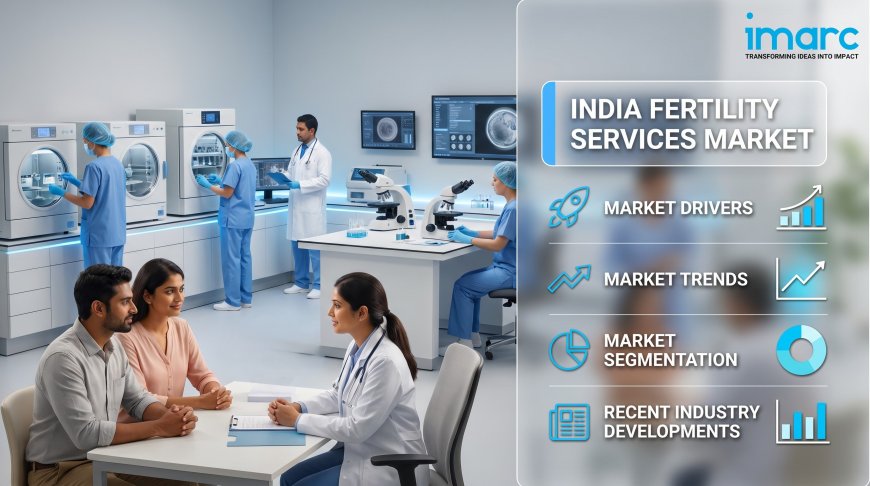
According to IMARC Group's report titled "India Fertility Services Market Size, Share, Trends and Forecast by Cause of Infertility, Procedure, Service, End-User, and Region, 2026-2034", The report offers a comprehensive analysis of the industry, including market forecast, growth, Trends, and regional insights.
India's reproductive healthcare sector is experiencing a structural transition, driven by delayed parenthood trends, rising infertility prevalence, and expanding clinical infrastructure. For corporate investors and healthcare strategists, formalizing the delivery of Assisted Reproductive Technology (ART) presents a highly resilient and volume-driven investment opportunity.
Market Insights
-
Market Size (2025): USD 1.69 Billion
-
Forecast (2034): USD 4.91 Billion
-
CAGR (2026–2034): 12.20%
-
Leading Segment: Female Infertility
Factors Driving Market Growth
-
Demographic Realities and Fertility Rate Stabilization: Data from the National Family Health Survey (NFHS-6) released by the Ministry of Health and Family Welfare (MoHFW) indicates that India's Total Fertility Rate (TFR) has stabilized at 2.0, below the replacement level of 2.1. Lifestyle shifts, delayed age of marriage, and rising rates of lifestyle-related reproductive disorders (e.g., Polycystic Ovary Syndrome and hormonal imbalances) continue to drive clinical demand for specialized fertility diagnostics and interventions.
-
Government-Backed Regulatory Certainty: The establishment of the National Board and State Boards for ART and Surrogacy under MoHFW provides legal clarity, clinical guidelines, and standard physical infrastructure norms. This regulatory transparency instills higher patient trust, driving increased institutional utilization of licensed IVF facilities.
-
Expansion of Diagnostic Infrastructure: Initiatives through the Department of Health Research (DHR) and the Indian Council of Medical Research (ICMR) to strengthen multidisciplinary research units (MRUs) and tertiary healthcare facilities have upgraded the clinical baseline. Modernized embryology labs, advanced cryopreservation equipment, and standardized genetic testing protocols are now widely integrated.
-
Medical Tourism via Regulated Channels: India remains a global destination for cost-effective, high-quality medical procedures. The formal regulatory setup under the ART Act provides international patients, non-resident Indians (NRIs), and Persons of Indian Origin (PIOs) with transparent, ethically governed reproductive technology options, maintaining steady inflows for specialized tertiary clinics.
Emerging Trends
-
Institutionalization and Centralized Registration: The operational landscape for fertility care in India has undergone a massive shift from fragmented, unorganized setups toward standardized, registered clinics. Following the operationalization of the Assisted Reproductive Technology (Regulation) Act, 2021, and the Surrogacy (Regulation) Act, 2021, all Assisted Reproductive Technology (ART) clinics and banks are required to register under the National ART and Surrogacy Registry maintained by the Department of Health Research (DHR).
-
Shift to Safe and Ethical Procedures: Driven by statutory mandates, clinics are pivoting away from multi-embryo transfer practices to mitigate high-risk multiple pregnancies. Standard Operating Procedures (SOPs) now emphasize single-embryo transfers, mandatory pre-implantation genetic testing (PGT) for specified conditions, and comprehensive health and insurance coverage for gamete donors.
-
Transition to Altruistic-Only Surrogacy Frameworks: Commercial surrogacy has been completely replaced by altruistic surrogacy frameworks managed strictly through State and National Boards. Intending parents must acquire official certificates of essentiality and eligibility issued by District Medical Boards, ensuring that medical indications are verified prior to procedure initiation.
-
Tier-2 and Tier-3 Geographical Penetration: Beyond major metropolitan hubs like Delhi, Mumbai, and Bengaluru, organized fertility chains and regional clinical setups are expanding into Tier-2 and Tier-3 cities. State-level health updates reflect increased availability of diagnostic setups and intrauterine insemination (IUI) or in-vitro fertilization (IVF) procedures in smaller urban centers.
➤ Unlock Industry Insights and Future Forecasts – Request Sample Report: https://www.imarcgroup.com/india-fertility-services-market/requestsample
India Fertility Services Market Segmentation:
IMARC Group provides an analysis of the key trends in each segment of the market, along with forecasts at the country level for 2026-2034. Our report has categorized the market based on cause of infertility, procedure, service, and end-user.
Cause of Infertility Insights:
-
Male Infertility (41.6% Market Share)
-
Female Infertility (58.4% Market Share)
Procedure Insights:
-
In Vitro Fertilization with Intracytoplasmic Sperm Injection (IVF with ICSI)
-
Surrogacy
-
In Vitro Fertilization Without Intracytoplasmic Sperm Injection (IVF without ICSI)
-
Intrauterine Insemination (IUI)
-
Others
Service Insights:
-
Fresh Non-Donor
-
Frozen Non-Donor
-
Egg and Embryo Banking
-
Fresh Donor
-
Frozen Donor
End-User Insights:
-
Fertility Clinics (46.8% Market Share)
-
Hospitals (28.9% Market Share)
-
Surgical Centers (10.6% Market Share)
-
Cryobanks (8.7% Market Share)
-
Clinical Research Institutes (5% Market Share)
Regional Insights:
-
North India (30.7% Market Share)
-
South India (28.1% Market Share)
-
East India (24.9% Market Share)
-
West India (16.3% Market Share)
Competitive Landscape
-
Standardization through Statutory Compliance: The competitive dynamic in the market has shifted from aggressive price-cutting to compliance-led credibility. Facilities must adhere to minimum standards for physical infrastructure, expert laboratory personnel, diagnostic equipment, and certified embryologists established by the National Board to maintain their licenses.
-
Stringent Monitoring of Gamete Banks and Clinics: Independent ART banks and clinics are held to strict operational separation rules. Commercial trading of human embryos or gametes and unauthorized sex selection are strictly prohibited under national law, with severe penal actions enforced by Appropriate Authorities at state levels for violations.
-
Emergence of Corporate Fertility Chains: Large healthcare groups and dedicated corporate clinical networks are capturing a prominent share of the market. Their ability to absorb compliance costs, deploy cutting-edge incubation technologies, and maintain dedicated genetic testing laboratories gives them a distinct operational advantage over standalone, unorganized clinics.
-
Cap on Gamete Sourcing and Surrogate Eligibility: The regulatory framework imposes strict limits on the number of times a donor can donate gametes or a surrogate can carry a pregnancy. Consequently, clinics compete heavily on quality of care, precise diagnostic matching, transparent medical counseling, and high clinical success rates rather than volume-driven throughput.
Key Competitors:
-
Indira IVF Hospital Pvt. Ltd.
-
Asia Healthcare Holdings
-
Apollo Hospitals Enterprise Ltd.
-
CK Birla Group
-
Sadguru Healthcare Services Pvt. Ltd
Note: If you need specific information that is not currently within the scope of the report, we can provide it to you as a part of the customization.
➤ Align Insights with Your Business Goals – Request Customization: https://www.imarcgroup.com/request?type=report&id=32527&flag=E
Frequently Asked Questions (FAQs)
Q1: What is the current value and projected growth of the India Fertility Services Market?
According to IMARC Group, the India fertility services market size reached USD 1.69 Billion in 2025. Looking forward, the market is expected to reach USD 4.91 Billion by 2034, exhibiting a steady Compound Annual Growth Rate (CAGR) of 12.20% during the 2026-2034 forecast period.
Q2: Which infertility cause dominates clinical demand in the country?
Female infertility is the dominant factor, accounting for 58.4% of the market share. This is primarily propelled by the rising incidence of Polycystic Ovary Syndrome (PCOS), tubal blockages, endometriosis, and shifting demographic patterns toward delayed childbearing.
Q3: What type of facility is the preferred end-user for these treatments?
Dedicated fertility clinics lead the end-user segment with a 46.8% market share. Their dominance is driven by the availability of specialized embryology laboratories, highly focused patient counseling, and consistently higher procedural success rates compared to general hospitals.
Q4: Which geographical region commands the highest market share?
North India holds the leading regional position, capturing 30.7% of the total market. This concentration is heavily supported by a dense network of accredited private clinical chains and established advanced medical infrastructure across the Delhi-NCR corridor.
Q5: How are recent regulatory acts impacting clinical operations?
The implementation of the ART (Regulation) Act, 2021 has formalized the sector by mandating clinic registration, establishing strict donor guidelines, and enforcing rigorous ethical standards. This regulatory clarity is actively attracting institutional capital by eliminating non-compliant operational risks.
Strategic Insight & Verdict:
As India undergoes a demographic shift characterized by declining natural fertility rates and delayed parenthood, reproductive healthcare is transitioning into a heavily formalized, technologically advanced clinical sector. Analyzing the convergence of stringent national regulatory frameworks, rising prevalence of systemic infertility factors, and the rapid deployment of specialized clinical chains, we at IMARC Group have observed that investors focusing on AI-integrated embryology platforms and consolidated clinic networks will capture the highest long-term yields. Allocating capital into compliant, scalable fertility infrastructure remains an indispensable strategic priority.
Verified Data Source: India Fertility Services Market Report By IMARC Group
What's Your Reaction?