






























India Carbonated Soft Drinks Market, Growth, Size, Share, Trends, Outlook, Forecast 2034
The India carbonated soft drinks market size reached USD 11,708.13 Million in 2025. The market is projected to reach USD 17,605.47 Million by 2034, growing at a CAGR of 4.64% during 2026-2034.
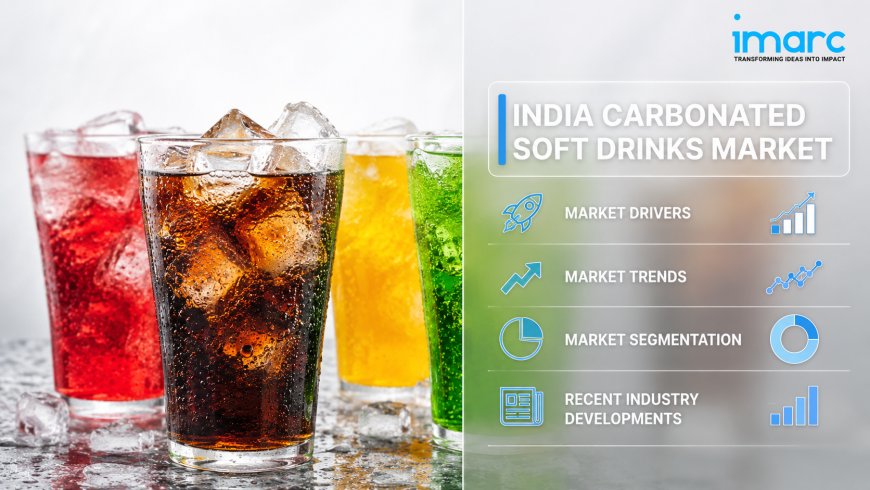
According to IMARC Group's report titled "India Carbonated Soft Drinks Market Size, Share, Trends and Forecast by Flavor, Distribution Channel, and Region, 2026-2034", The report offers a comprehensive analysis of the industry, including market forecast, growth, India carbonated soft drinks market size, and regional insights.
India's beverage sector is undergoing a rapid formalization, transitioning from fragmented regional consumption to structured, organized retail distribution of packaged carbonated beverages. This macro-shift offers robust capital deployment opportunities across regional bottling infrastructure, zero-sugar formulation technology, and deep-tier distribution networks.
-
Robust Baseline Valuation: The market size stands at USD 11,708.13 Million in 2025, supported by rising per capita incomes and a surge in convenience-driven retail formats across urban and semi-urban geographies.
-
Steady CAGR Growth: Strategic capacity expansions and evolving consumption patterns are projected to push overall valuations to USD 17,605.47 Million by 2034, registering a steady 4.64% CAGR over the forecast period.
-
Core Flavor Segments: The cola and citrus segments dominate domestic consumption, providing a highly reliable baseline for sustained volume throughput and localized inventory planning.
-
Omnichannel Distribution Expansion: Hypermarkets, supermarkets, and convenience stores act as primary volume drivers, heavily supported by the aggressive expansion of quick-commerce platforms accelerating rapid delivery logistics.
Current Market Trends
-
Tax-Driven Shift Towards Fruit-Based Carbonation: The Goods and Services Tax (GST) Council has structured taxation to clearly delineate sugary soft drinks from healthier alternatives. Standard carbonated beverages and "Carbonated Beverages of Fruit Drink" or "Carbonated Beverages with Fruit Juice" attract the highest GST rate of 28% alongside a 12% Compensation Cess. This rigid tax classification is prompting beverage manufacturers to innovate with non-carbonated fruit pulp formulations, which fall into lower tax brackets, to remain cost-competitive.
-
Public Sector R&D in Nutritional Carbonation: To bridge the gap between traditional soft drinks and nutritional beverages, the Ministry of Food Processing Industries (MoFPI) is actively incubating novel product categories. National food technology institutions are developing specialized formulations, such as "Kinnow carbonated drinks" and millet-based beverages, which utilize indigenous agricultural produce to create healthier, value-added carbonated alternatives.
-
Stringent Quality and Ecological Standards: The Bureau of Indian Standards (BIS) strictly enforces IS 2346:1992, which governs the quality of ingredients and carbonation levels for soft drinks. Concurrently, the Central Pollution Control Board (CPCB) rigidly monitors the environmental footprint of soft drink bottling plants. State Pollution Control Boards are mandated to ensure that bottling units comply strictly with wastewater discharge, air emission, and solid waste disposal norms under the Environment (Protection) Act, 1986.
Factors Driving Market Growth
-
Production Linked Incentive (PLI) Scheme (PLISFPI): The primary institutional catalyst for the sector is the MoFPI's PLI Scheme for the Food Processing Industry, which operates with a total financial outlay of ₹10,900 crore extending through FY 2026-27. The scheme directly incentivizes capacity expansion, technology upgradation, and the in-store branding and marketing of Indian food and beverage brands in global markets, triggering massive capital expenditure.
-
Robust Agricultural Sourcing and Demographics: According to Invest India, the nation's favorable geography and robust agricultural base provide an abundant, cost-effective supply of raw materials—including sugarcane, spices, and fruits—essential for the soft drink industry. Furthermore, a rapidly expanding middle class with increasing purchasing power and a youthful demographic is aggressively reshaping consumption dynamics and expanding the domestic consumer base.
-
Decentralized MSME Bottling Capabilities: The soft drink industry benefits from a highly decentralized growth model. State government initiatives encourage MSMEs to set up local bottling plants. Because water constitutes 85-90% of any carbonated beverage, establishing regional water treatment, carbonation, and packaging units allows entrepreneurs to efficiently meet rising local demand while minimizing long-distance logistical costs.
➤ Unlock Industry Insights and Future Forecasts – Request Sample Report: https://www.imarcgroup.com/india-carbonated-soft-drinks-market/requestsample
Competitive Overview
-
Rise of Contract Manufacturing Networks: The competitive ecosystem is increasingly relying on asset-light expansion. Supported directly by the PLISFPI scheme—which has approved numerous MSME applicants and specifically supported 40 contract manufacturing units—large beverage brands are scaling their operations by leveraging localized contract bottlers to optimize their supply chains.
-
Synergy with Ancillary Packaging Sectors: Competition in the beverage market drives parallel growth in allied industries. The massive scale of soft drink distribution heavily impacts the packaging sector, with the broader beverages industry accounting for approximately 22% of India’s overall glass-packaging market. Securing robust, cost-effective packaging supply lines is a critical competitive differentiator for bottlers.
-
MNC Expansion vs. Regional Flavors: The market features intense competition between global industry giants (like Coca-Cola and PepsiCo) and nimble regional players. Multinational corporations are aggressively expanding their footprint through strategic franchise bottling partners and new greenfield investments. Meanwhile, regional MSMEs compete by successfully developing hyper-local flavor profiles (such as jeera, ginger, and lime-lemon) that cater to specific indigenous tastes at highly competitive price points.
India Carbonated Soft Drinks Market Segmentation:
IMARC Group provides an analysis of the key trends in each segment of the India carbonated soft drinks market, along with forecasts at the country and regional levels for 2026-2034. The market has been categorized based on flavor and distribution channel.
Analysis by Flavor:
-
Cola
-
Citrus
-
Others
Analysis by Distribution Channel:
-
Hypermarkets, Supermarkets and General Merchandisers
-
Convenience Stores and Gas Stations
-
Food Service Outlets
-
Online and D2C
-
Others
Analysis by Region:
-
North India
-
South India
-
East India
-
West India
Note: If you need specific information that is not currently within the scope of the report, we can provide it to you as a part of the customization.
➤ Align Insights with Your Business Goals – Request Customization: https://www.imarcgroup.com/request?type=report&id=43822&flag=E
Frequently Asked Questions (FAQs)
Q1: What is the current value and projected growth of the India Carbonated Soft Drinks Market?
According to IMARC Group, the India carbonated soft drinks market size reached USD 11,708.13 Million in 2025. The market is projected to reach USD 17,605.47 Million by 2034, growing at a CAGR of 4.64% during 2026-2034.
Q2: Which flavor segment dictates the majority of domestic demand?
The cola segment historically commands a substantial market share. This dominance is heavily driven by entrenched brand loyalty, aggressive multinational marketing campaigns, and widespread product availability across both modern trade and traditional retail stores.
Q3: How are consumer health trends impacting market growth?
There is a rapid structural shift toward low-calorie and zero-sugar variants. Urban consumers are increasingly prioritizing metabolic health, prompting manufacturers to re-engineer core product lines with alternative sweeteners to retain market share and drive premiumization.
Q4: Which distribution channel drives the highest volume sales?
While traditional convenience stores and local grocers maintain vast reach, hypermarkets, supermarkets, and emerging quick-commerce platforms are rapidly capturing market share by offering multi-pack discounts and superior product visibility for bulk purchases.
Q5: What are the primary structural challenges facing the industry?
The industry faces significant headwinds from extreme seasonal demand volatility, which complicates inventory planning, alongside high GST taxation brackets and intense price competition from unorganized, localized traditional beverage producers.
Strategic Insight & Verdict:
As India's retail ecosystem formalizes and consumption patterns bifurcate between rural volume and urban premiumization, we at IMARC Group have observed that the intersection of localized production and low-sugar product innovation is the primary value driver. While traditional cola segments ensure baseline scale, long-term margin expansion resides in functional, low-calorie formats supported by decentralized bottling infrastructure. Institutional investors and corporate strategists should prioritize capital allocation toward sustainable packaging tech and zero-sugar portfolios to secure enduring market dominance.
Verified Data Source: India Carbonated Soft Drinks Market Report By IMARC Group
What's Your Reaction?