




























India Commercial Vehicle Market Size, Share, Key Trends and Report 2026-2034
The India commercial vehicle market size was valued at USD 53.23 Billion in 2025 to USD 55.91 Billion in 2026 and is projected to reach USD 84.12 Billion by 2034, exhibiting a CAGR of 5.03% during 2026-2034.

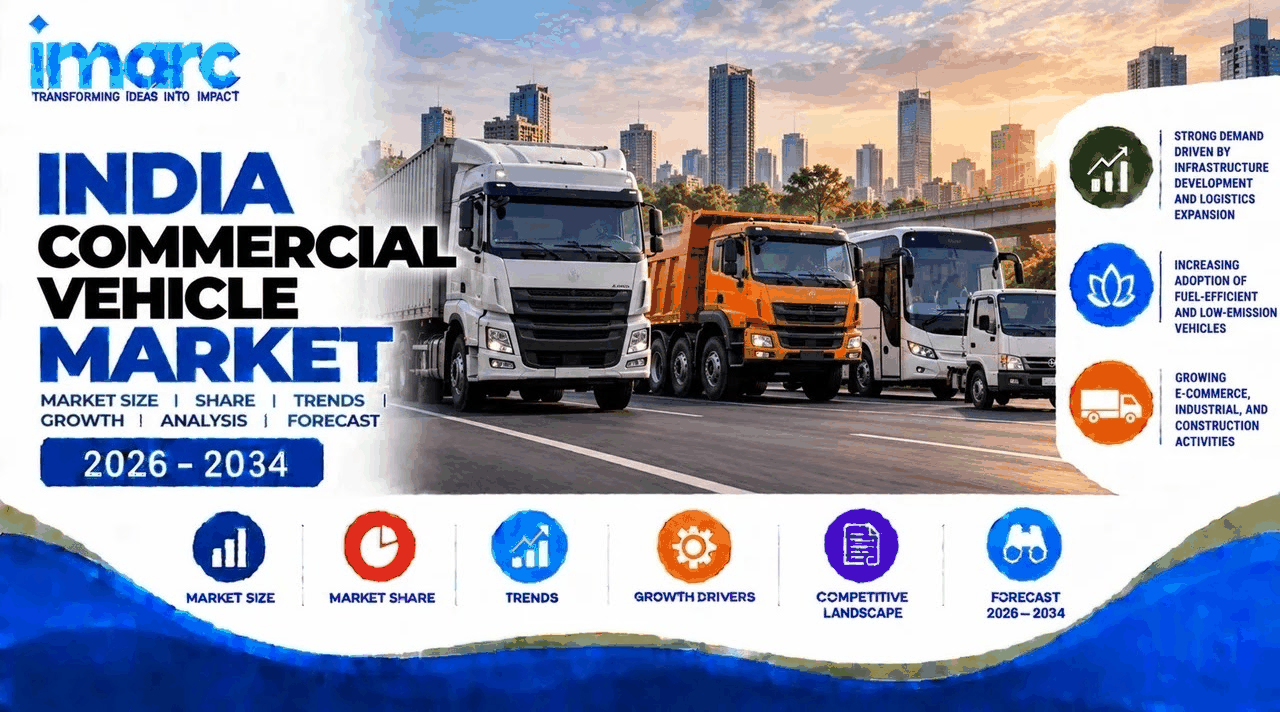
According to IMARC Group’s report titled “India Commercial Vehicle Market Size, Share, Trends and Forecast by Vehicle Body Type, Propulsion Type, and Region, 2026-2034“, The report offers a comprehensive analysis of the industry, including India commercial vehicle market forecast, growth and regional insights.
The India commercial vehicle market size was valued at USD 53.23 Billion in 2025 to USD 55.91 Billion in 2026 and is projected to reach USD 84.12 Billion by 2034, exhibiting a CAGR of 5.03% during 2026-2034.
India's commercial vehicle sector is rapidly evolving from legacy, diesel-dominant fleets into a highly formalized, digitally integrated backbone designed to power the nation's multi-trillion-dollar economic ambitions.
- Last-Mile Dominance: Light Commercial Pick-Up Trucks command a dominant 42.5% market share, functioning as the critical artery for the booming e-commerce and fast-moving consumer goods (FMCG) distribution networks.
- Propulsion Shift: While Internal Combustion Engines (ICE) currently retain 69.0% of the market, there is a structural institutional push toward electric and alternative fuel adoption across the entire logistics chain.
India's Strategic Vision for the India Commercial Vehicle Market
- Net-Zero Freight Corridors: The macroeconomic vision centers on decarbonizing heavy transport, with a clear national objective to integrate high-tonnage zero-emission vehicles across newly constructed industrial corridors and expressways.
- Domestic Self-Reliance: Through the "Make in India" initiative, the government aims to aggressively build localized supply chains for advanced automotive technologies, reducing reliance on imported battery cells and powertrain components.
- Logistics Efficiency: Integrated with the PM Gati Shakti National Master Plan, the ultimate goal is to optimize multi-modal connectivity, dramatically lowering India's systemic logistics costs to align with global benchmarks.
Why Invest in the India Commercial Vehicle Market: Key Growth Drivers & ROI
- Massive Infrastructure Capital: Sustained federal investments in highways, smart cities, and mega-projects guarantee multi-year demand for heavy-duty construction and mining trucks. This secures long-term asset utilization and predictable ROI for fleet operators managing high-tonnage payloads.
- E-Commerce and Hub-and-Spoke Dynamics: The formalization of the logistics sector into centralized hubs has triggered an exponential demand for Light Commercial Vehicles (LCVs). Investors capture immediate yield by funding micro-commercial fleets engineered for high-frequency, last-mile urban distribution.
- Fleet Modernization Mandates: Regulatory policies actively phasing out aging, highly polluting vehicles are triggering massive replacement cycles. Investing in compliant, high-tonnage assets allows stakeholders to capture market share from unorganized players while benefiting from improved fuel economy and reduced downtime.
India Commercial Vehicle Market Trends & Future Outlook
- Electric Micro-Mobility Surge: A massive structural shift toward electric three-wheelers and sub-1-ton e-trucks is redefining hyper-local, intra-city logistics, perfectly tailored for congested urban environments and strict zero-emission delivery mandates.
- Advanced Telematics Integration: Fleet managers are rapidly deploying IoT-enabled telematics and AI-driven data analytics to optimize route planning, monitor predictive maintenance, and maximize payload density in real-time.
- LNG/CNG Transition Phase: For long-haul operations where battery weight restricts payload capacity, Liquid Natural Gas (LNG) and Compressed Natural Gas (CNG) are emerging as the dominant medium-term transition fuels, bridging the gap between diesel and hydrogen powertrains.
- Adoption of ADAS: The systematic integration of Advanced Driver Assistance Systems (ADAS), including collision avoidance and lane departure warnings, is becoming a baseline requirement for heavy commercial vehicles to mitigate highway fatalities and lower insurance premiums.
➤ Request Sample Report – TOC, Charts & Key Insights: https://www.imarcgroup.com/india-commercial-vehicle-market/requestsample
India Commercial Vehicle Market Segmentation
The market report offers a comprehensive analysis of the segments, highlighting those with the largest India commercial vehicle market share. It includes forecasts for the period 2026-2034 and historical data from 2020-2025 for the following segments.
Vehicle Body Type Insights:
- Buses (17.6% market share in 2025)
- Heavy-Duty Commercial Trucks (28.4% market share in 2025)
- Light Commercial Pick-Up Trucks (42.5% market share in 2025)
- Light Commercial Vans (11.5% market share in 2025)
Propulsion Type Insights:
- Hybrid and Electric Vehicles (31.0% market share in 2025)
- ICE (69.0% market share in 2025)
Regional Insights:
- North India (26.1% market share in 2025)
- South India (24.3% market share in 2025)
- East India (21.8% market share in 2025)
- West India (27.8% market share in 2025)
By the IMARC Group, the Top Competitive Landscape & their Positioning:
Covering an in-depth analysis of the competitive landscape, market structure, key player positioning, competitive dashboards, top winning strategies, and detailed profiles of all major industry participants you will gain access to all these exclusive insights within the full research report.
Some of the key players include
- Tata Motors Limited
- Mahindra & Mahindra Ltd
- Eicher
Note: If you need specific information that is not currently within the scope of the report, we can provide it to you as a part of the customization.
➤ Request Report Customization: https://www.imarcgroup.com/request?type=report&id=29619&flag=E
Frequently Asked Questions (FAQs)
1. What is the current value and projected growth of the India Commercial Vehicle Market?
According to IMARC Group, the India commercial vehicle market size was valued at USD 53.23 Billion in 2025 and is projected to reach USD 84.12 Billion by 2034, growing at a compound annual growth rate (CAGR) of 5.03% from 2026 to 2034.
2. Which vehicle segment currently dominates the Indian market?
The market is heavily dominated by the Light Commercial Pick-Up Trucks segment, capturing a 42.5% share. This is primarily fueled by the rapid expansion of quick-commerce, retail distribution, and last-mile logistics networks.
3. What are the core drivers propelling commercial vehicle demand?
Key growth drivers include aggressive government spending on national infrastructure (highways and industrial corridors), the exponential growth of the e-commerce sector, and state-backed incentives promoting fleet modernization.
4. What is the current state of electric mobility in this sector?
While Internal Combustion Engines (ICE) maintain a 69.0% market share, the transition to electric mobility is accelerating rapidly, particularly within the intra-city bus and light commercial vehicle segments, heavily supported by the PM E-DRIVE initiative.
5. What are the primary operational challenges for fleet owners?
Fleet operators face significant challenges related to the high upfront capital expenditure required for electric vehicles, volatile raw material costs, and the lack of robust, nationwide charging and alternative refueling infrastructure along primary freight corridors.
Strategic Insight & Verdict:
The Indian commercial vehicle sector is pivoting from a volume-driven manufacturing base to a technology-centric logistics solution. We at IMARC Group have observed that the market heavily rewards early adopters of compliant, alternative-fuel architectures and digital fleet management tools. For corporate investors and CXOs, the strategic path is absolute: to capture high-margin logistics contracts and mitigate regulatory risks, capital allocation must be directed toward IoT-enabled, zero-emission capable fleets that seamlessly integrate into India's modernized green freight corridors.
What's Your Reaction?