



























Portable LIBS Spectrometer LIS-02, Carbon detection spectrometer
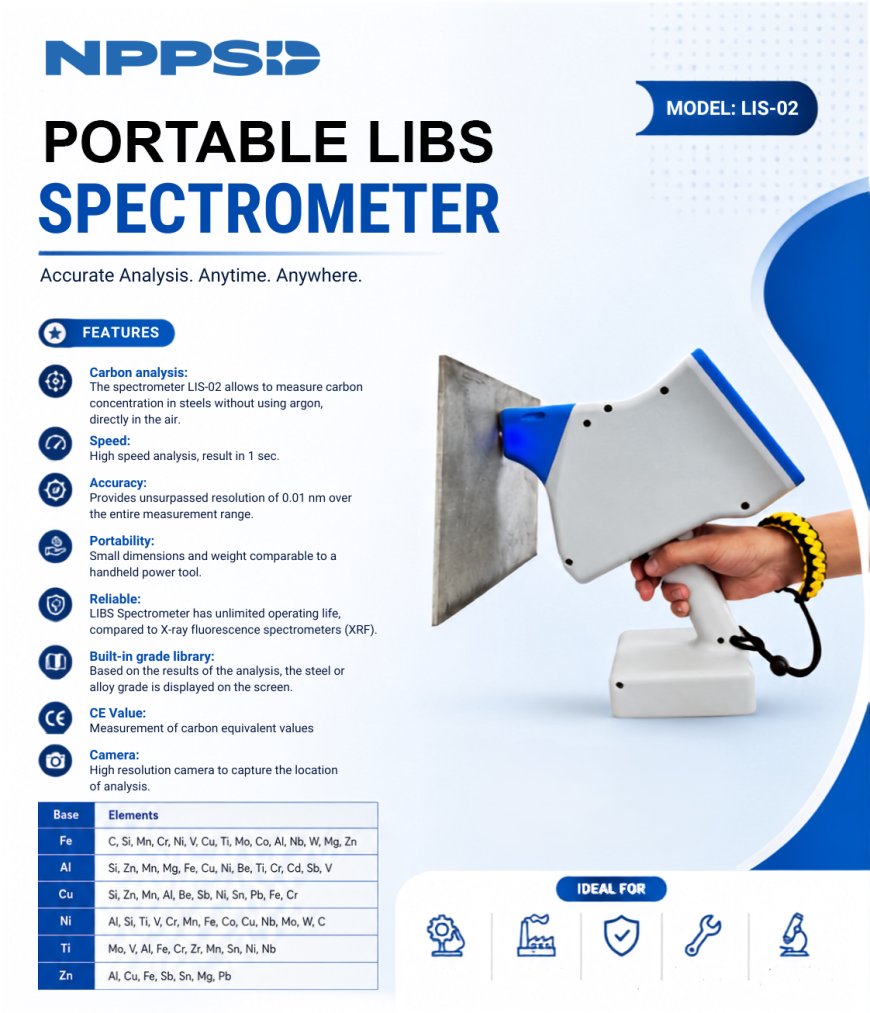
Portable LIBS Spectrometer LIS-02 deducts the carbon without use of argon gas in one second. It is Fast, precise metal analyzer.

Portable LIBS Spectrometer: A Practical Guide to Fast Metal
and Alloy Analysis
Metal identification aur alloy verification mein speed ke saath accurate elemental analysis bhi important hota hai. Portable LIBS Spectrometer industrial teams ko laboratory setup par depend kiye bina material composition check karne ka practical option deta hai. Yeh technology metals aur alloys ki elemental composition identify karne ke liye laser-induced breakdown spectroscopy (LIBS) ka use karti hai.
NPPSD ka Portable LIBS Spectrometer LIS-02 on-site metal testing, steel-grade identification, scrap sorting, quality control aur material verification jaise applications ke liye designed hai. NPPSD ke product documentation ke according, LIS-02 steel mein carbon analysis ko argon gas ke bina, directly air mein perform kar sakta hai, aur measurement result approximately 1 second mein provide karta hai.
What Is a Portable LIBS Spectrometer?
A Portable LIBS Spectrometer ek compact elemental-analysis instrument hai jo laser pulse ke through material ki surface par microscopic plasma create karta hai. Plasma se emit hone wali light ko spectrometer analyze karta hai. Different elements specific spectral signatures produce karte hain, jinke basis par instrument material mein present elements ko identify aur quantify karta hai.
Traditional laboratory analysis ke comparison mein portable LIBS ka major advantage measurement ko material ke paas le jana hai.
For example, quality inspector production floor par steel component check kar sakta hai. Scrap yard mein different alloy grades ko separate kiya ja sakta hai. Similarly, incoming raw material inspection mein unknown metal grade ko quickly verify kiya ja sakta hai.
NPPSD ke LIS-02 documentation mein steel-grade sorting, ferrous/non-ferrous scrap sorting, laboratory spectral analysis aur production quality control jaise applications listed hain.
How Does Portable LIBS Analysis Work?
LIBS measurement ka basic process relatively simple hai:
- Instrument ko metal surface par position kiya jata hai.
- Pulsed laser material ki surface par focus hota hai.
- Laser energy se microscopic plasma generate hota hai.
- Plasma se emitted light spectrometer collect karta hai.
- Software spectral information ko process karta hai.
- Elemental composition measurement ke form mein display hoti hai.
LIS-02 ke technical specifications mein NPPSD 1064 nm pulsed DPSS laser, approximately 50-micron measurement point aur 177–380 nm working spectral range list karta hai. Measurement duration 1.0 second specified hai.
Is process ka practical benefit yeh hai ki operator ko har sample laboratory mein transport karne ki zarurat nahi padti.
Why Carbon Detection Matters in Steel Analysis
Steel identification mein carbon ek critical element hai. Carbon concentration steel ki grade aur properties ko distinguish karne mein important role play karti hai.
Isi wajah se carbon detection portable elemental analysis ka important consideration hai.
Many material-analysis workflows mein carbon measurement ke liye controlled laboratory conditions ya additional equipment ki requirement ho sakti hai. NPPSD ke according, LIS-02 steel mein carbon analysis argon gas ke bina aur directly in air perform kar sakta hai.
Is capability ka practical use steel-grade verification aur material sorting mein ho sakta hai.
However, measurement conditions, calibration aur sample surface quality result quality ko influence kar sakte hain. Isliye industrial users ko instrument specifications ke saath proper operating procedure aur reference samples ka use bhi consider karna chahiye.
Portable LIBS Spectrometer for PMI and Material Verification
Positive Material Identification, commonly PMI, ka objective hota hai ki actual material ko expected material specification ke saath verify kiya ja sake.
A typical workflow kuch is tarah ho sakta hai:
Material received → Surface prepared → LIBS measurement → Elemental composition → Grade comparison → Acceptance / further inspection
Portable instrument ka advantage especially field inspections mein visible hota hai.
Agar hundreds of metal parts production area mein available hain, har component ko laboratory bhejna time-consuming ho sakta hai. Portable analysis operator ko production floor, warehouse, fabrication area ya scrap yard mein testing karne deta hai.
LIS-02 mein built-in grade library bhi listed hai, jo identified material ko available grade information ke against evaluate karne mein help kar sakti hai.
Applications of Portable LIBS Spectrometer
1. Steel Grade Identification
Steel grades ko elemental composition ke basis par distinguish karna quality control ka important part hai. LIBS rapid screening ke liye useful ho sakta hai, particularly jab multiple grades handle kiye ja rahe hon.
2. Scrap Metal Sorting
Scrap processing mein mixed materials ka identification operational efficiency improve kar sakta hai. Ferrous aur non-ferrous alloys ke saath different alloy grades ko separate karne ke liye elemental information useful hoti hai.
NPPSD ke LIS-02 manual mein ferrous/non-ferrous scrap sorting specifically listed application hai.
3. Incoming Material Inspection
Manufacturing companies raw materials receive karte waqt supplier-specified material grade verify kar sakti hain.
A portable instrument warehouse ya receiving area mein preliminary verification support kar sakta hai.
4. Production Quality Control
Production ke different stages par material composition check karna process-control strategy ka part ho sakta hai.
Fast measurement ka benefit tab aur important ho jata hai jab inspection volume high ho.
5. Aerospace and Automotive Components
Aerospace aur automotive manufacturing mein material traceability aur specification compliance important considerations hain. Portable elemental analysis component verification workflows ko support kar sakta hai.
NPPSD apne LIS-02 ko aerospace aur automotive industries ke applications ke liye position karta hai.
Portable LIBS Spectrometer LIS-02: Key Technical Features
NPPSD ke published product information ke according, Portable LIBS Spectrometer LIS-02 mein several features include hain:
| Feature | LIS-02 Specification |
|---|---|
| Laser | Pulsed DPSS, 1064 nm |
| Measurement point | Approximately 50 micron |
| Measurement duration | 1.0 second |
| Spectral range | 177–380 nm |
| Resolution | 0.01 nm |
| Display | 5-inch colour touchscreen |
| Connectivity | Wi-Fi & Bluetooth |
| Camera | High-resolution camera |
| Grade library | Built-in |
| Battery | Replaceable Li-ion |
| Safety class | Laser Class 3B |
These specifications are based on NPPSD's published product page and manual.
What Should You Check Before Buying a Portable LIBS Spectrometer?
Instrument select karte waqt sirf price ya measurement speed dekhna sufficient nahi hota.
Check Element Coverage
Sabse pehle determine karein ki aapke application mein kaunse elements important hain.
Steel identification ke liye carbon, chromium, nickel, manganese aur other alloying elements relevant ho sakte hain.
Check Measurement Conditions
Dekhein ki instrument measurement ke liye argon ya kisi external gas ki requirement rakhta hai ya nahi.
Field applications mein gas-free operation logistics ko simplify kar sakta hai.
Check Measurement Speed
High-volume inspection mein measurement time directly workflow efficiency ko affect karta hai.
Check Grade Library
Built-in grade libraries operators ko material identification aur comparison mein practical support de sakti hain.
Check Portability
Industrial inspection ke liye weight, battery operation, protective case aur physical design important factors hain.
Check Training and Support
Advanced analytical equipment ka effective use sirf instrument purchase karne se nahi hota. Operators ko measurement procedure, surface preparation, calibration aur result interpretation samajhna chahiye.
NPPSD apni company information mein installation, commissioning, operator training, maintenance aur after-sales support ka mention karta hai.
Practical Insight: Surface Preparation Still Matters
Portable LIBS ki speed useful hai, lekin measurement quality ko ignore nahi karna chahiye.
Paint, rust, oil, scale ya surface contamination elemental reading ko affect kar sakte hain. Isliye critical identification se pehle appropriate surface preparation karna sensible practice hai.
Ek practical inspection workflow mein:
- Surface condition check karein.
- Contamination remove karein.
- Stable contact maintain karein.
- Suitable reference or calibration procedure follow karein.
- Multiple readings ki requirement ho to defined procedure use karein.
- Uncertain results ko secondary verification se confirm karein.
Is approach se portable analysis ko quick screening ke saath responsible quality-control process mein integrate kiya ja sakta hai.
LIBS vs Traditional Laboratory Analysis
Portable LIBS ko laboratory techniques ka universal replacement nahi samajhna chahiye.
Laboratory instruments highly controlled conditions mein detailed analysis provide kar sakte hain. Portable LIBS ka primary strength speed, mobility aur on-site elemental screening hai.
Therefore, best technology application par depend karti hai.
Agar objective rapid material identification hai, portable LIBS highly practical ho sakta hai. Agar complete laboratory characterization ya highly specialized analysis required hai, laboratory-based techniques appropriate ho sakti hain.
Final Thoughts
A Portable LIBS Spectrometer industrial material identification ko laboratory se production floor tak le ja sakta hai. Steel-grade verification, scrap sorting, incoming inspection aur production quality control jaise applications mein rapid elemental information valuable ho sakti hai.
Portable LIBS Spectrometer LIS-02 ke published specifications mein 1-second measurement, 1064 nm pulsed DPSS laser, 0.01 nm resolution, built-in grade library aur steel carbon analysis without argon gas jaise features included hain.
For companies evaluating portable elemental-analysis equipment, the right approach is to compare element coverage, measurement conditions, accuracy requirements, portability, software capabilities, operator training and after-sales support rather than focusing on a single specification.
For detailed LIS-02 technical information, users can review the product documentation provided by NPPSD and evaluate the instrument against their specific material-testing requirements.
What's Your Reaction?