



























Why Your Cladding Choice Today Determines Your Building's Costs for Decades
Discover how cladding choices affect installation costs, maintenance, energy efficiency, durability, and long-term building expenses.

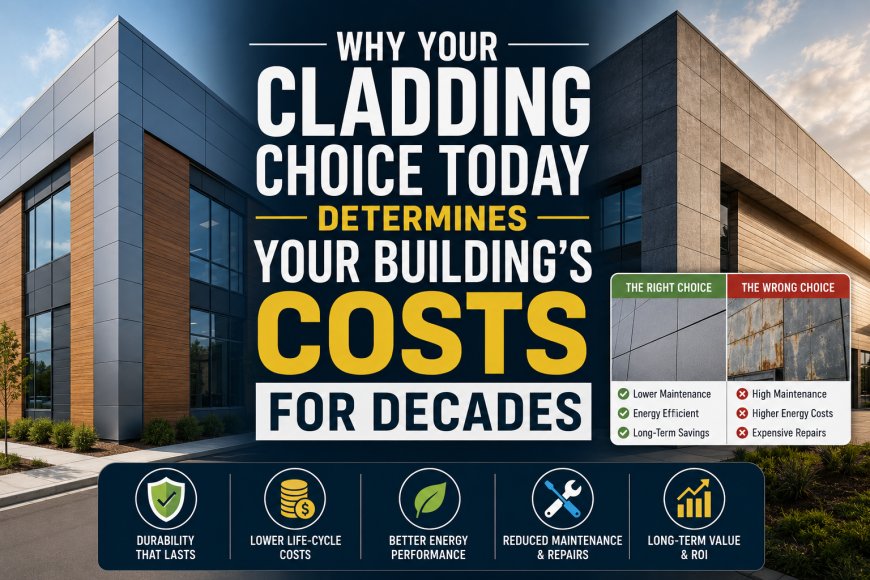
When building owners talk about their biggest regrets with a completed commercial or residential project, one thing comes up surprisingly often: they wish they'd thought more carefully about the exterior. Not the architectural design or the layout, those usually get attention. But the actual protective layer on the outside of the building, the part that's going to face weather, temperature swings, and sunlight for the next 30 to 50 years.
That protective layer is cladding, and it's one of the few building decisions that genuinely impacts both your near-term budget and your long-term operating costs in ways most owners don't fully anticipate.
The Real Cost of Cladding Isn't Just Installation
When a building is being designed, cladding selection often happens almost as an afterthought. The structure is planned, the interior systems are detailed, and then someone asks: "So what's going on on the outside?" The decision sometimes comes down to cost per square foot at bid time or what the architect specified. Rarely does anyone sit down and do the full math on what that choice actually costs over the life of the building.
Here's what that full math looks like:
Year 1: Installation cost. This is the number everyone focuses on materials and labor to install the cladding system. It's visible and immediate.
Years 2-10: Maintenance costs. Some cladding systems need regular upkeep. Wood cladding needs repainting or staining every 5-7 years. Metal panels might need touch-ups if scratched or dented. Brick slip systems need occasional repointing. Fiber cement is lower maintenance but not zero maintenance.
Years 10-30: Major maintenance or early replacement decisions. Cheaper cladding materials sometimes start showing problems fading, deterioration, moisture issues before the building is even 15 years old. Now the owner is facing a partial or full recladding, which costs as much as the original installation but wasn't budgeted for.
Year 30+: Total replacement or expensive rehabilitation. If the original cladding was truly budget-focused, it might not even make it to 30 years with acceptable appearance and performance.
The building owner who saved 15% on cladding cost in year 1 might spend 50% more over the building's life.
How Climate Changes Everything About Cladding Performance
One of the biggest errors in cladding selection is treating it like a one-size-fits-all decision. A cladding material that performs beautifully in Arizona behaves completely differently in Seattle. Temperature cycles, humidity, freeze-thaw exposure, salt air all of these change which materials age well and which materials start failing within 10 years.
Timber cladding in a dry climate can age beautifully for decades. The same timber in a humid coastal environment or a freeze-thaw zone starts deteriorating much faster unless it's religiously maintained.
Metal cladding panels handle temperature cycles well, but improper installation or poor drainage design can trap moisture behind the panels, causing corrosion and paint failure.
Fiber cement performs well in most climates, but in areas with intense UV exposure or constant moisture, some products fade or weather more quickly than expected.
The point: cladding material selection needs to be climate-specific, not just budget-specific. A contractor or building owner who doesn't account for this is essentially making a long-term bet on a material without understanding the odds.
The Maintenance Trap Nobody Talks About
Building owners often discover too late that they've picked a cladding system that requires more maintenance than they're actually willing to do. Wood cladding needs periodic refinishing to prevent rot. Stone veneer needs sealing in certain environments. Some metal finishes require regular touch-ups to prevent corrosion.
When maintenance gets deferred and with commercial buildings managing dozens of systems, often does the cladding starts deteriorating faster than expected. What should have lasted 30 years starts showing significant problems at year 15 or 18.
Compare that to some of the more modern cladding options. Properly installed rainscreen systems with fiber cement or composite materials can require minimal maintenance, just routine cleaning. Over 30 years, the difference in maintenance labor costs between high-maintenance and low-maintenance cladding can be hundreds of thousands of dollars on a large building.
The Thermal Performance Nobody Quantifies
Cladding selection also affects building energy costs, but this rarely gets calculated during design. Different cladding materials and systems have different thermal properties. A ventilated rainscreen system with good insulation performs thermally differently than metal panels on minimal framing.
A building owner in a cold climate who picks cladding without considering thermal performance might end up spending thousands extra per year on heating costs compared to an alternative that costs only slightly more to install.
For commercial buildings, especially those in heating-heavy or cooling-heavy climates, the energy impact of cladding choice can actually exceed the material cost difference within 5-10 years of operation.
Fire Rating and Durability: The Issues That Show Up Late
Most building codes require certain fire ratings for cladding, especially on multi-story buildings. But "fire-rated" doesn't mean all fire-rated systems are created equal. Some materials burn slower than others. Some shed materials or create smoke in ways that matter for emergency evacuation scenarios.
More importantly, fire-rated status doesn't tell you about durability or how the material will perform in regular weathering. A cladding material can be fire-rated and still fail due to moisture or UV exposure within 20 years.
Building owners and architects need to evaluate cladding on multiple dimensions: fire safety, thermal performance, weathering durability, maintenance requirements, climate suitability not just installation cost.
Making the Right Cladding Decision Takes Real Work
The best cladding choices come from actually understanding what different cladding systems are, how they perform in your specific climate, what maintenance they'll require, and what their total cost of ownership looks like.
This isn't intuitive. Most building owners and even many contractors don't naturally think through all the variables. Understanding the different types of cladding in construction, from metal panels and timber options to fiber cement and rainscreen systems, helps clarify which materials suit different project requirements and climates.
Once you understand the options, you can evaluate them against actual project criteria: How much maintenance are we willing to do? What's our timeline for replacement cycles? What does thermal performance actually cost us annually? How important is the visual aging of the material?
Different projects have different answers to these questions. A 50-year institutional building needs different cladding logic than a 25-year commercial spec building. A building in a high-humidity coastal zone needs different material choices than a dry inland location.
The Bottom Line
Cladding is often treated as a minor detail in the construction budget, when it's actually one of the most consequential decisions a building owner or contractor makes. It affects appearance, performance, maintenance burden, energy costs, and durability for decades.
The cheapest cladding at bid time is frequently the most expensive choice over the building's lifespan. The most expensive option at bid time sometimes delivers superior total cost of ownership because maintenance and replacement needs are far lower.
Making that decision wisely requires more than picking a material and a budget. It requires understanding the tradeoffs and evaluating them against your specific project's climate, timeline, and operating philosophy.
The building owners who end up most satisfied with their cladding choices are the ones who did that work upfront, not the ones who deferred to whichever option was lowest-cost in the bid.
What's Your Reaction?