



























The Smart Injection: Why DPC Cream Is the Preferred Choice for Modern Damp Proofing
Discover why the DP Cream system is the modern choice for rising damp proofing. Fast, clean, and reliable protection for your property. Read our guide!

Rising damp is one of the most stubborn and stressful issues a property owner can face. Peeling wallpaper, crumbling plaster, and a musty smell are telltale signs that moisture is creeping up from the ground through your walls. For decades, fixing this problem meant messy, disruptive drilling and slow chemical pumping methods. Today, homeowners and property experts are turning to a cleaner, faster, and far more effective solution: the DP Cream system.
Modern damp proofing has evolved, and this article explores why silicone-based injection creams have become the gold standard for protecting properties against moisture.
What is Rising Damp and Why Does It Happen?
Rising damp occurs when moisture from the ground travels upward through the microscopic pores of masonry and brickwork. Buildings rely on a damp-proof course (DPC), a horizontal barrier, usually a waterproof membrane or slate layer built into the walls, to block this moisture.
However, in older or poorly maintained properties, this original barrier can break down, bridge, or fail entirely. Without a functional DPC, water climbs higher into your walls, carrying ground salts that damage plaster, rot timber, and create the ideal environment for harmful black mold.
Traditional DPC vs. The DP Cream System
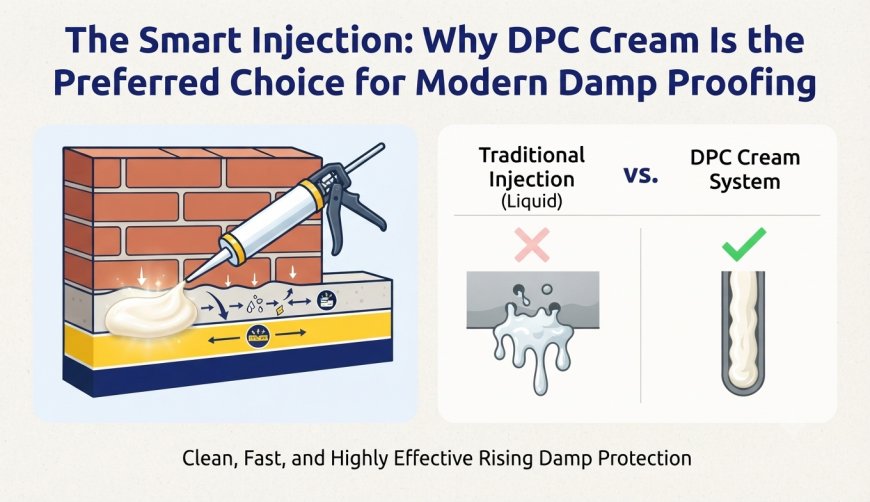
For years, liquid chemical damp-proofing was the industry norm. This involved pumping large volumes of watery fluids under pressure into holes drilled along the mortar course. The problem? Liquid often leaked out through cracks in the masonry before it could cure, leading to inconsistent protection.
The DP Cream system revolutionizes this process by using a high-viscosity, thixotropic silane/siloxane emulsion. Instead of running out of holes, the cream stays put, slowly releasing active silanes that line the pores of the brick and mortar to create a permanent, water-repellent barrier.
Comparison: Traditional Liquid Injection vs. DP Cream
| Feature | Traditional Liquid Injection | DP Cream System |
| Application Method | Low-pressure liquid pumping | Gravity-fed or caulking gun injection |
| Mess & Waste | High risk of liquid run-off and mess | Controlled, clean application with zero waste |
| Absorption | Can escape through wall cracks | Slow-release formula ensures maximum absorption |
| Effectiveness | Variable depending on wall porosity | Highly reliable across all masonry types |
| Odor & Safety | Often solvent-heavy with strong chemical smells | Generally water-based, low odor, and safer to use |
Why DPC Cream is the Preferred Choice for Modern Property Owners
Property experts and specialists at Damp-solutions recommend injection creams for several distinct reasons. Here is why the modern approach stands out:
1. Maximum Penetration and Effectiveness
Because the cream remains in the drill hole longer, the masonry has more time to absorb the active ingredients. As the cream breaks down, it lines the capillaries of the wall, effectively stopping water from rising while still allowing the building to "breathe" naturally.
2. Speed and Minimal Disruption
Time is money, and property repairs can be stressful. The cream application process is remarkably fast. Holes are drilled at regular intervals along a mortar bed, cleaned, and filled with the cream using a standard caulking gun. There is no need for bulky, noisy pump machinery.
3. Safety and Eco-Friendly Formulation
Older damp-proofing chemicals often relied on hazardous petroleum solvents. Modern formulas are typically water-based and low-odor, making them safer for the applicators, your family, and pets. They also reduce the risk of staining internal decor.
4. Proven Reliability in Historic and Modern Homes
Whether you live in a Victorian terrace or a modern brick cavity wall, injection creams adapt exceptionally well. Professionals across regions like Damp Proofing Cheshire rely on these systems because they deliver consistent results even in deeply saturated or challenging stonework.
Step-by-Step: How Professional Damp Proofing Works
If you are wondering what a treatment involves, here is a quick look at how specialists tackle rising damp:
-
Inspection: A thorough damp survey identifies the source of moisture and confirms whether rising damp is the culprit (as opposed to condensation or plumbing leaks).
-
Plaster Removal: Damaged, salt-laden internal plaster is stripped back to the bare brickwork.
-
Drilling: Holes are drilled into the designated mortar bed at calculated depths and intervals.
-
Injection: The cream is pumped uniformly into the holes using an applicator gun until fully saturated.
-
Re-Plastering: Once the cream cures and forms the new damp-proof barrier, specialized salt-retardant plastering is applied to finish the wall.
Frequently Asked Questions (FAQs)
1. How long does a DPC cream treatment last?
When installed correctly by experienced professionals, a quality damp-proof course cream can last for decades, effectively protecting your walls for the lifetime of the property.
2. Can I apply the DP Cream system myself?
While DIY kits are available, it is always recommended to hire professionals. Proper diagnosis, correct drilling depths, and correct re-plastering are crucial to ensuring the damp does not bypass the new barrier.
3. Does the treatment have a strong chemical smell?
No. Modern injection creams are typically water-based and low-odor, meaning you won't have to deal with harsh chemical fumes lingering in your living spaces.
4. How long does it take for walls to dry out after treatment?
As a general rule of thumb, walls dry out at a rate of roughly one month per inch of wall thickness once the source of rising damp has been successfully cut off and internal ventilation is adequate.
5. Is rising damp the only cause of wet walls on ground floors?
No. Condensation, penetrating damp (water leaking through exterior walls from rain), and leaking pipes are also very common. A professional survey is essential to identify the exact cause before treatment.
Protecting your home from the ground up is essential for maintaining its structural integrity and indoor air quality. If you are noticing damp patches or peeling plaster, don't wait for the damage to spread. Reach out to the experts at Damp-solutions today for reliable advice and professional service.
Contact us at
What's Your Reaction?