









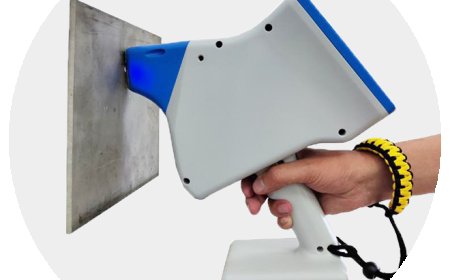





















What Is Portable Hardness Tester - UCI & LEEB Portable Hardness Tester
A portable hardness tester is used to measure the hardness of small & heavy jobs in field. Leeb & UCI is also portable hardness testers.

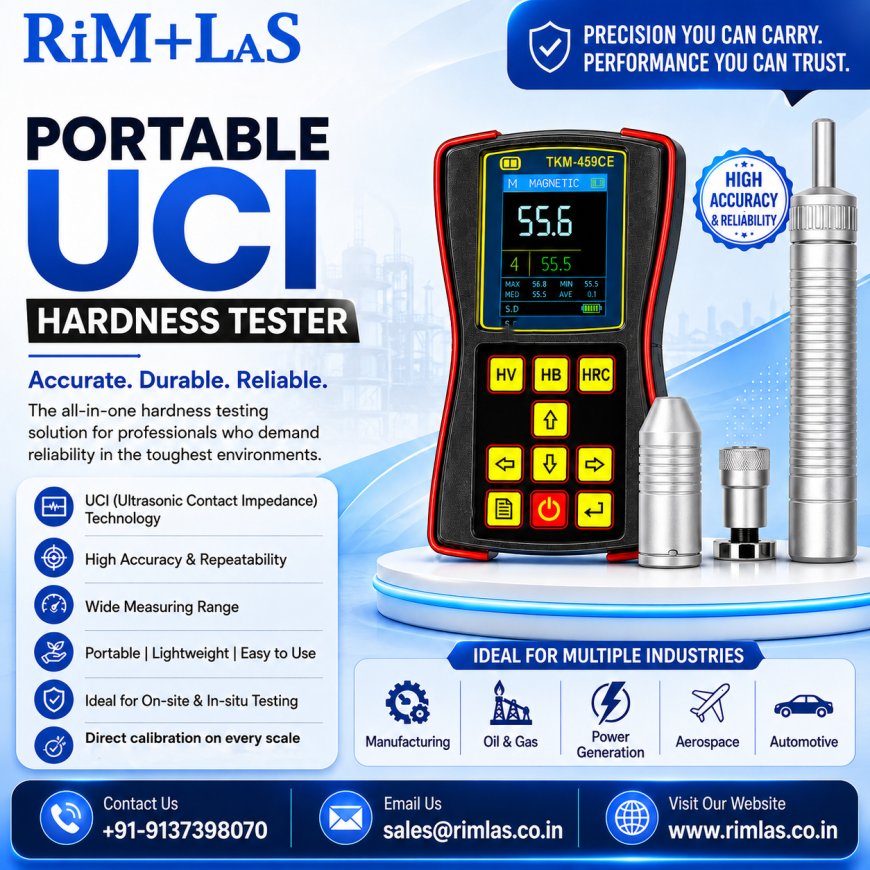
Portable Hardness Tester: Complete Guide to UCI Hardness
Testing, Applications & Professional Training
In modern manufacturing, aerospace, automobile, and metal industries, accurate hardness measurement is essential for maintaining material quality, performance, and reliability. A Portable Hardness Tester allows professionals to evaluate the hardness of metallic components directly at the job site, production floor, or inspection area without depending entirely on a conventional laboratory setup.
For industries where components are large, heavy, assembled, or difficult to transport, portable testing provides a practical approach to quality control. Among the available technologies, the Portable UCI Hardness Tester is particularly useful for applications requiring localized and precise hardness measurements.
RiM LaS Private Limited supports professionals and organizations working with advanced material testing and inspection technologies. Understanding how portable hardness testing works—and how to use the equipment correctly—is important for obtaining reliable and repeatable results.
What Is a Portable Hardness Tester?
A Portable Hardness Tester is a compact material-testing instrument designed to determine the hardness of metallic components outside a traditional laboratory environment.
Hardness represents a material's resistance to localized deformation. Depending on the testing technology, hardness values can be reported using scales such as Rockwell, Vickers, Brinell, or other standardized scales.
Portable systems are especially valuable when testing large components, installed equipment, welded structures, shafts, gears, molds, or parts that cannot easily be moved to a laboratory.
RiM LaS offers portable hardness-testing solutions based on Leeb and UCI (Ultrasonic Contact Impedance) technologies. The appropriate method depends on the material, component geometry, surface condition, accessibility, and inspection requirements.
How Does a Portable Hardness Tester Work?
The operating principle depends on the technology used.
A Leeb hardness tester generally evaluates the relationship between the impact and rebound behavior of a test body against the material surface. It is useful for many metallic components and field inspection applications.
A Portable UCI Hardness Tester, on the other hand, uses the Ultrasonic Contact Impedance principle. A probe applies a controlled force while an ultrasonic measurement system evaluates changes associated with the material's hardness.
The UCI method is particularly useful where a small testing area is required. It can be advantageous for components with limited access, thin sections, small parts, finished surfaces, and areas where conventional indentation methods may be inconvenient.
Portable UCI Hardness Tester: Why Is It Important?
The Portable UCI Hardness Tester has become an important tool for professionals who need localized hardness measurements without removing components from service.
One of its major advantages is its ability to perform measurements in areas that may be difficult to access using conventional hardness-testing equipment.
According to RiM LaS product information, UCI systems can be used for measurements in hard-to-reach locations, including slots and blind holes, while specialized probes can support different testing forces. The technology can also be suitable for measuring thin layers and components with relatively low mass or thickness.
For technical professionals, these capabilities can make UCI testing valuable for:
-
Small and precision components
-
Thin-walled parts
-
Gears and shafts
-
Welded components
-
Dies and molds
-
Heat-treated components
-
Aerospace components
-
Automobile parts
-
Maintenance and repair inspections
-
Production quality control
Key Benefits of a Portable Hardness Tester
1. Testing Directly at the Component
One of the biggest advantages of a Portable Hardness Tester is mobility. Large components do not necessarily need to be transported to a testing laboratory.
This can reduce handling requirements and make inspection more practical during manufacturing, maintenance, and field-service operations.
2. Suitable for Difficult-to-Reach Areas
With suitable UCI probes, hardness measurements can be performed in relatively restricted areas. RiM LaS documentation highlights applications involving slots, blind holes, small control areas, and challenging component geometries.
3. Minimal Surface Impact
For applications involving finished or visually sensitive surfaces, UCI testing can provide a small, localized indentation. This makes it useful when maintaining the appearance and integrity of the component is important.
4. Useful for Production and Inspection
Portable hardness testing can support incoming inspection, process verification, heat-treatment verification, maintenance inspection, and final quality checks.
5. Data Management
Modern portable instruments can provide digital measurement storage and data-transfer capabilities. RiM LaS product information specifies memory storage and PC data transfer through USB and software for its portable hardness-testing solutions.
Portable Hardness Tester Applications in Different Industries
Aerospace Industry
Aerospace components require strict control over material properties and manufacturing processes. Portable hardness testing can help inspectors verify components and selected areas without moving large or installed parts.
Automobile Industry
In automobile manufacturing, hardness is important for gears, shafts, engine components, dies, molds, and other critical parts. A Portable UCI Hardness Tester can support quick inspection during production and quality-control processes.
Metal Industry
Metal manufacturers and processors can use portable hardness testing for material verification, heat-treatment checks, production inspection, and maintenance activities.
Engineering and Maintenance
For maintenance professionals, portability is particularly valuable. Components that are already installed or difficult to remove can potentially be inspected at their location, subject to the applicable testing procedure and component requirements.
Why Professional Training Matters in Hardness Testing
Owning a Portable Hardness Tester is only part of achieving reliable inspection results. Correct surface preparation, probe selection, calibration, testing force, component geometry, measurement location, and interpretation of results can all influence the outcome.
This is why technical training is valuable for inspectors, quality engineers, production professionals, application engineers, and other users.
Professional RiM LaS training can help participants develop a stronger understanding of portable hardness-testing principles, equipment operation, application considerations, measurement practices, and result interpretation.
For organizations using hardness testing as part of a quality or inspection process, structured training can also help improve consistency between operators.
How to Choose the Right Portable Hardness Tester
Before selecting a Portable Hardness Tester, professionals should consider:
-
Material type and hardness range
-
Component size and geometry
-
Surface finish
-
Required testing location
-
Accessibility of the inspection area
-
Required testing force
-
Desired hardness scale
-
Applicable standards or procedures
-
Data-storage and reporting requirements
-
Operator training requirements
For small areas, thin components, finished surfaces, and difficult-to-access locations, a Portable UCI Hardness Tester may be a particularly suitable option. However, the testing method should always be selected according to the specific application and applicable standards.
Why Choose RiM LaS for Portable Hardness Testing?
RiM LaS Private Limited works with advanced material-testing and inspection solutions for industrial applications. Its portable hardness-testing portfolio includes both Leeb and UCI technologies, supporting different inspection requirements.
Beyond equipment selection, professional understanding is essential for getting meaningful results from hardness testing. RiM LaS can be a valuable resource for organizations and professionals looking to understand portable hardness measurement, application requirements, and technical training.
If your organization operates in the metal, aerospace, automobile, manufacturing, inspection, or engineering sector, choosing the right hardness-testing technology and developing competent operators can strengthen your quality-control process.
Conclusion
A Portable Hardness Tester provides an efficient way to evaluate metallic components where conventional laboratory hardness testing may not be practical. For applications involving small testing areas, difficult geometries, thin sections, and finished components, a Portable UCI Hardness Tester can offer significant practical advantages.
However, reliable hardness measurement depends on more than the instrument itself. Correct methodology, surface preparation, probe selection, calibration, operator knowledge, and application-specific procedures are equally important.
Looking to improve your team's expertise in portable hardness testing? Connect with RiM LaS Private Limited for professional guidance, advanced hardness-testing solutions, and training support tailored to industrial inspection requirements.
Frequently Asked Questions
1. What is a Portable Hardness Tester?
A Portable Hardness Tester is a mobile instrument used to measure the hardness of metallic components directly at the inspection location. It is useful for large, heavy, installed, or difficult-to-transport components.
2. What is a Portable UCI Hardness Tester?
A Portable UCI Hardness Tester uses Ultrasonic Contact Impedance technology to determine material hardness through a controlled probe measurement. It is particularly useful for localized measurements and difficult-to-access areas.
3. Where are Portable UCI Hardness Testers used?
Portable UCI Hardness Testers can be used across industries such as aerospace, automobiles, metal manufacturing, engineering, maintenance, tooling, and quality inspection, depending on the application and applicable testing procedure.
4. Why is training important for Portable Hardness Testing?
Training helps operators understand equipment operation, surface preparation, probe selection, calibration, measurement practices, and interpretation of results. Proper training can improve measurement consistency and reduce operator-related errors.
5. How do I choose the right Portable Hardness Tester?
Selection should consider material type, component geometry, surface condition, accessibility, required testing force, hardness range, applicable standards, reporting requirements, and the specific inspection objective. RiM LaS can help professionals evaluate the appropriate technology for their application.
Schema-Ready Q&A
Q1: What is a Portable Hardness Tester?
A: A Portable Hardness Tester is a mobile instrument used to measure the hardness of metallic components directly at the inspection location.
Q2: What is a Portable UCI Hardness Tester?
A: A Portable UCI Hardness Tester uses Ultrasonic Contact Impedance technology to perform localized hardness measurements on metallic components.
Q3: What are the applications of Portable UCI Hardness Testing?
A: Portable UCI Hardness Testing can be used for applications involving small components, thin sections, finished surfaces, difficult-to-access areas, aerospace parts, automobile components, tooling, and industrial inspection.
Q4: What industries use Portable Hardness Testers?
A: Portable Hardness Testers are used across metal manufacturing, aerospace, automobiles, engineering, maintenance, production, and quality-control applications.
Q5: Why is professional training important for hardness testing?
A: Professional training helps users understand testing principles, equipment operation, surface preparation, probe selection, calibration, measurement procedures, and result interpretation.
What's Your Reaction?