





























Philippines Car Rental Market Analysis Report 2026-2034
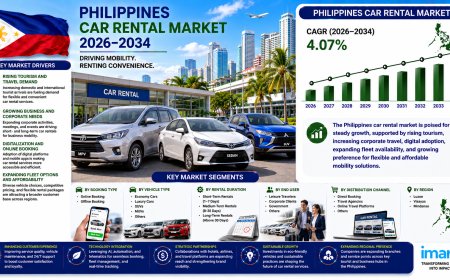
The Philippines car rental market size reached USD 393.1 Million in 2025 and is projected to reach USD 568.8 Million by 2034, exhibiting a CAGR of 4.07%.

Market Overview
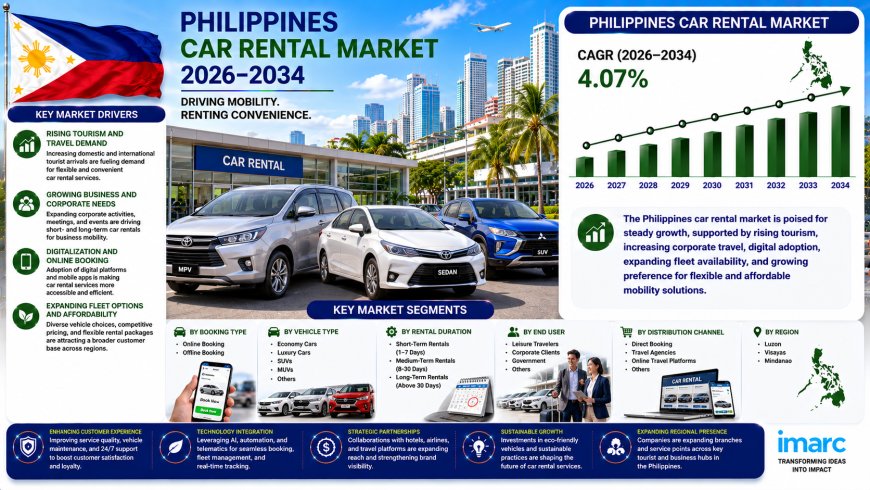
The Philippines car rental market size reached USD 393.1 Million in 2025 and is projected to reach USD 568.8 Million by 2034, growing at a compound annual growth rate (CAGR) of 4.07% from 2026 to 2034. The market is driven by tourism, digital booking, and sustainability and regulatory shifts toward hybrid and low-emission fleets.
Philippines Car Rental Market Summary
- The Philippines car rental market covers luxury, executive, economy, SUV, and other vehicles, rented for short or long terms, self-driven or chauffeur-driven, for leisure and business.
- Car rental is valued for flexible mobility for tourists, business travelers, and residents without owning a car.
- The ecosystem includes rental companies and dealer-backed services, ride-hailing and mobility apps, vehicle suppliers, tour operators, airports and hotels, and travelers and businesses.
- Major segments identified in the market include booking type (offline, online), rental length, vehicle type, application, end user, and region. IMARC does not give shares for these.
- IMARC cites the 2024 enforcement of the Public Utility Vehicle Modernization Program as encouraging hybrid and low-emission fleets, while noting rental cars are not its main target.
Request a Sample Report for In-Depth Market Insights: https://www.imarcgroup.com/philippines-car-rental-market/requestsample
Porter’s Five Forces Analysis
- Competitive Rivalry: Moderate to High. Established rental firms, dealer-backed services, and app-based platforms compete on price, availability, and convenience. Business implication: Differentiate through fleet quality, digital booking, and service.
- Supplier Power (Vehicle Makers and Dealers): Moderate. Fleet costs depend on automakers and dealers, which can offer volume deals. Business implication: Negotiate fleet agreements and manage resale values.
- Buyer Power (Travelers and Corporates): Moderate to High. Customers compare prices online, and corporates negotiate long-term rates. Business implication: Offer flexible terms and loyalty benefits.
- Threat of Substitutes: High. Ride-hailing, taxis, public transport, and private cars substitute for rentals. Business implication: Focus on convenience, drivers, and long-term rental offers.
- Threat of New Entrants: Moderate. App-based platforms enter easily, but fleet capital and insurance matter. Business implication: Build fleet partnerships and strong digital platforms.
Market Growth Drivers
Tourism Growth
Island-hopping, heritage tours, and regional travel are raising demand for rental cars. IMARC cites strong international arrivals in March 2024, without a figure. Tourists want flexible transport between islands and rural destinations, which makes self-drive and chauffeur-driven rentals attractive, especially around airports, hotels, and popular tourist areas.
Digital Booking
Online reservations, mobile apps, and cashless payments are gaining traction, according to IMARC. They make it easier to compare vehicles, book quickly, and manage rentals, which widens the customer base. IMARC points to Toyota RentαCar’s May 2025 partnership with JoyRide for long-term rentals through the JoyRide app in Metro Manila.
Sustainability and Regulation
Enforcement of the Public Utility Vehicle Modernization Program in 2024 is encouraging hybrid and low-emission fleets, though IMARC notes rental cars are not its main target. Rental firms are exploring cleaner vehicles to meet customer expectations and regulation, and corporate buyers increasingly value sustainability when choosing providers for business travel and long-term rentals.
Philippines Car Rental Market Segmentation
Booking Type Insights:
- Offline
- Online
Rental Length Insights:
- Short Term
- Long Term
Vehicle Type Insights:
- Luxury
- Executive
- Economy
- SUVs
- Others
Application Insights:
- Leisure/Tourism
- Business
End User Insights:
- Self-Driven
- Chauffeur-Driven
Regional Insights:
- Luzon
- Visayas
- Mindanao
Competitive Landscape
The Philippines car rental market includes dealer-backed rental services, independent rental companies, chauffeur and tour operators, and app-based mobility platforms. IMARC says company profiles are in the full report and names no key players or ratings on the page. Competition centers on fleet, price, availability, and digital convenience.
Key Organizations Mentioned in the Report Context Include:
- Toyota RentαCar, the official car rental service of Toyota Motor Philippines, partnered with JoyRide in May 2025 to offer long-term rentals, self-drive and chauffeur-driven, through the JoyRide app, launching first in Metro Manila.
- JoyRide is the mobility app that carries the rental offer.
Regional Analysis
- Luzon: The largest market, led by Metro Manila’s business travel, airports, and mobility apps.
- Visayas: A strong tourism region, with Cebu and nearby islands driving leisure rentals.
- Mindanao: An emerging market, with Davao and other destinations seeing growing tourism and business demand. IMARC gives no regional values.
Recent Industry Developments
October 2026: Philippine Tourism Arrivals Reach 4.7 Million
The Philippines recorded approximately 4.7 million tourist arrivals from January to October 12, 2026, according to the Department of Tourism. Arrivals were reported to be 34.3% higher year-on-year, strengthening prospects for tourism-related transportation services. Visitors from China increased by 70.2% to 371,138, while arrivals from India rose by 272% to 89,655. The expanding international visitor base creates opportunities for rental operators serving airport transfers, business travel, family holidays and multi-destination trips.
September 2026: Green GSM Rolls Out 1,000 Electric Vehicles Through Its Rental Programme
Green GSM Philippines handed over 1,000 electric vehicles to driver partners as part of its expansion of app-based transport services. The programme, introduced during a driver-partner event held from September 12–14, offered eligible drivers access to vehicles with an initial investment starting at PHP 5,000. Available models included the VinFast Herio Green, VF 5 and Limo Green. Although primarily aimed at transport-network drivers rather than traditional tourists, the initiative highlights the potential of vehicle-rental models to expand access to electric mobility and create new fleet-management opportunities in the Philippines.
September 2026: Tourism Data Dashboard Improves Visibility Into Travel Demand
The Department of Tourism introduced an updated tourism data dashboard that revised the country's January–August 2026 arrival figure to approximately 4.42 million, including overseas Filipinos permanently residing abroad. The revised figures incorporated electronic travel records and Bureau of Immigration data. Better access to visitor statistics can help car rental businesses assess demand across source markets, identify seasonal travel patterns and plan vehicle availability around major tourism destinations.
Key Aspects Required for the Philippines Car Rental Market
- Market Performance: USD 393.1 Million in 2025, with a projected trajectory to USD 568.8 Million by 2034.
- Market Outlook: A 4.07% CAGR through 2034 indicates steady growth.
- Growth Drivers: Tourism growth; digital booking; and sustainability and regulation.
- Competitive Landscape: Rental firms, dealer-backed services, and mobility apps competing on fleet, price, and convenience.
- Value Chain Analysis: From vehicle makers and dealers, through rental companies and platforms, to tourists, businesses, and residents.
- Industry Trends: App-based rentals; long-term rental; cashless payment; and hybrid and low-emission fleets.
- Strategic Recommendations: Build digital booking; expand long-term and chauffeur options; add hybrid vehicles; and partner with airports, hotels, and mobility apps.
Note: If you need any specific information that is not currently covered within the scope of the report, we will provide the same as a part of customization.
Speak to an analyst: https://www.imarcgroup.com/request?type=report&id=41915&flag=C
Report Format, Delivery, and Customization Details
- Report Format Mode: PDF and Excel (Editable version in PPT/Word format available on special request)
- Report Delivery Mode: Online Delivery, Physical Delivery
- Report Delivery Time: report delivered over email within 24 to 48 hours. If requested by the client, a physical copy will be delivered within three to ten days.
- Report Confirmation Mode: Yes, via email
- Report Customization Mode: Yes, via Email / Call
- Report Table of Content: Yes
- Report List of Figures: Yes
- Report Methodology Mode: Yes
- Request For Sample Report: Yes
What's Your Reaction?