
























Jewar Airport Impact on Yamuna Expressway Property Rates
Discover how Jewar International Airport is impacting Yamuna Expressway property prices. Check current rates, future appreciation potential, best sectors to invest, and upcoming projects near the airport zone.

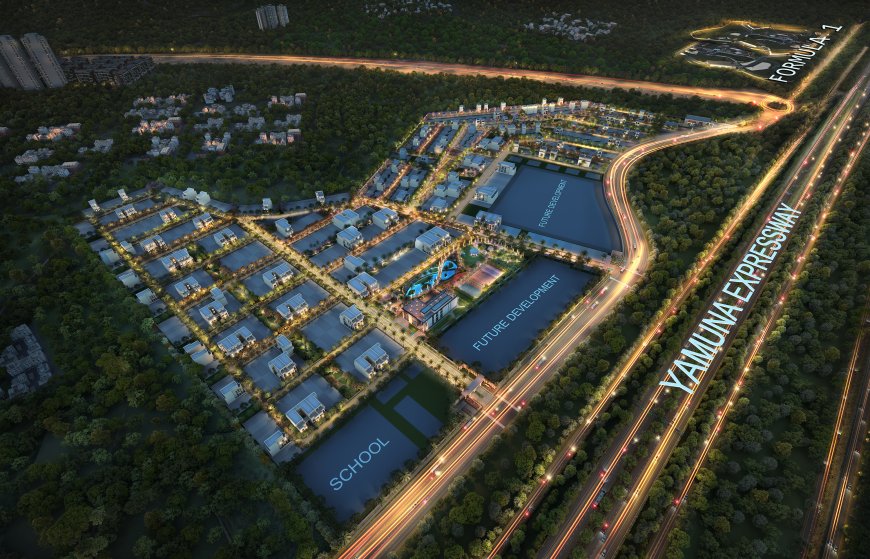
#Yamuna Expressway :- In early 2020, a small group of friends met at a café in Noida to discuss property investments. Most of them were planning to buy apartments in crowded sectors because those areas already looked “developed”. One of them suggested visiting the Yamuna Expressway because an international airport had been announced there.
They drove down the expressway — wide roads, open land, and almost no city life. The conclusion was obvious: “Nothing is here yet… it will take decades.”
So they ignored it.
Four years later, the same group met again. This time the discussion was different. Prices had multiplied, infrastructure had started appearing, developers had launched townships, and investors were rushing to enter. The same empty land now had a timeline — because the airport was no longer an idea; it was becoming reality.
Real estate markets rarely change overnight. They change the moment economic activity becomes certain. The announcement of the Noida International Airport turned the Yamuna Expressway from a future possibility into a planned urban corridor.
That is why property prices here are not rising randomly — they are adjusting to a future city that is about to function.
Why Airports Always Change Real Estate Markets
An airport is not just transportation infrastructure — it is a demand generator. The moment flights begin operating, three permanent forces start working together: employment demand, business demand, and rental demand.
Thousands of professionals work directly and indirectly with an airport:
-
Aviation and ground staff
-
Logistics and cargo companies
-
Hotels and hospitality services
-
Corporate offices and vendors
These people prefer to live close to work. Daily commuting from distant cities becomes impractical. That continuous migration creates long-term housing absorption.
At the same time, businesses prefer offices near airports for connectivity, and travelers need short-stay accommodation. Because of this, airport regions grow faster than traditional residential areas.
The Yamuna Expressway is entering exactly that transformation phase.
Price Movement — What Has Already Happened
Even before full operations, the region has seen strong appreciation. This matters because early growth is usually driven by expectation, while later growth is driven by actual usage.
The Yamuna Expressway market has moved from a speculation phase to a utilization phase. Historically, this is the stage where prices become stable and steadily rising instead of fluctuating.
What Happens After Full Operations
Once flight activity increases, the growth pattern becomes predictable. The demand grows in stages:
-
Rental housing demand rises first — employees and contract workers need nearby accommodation
-
Retail and commercial demand follows — daily needs businesses open
-
End-user families shift after social infrastructure develops
-
Long-term capital appreciation stabilizes the market
This explains why both residential and commercial projects are gaining attention simultaneously in the corridor.
Infrastructure Multipliers Supporting Growth
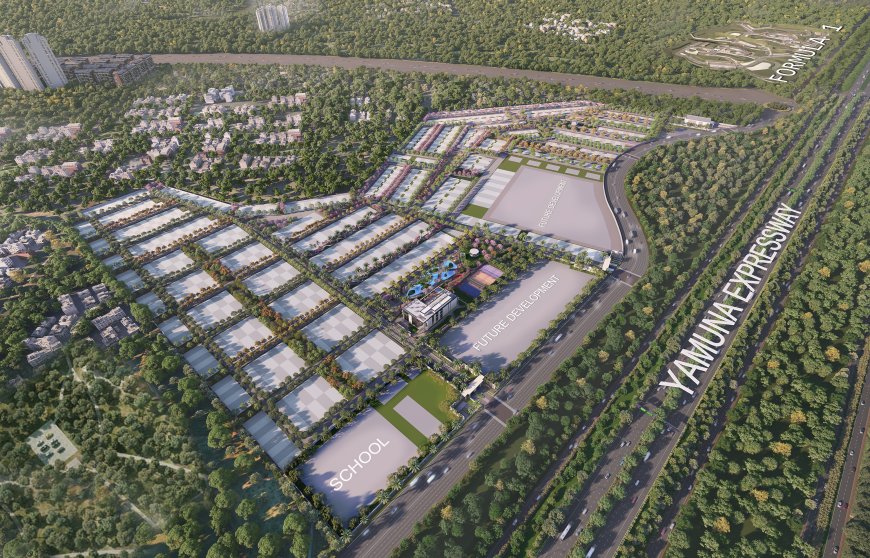
The airport is not the only factor shaping the future. Connectivity expansion, industrial zones, logistics parks, and urban planning around the corridor amplify demand. When multiple infrastructure projects develop together, the location transitions from a developing area to a functioning city.
The Yamuna Expressway is therefore evolving as a planned economic region rather than a single-purpose residential stretch.
Investor Concerns — Common Questions Answered
Is it already too late to invest?
No. Property cycles usually follow three stages:
-
Announcement growth
-
Construction growth
-
Operational growth
Most long-term appreciation occurs during operational growth because population actually shifts. The region is entering that phase now.
Short-term or long-term investment?
Short-term appreciation can occur, but airport-driven markets reward long-term holding the most. Consistent demand supports sustained growth.
What is the biggest risk?
Not the location — but project selection. In new corridors, usable assets perform better than purely speculative ones. Demand-based properties remain occupied even in early stages.
Why Integrated Developments Matter
In early city development, isolated buildings struggle because population arrives gradually. Integrated townships perform better because they create self-sustained ecosystems where living, working, and daily needs exist together.
This reduces dependency on external population during initial years and stabilizes property value faster.
ACE Group Developments on Yamuna Expressway
Some developments in the corridor are designed around usage-based demand rather than only residential expansion.
ACE Hive focuses on business suites and commercial activity. Such formats suit professionals, visiting executives, and service businesses connected with airport operations.
ACE Edit supports neighborhood retail and daily convenience demand. In emerging cities, everyday service spaces stabilize occupancy before full residential population arrives.
These formats align with how airport cities naturally grow — activity first, then expansion.
Future Outlook — The Expected Property Cycle
Globally, airport-driven cities follow a predictable pattern: initial speculation, construction stabilization, and then consistent operational growth. The Yamuna Expressway is moving toward that operational demand phase.
Future appreciation here is expected to be gradual and stable, supported by employment and infrastructure rather than sudden speculation spikes.
Conclusion — From Highway to Economic Corridor
The Yamuna Expressway is no longer just a fast road connecting cities. It is becoming a functioning economic corridor. The airport acts as a catalyst, but the real driver will be continuous inflow of people, businesses, and services.
For buyers and investors, the key decision is not whether development will happen — but when to enter and what to choose. Markets reward early participants because they enter before usage becomes obvious.
Once a place becomes practical to live and work in, value follows naturally. The Jewar Airport has set that process in motion, and the corridor is transitioning from potential to reality.
To Know More About Yamuna Expressway :- click here
What's Your Reaction?