
































Manual Pull Down Projection Screen Buying Guide
Find the best manual pull down projection screen with this buying guide covering screen size, material, durability, and setup.
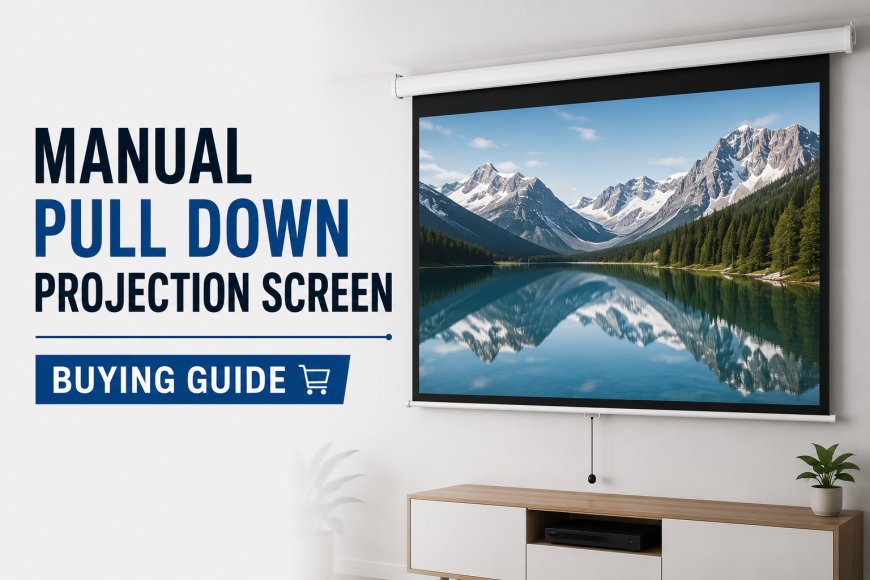
A projection screen is one of the most important components of any visual display setup. Whether used in classrooms, offices, training centers, conference rooms, or home entertainment spaces, the right screen can significantly improve image quality and viewing comfort. Among the many options available, manual pull-down projection screens remain a popular choice because of their affordability, simplicity, and reliability. They provide a practical solution for users who want a professional projection experience without the higher costs associated with motorized systems.
Unlike fixed-frame or electric screens, manual pull-down screens operate through a simple spring-loaded mechanism that allows users to lower the screen when needed and retract it after use. Their versatile design makes them suitable for both commercial and residential applications. However, choosing the right model requires careful consideration of factors such as screen size, material, aspect ratio, installation requirements, and room conditions.
Why Choose a Manual Pull-Down Projection Screen?
Manual projection screens continue to be widely used because they offer an excellent balance between performance and cost. They provide a dedicated projection surface that improves image brightness, color accuracy, and contrast compared to projecting directly onto a wall. This results in a more professional viewing experience, whether the content involves presentations, educational material, videos, or movies.
One of the biggest advantages of a manual pull down projector screen is its ease of use. The screen can be lowered quickly whenever required and retracted when not in use, helping maintain a clean and organized space. This makes it particularly useful in multipurpose rooms where permanent screens may not be practical.
Another key benefit is durability. Since manual screens do not rely on motors or electronic components, they generally require less maintenance and have fewer parts that could fail over time. For schools, offices, and organizations looking for a dependable long-term solution, manual screens often provide excellent value.
Their affordability also makes them attractive for budget-conscious buyers. Users can achieve professional-quality presentations without investing in more expensive automated systems.
Important Factors to Consider Before Buying
Choosing the right screen begins with understanding your specific viewing requirements. Screen size is one of the most important considerations. A screen that is too small may make content difficult to see, while an oversized screen can reduce image brightness and viewing comfort.
The ideal size depends on room dimensions, audience distance, and projector specifications. Larger conference rooms and classrooms typically require bigger screens to ensure visibility for all viewers. In smaller spaces, a moderately sized screen may provide a better viewing experience.
Aspect ratio is another important factor. Modern projectors commonly use widescreen formats such as 16:9, while some presentation-focused systems still operate in 4:3 format. Selecting a screen that matches the projector's native aspect ratio helps prevent image distortion and maximizes display quality.
Screen material also plays a crucial role in image performance. High-quality materials provide better light reflection, color consistency, and viewing angles. Smooth surfaces help maintain image sharpness and reduce visual distractions during presentations or entertainment sessions.
Installation and Room Considerations
Before purchasing a manual projection screen, it is important to evaluate the installation environment. Most manual screens can be mounted on either walls or ceilings, providing flexibility based on room layout and design preferences.
The screen should be positioned so that viewers have a clear line of sight and comfortable viewing angles. Placement should also align properly with the projector to avoid image distortion or alignment issues.
Lighting conditions significantly affect projection quality. Rooms with controlled lighting typically achieve the best results because excessive ambient light can reduce image contrast and visibility. Buyers should consider how much natural or artificial light is present in the space when selecting a screen.
Proper installation ensures smooth operation and helps extend the lifespan of the screen. A securely mounted screen remains stable during use and provides a more professional appearance.
Applications and Benefits Across Different Environments
Manual pull-down projection screens are highly versatile and suitable for various settings. In educational institutions, they support classroom instruction, training sessions, and seminars by providing a clear display surface for presentations and multimedia content.
Corporate offices frequently use manual screens in meeting rooms and conference spaces because they offer reliable performance without requiring complex installation or electrical connections. Their retractable design helps preserve room aesthetics when presentations are not taking place.
Home users also appreciate manual screens for movie nights, gaming, and entertainment purposes. They provide a cinematic viewing experience while remaining cost-effective and easy to operate.
Businesses looking for long-term projection solutions often work with a projector screen supplier to ensure they select the most suitable screen based on room size, projector compatibility, and usage requirements. Professional guidance can help buyers avoid common mistakes and achieve the best possible viewing results.
Maintenance and Long-Term Value
One of the reasons manual projection screens remain popular is their low maintenance requirements. Regular cleaning and careful handling are usually sufficient to maintain performance. Since there are no electronic motors involved, the risk of mechanical failure is significantly reduced.
Proper storage when not in use helps protect the screen surface from dust and accidental damage. Retracting the screen after each use also helps preserve image quality over time.
Investing in a quality manual screen often delivers excellent long-term value. Durable materials and reliable mechanisms ensure consistent performance for many years, making them a practical choice for both professional and personal applications.
Conclusion
A manual pull-down projection screen is an excellent investment for users seeking a dependable, cost-effective, and versatile display solution. Its ability to enhance image quality, save space, and provide easy operation makes it suitable for classrooms, offices, conference rooms, and home entertainment environments.
By carefully considering screen size, material quality, aspect ratio, installation requirements, and room conditions, buyers can select a screen that meets their specific needs and delivers a superior viewing experience. With the right choice, a manual projection screen can provide years of reliable performance and significantly improve the effectiveness of presentations and visual content.
What's Your Reaction?