



























How Brands Can Use Animated Marketing Videos to Stand Out Online
Animated marketing videos give brands a flexible way to compete for attention, simplify complicated messages, strengthen brand identity, and tell stories across digital channels.

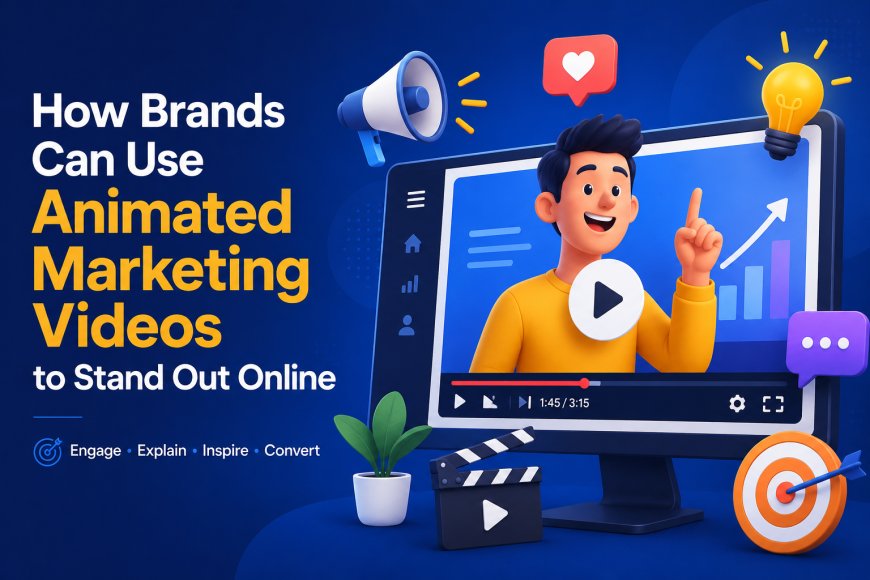
In today’s crowded digital landscape, brands have only a short window to capture attention. Social media feeds are filled with videos, advertisements, graphics, and promotional content competing for the same audience. For businesses looking for a creative way to communicate their message, animated marketing videos can provide a powerful solution.
Animation gives brands the freedom to visualize ideas that may be difficult or expensive to capture with traditional video. From explaining complex products to telling a memorable brand story, animation can combine visuals, movement, sound, and storytelling into one engaging experience. Recent industry discussions also highlight animation’s flexibility, brand consistency, and ability to communicate ideas that are difficult to show through live-action video.
What Are Animated Marketing Videos?
Animated marketing videos are promotional videos created primarily through animation, motion graphics, illustrations, characters, typography, or 2D and 3D visual elements. Brands can use them to introduce products, explain services, promote campaigns, educate customers, or communicate their identity.
Unlike traditional live-action videos, animation does not depend on physical locations, actors, or real-world environments. This gives creative teams much more control over how a message looks and feels.
Common examples include:
- Animated explainer videos
- 2D marketing animations
- 3D product animations
- Motion graphics videos
- Animated social media advertisements
- Brand storytelling videos
- Product demonstration animations
- Animated educational content
The right format depends on the brand’s audience, marketing objective, message, and distribution channel.
Why Animated Marketing Videos Help Brands Stand Out
1. Capture Attention With Movement
Online audiences scroll quickly, especially on social media. A static image may be overlooked, while movement, visual transitions, characters, and animation can immediately create a reason to stop and watch.
The goal, however, should not simply be to make something flashy. Effective animation uses movement to guide attention toward the most important part of the message.
A strong opening can introduce a problem, surprising visual, question, or compelling statement that encourages viewers to continue watching.
2. Make Complex Ideas Easier to Understand
Some products and services are difficult to explain with words alone. Technology platforms, financial services, software, manufacturing processes, and innovative products may involve complicated concepts that audiences do not immediately understand.
Animation can break these ideas into simple visual steps.
For example, instead of explaining how a software platform works through several paragraphs, an animated video can visually show:
Problem → Solution → Product → Benefits → Call to Action
This makes the information easier to follow while keeping the viewer focused on the main message.
Animation is particularly useful when a product or service is difficult to demonstrate physically or contains abstract concepts.
3. Build a Distinctive Brand Identity
One of the biggest advantages of animation is creative control.
Brands can develop a recognizable visual language using:
- Brand colors
- Typography
- Character design
- Illustration styles
- Motion patterns
- Transitions
- Voiceover
- Sound design
- 2D or 3D elements
When these elements are used consistently, animated content can become an extension of the brand itself.
This is particularly valuable for businesses competing in industries where many companies offer similar products or services. A distinctive animation style can help audiences recognize your content before they even see the logo.
4. Tell Stories That Connect With Audiences
People do not always remember lists of product features, but they can remember stories.
Animated marketing videos allow brands to build characters, situations, visual metaphors, and narratives around their message. A company can show a customer struggling with a problem, introduce its solution, and demonstrate the transformation.
This storytelling approach makes promotional content feel less like a sales pitch and more like a meaningful experience.
A strong animated brand story should answer three basic questions:
What problem does the audience have?
How does the brand solve it?
Why should the audience care?
Keeping these questions at the center of the script helps prevent animation from becoming visually impressive but commercially ineffective.
5. Showcase Products From Any Angle
For products that benefit from detailed visual presentation, 3D animation can be especially effective.
A 3D product animation can show internal components, different angles, product features, assembly processes, or functionality that would be difficult to demonstrate through conventional filming.
For example, a technology company could use animation to reveal what happens inside a device. A SaaS company could visualize an otherwise invisible digital process. A manufacturer could demonstrate how a machine operates without building a physical demonstration set.
This creative flexibility makes animation useful for both consumer-facing and B2B marketing.
6. Create Content for Multiple Digital Channels
A major advantage of animated marketing videos is their versatility.
A single core animation can potentially be adapted into multiple content formats for different platforms. Brands can create:
- Short social media clips
- Website videos
- Digital advertisements
- Email marketing content
- Presentation visuals
- Product launch videos
- Landing-page videos
- Educational content
Instead of treating each video as an isolated asset, marketers can build a content system around the original production.
For example, a 90-second animated marketing video could be edited into several shorter clips, each focusing on a different feature or benefit.
This approach can help brands maintain consistent visual identity across multiple channels.
7. Strengthen Social Media Marketing
Social media is one of the most natural environments for animated content.
Short animations can communicate an idea quickly while using motion and visual storytelling to compete for attention in busy feeds. Different versions can also be created for platforms with different aspect ratios and audience behaviors.
Brands can use animation for:
- Product announcements
- Educational tips
- Promotional campaigns
- Customer problems and solutions
- Industry statistics
- Brand stories
- Event promotions
- New feature announcements
The key is to design the content for the platform rather than simply uploading the same video everywhere.
A short vertical animation may work well for mobile-first platforms, while a longer explainer could be more appropriate for a website or YouTube.
8. Make Your Brand More Memorable
Good marketing is not only about getting someone to watch. It is also about being remembered afterward.
Animation can combine visual style, characters, music, voiceover, storytelling, and motion to create a distinctive experience. When these elements work together, the audience has more than just a written description of the company to remember.
Consistency is important here. Using the same visual language across multiple animated videos can strengthen recognition over time.
9. Support SEO and Website Engagement
Animated marketing videos can also become useful assets within a broader content and SEO strategy.
A video can complement a service page, product page, blog post, or landing page by providing another way for visitors to understand the subject.
For SEO, the video itself should not be treated as a replacement for useful written content. Instead, it can support the page by improving the overall user experience and helping communicate information visually.
Brands should also optimize the surrounding page with relevant text, descriptive titles, transcripts where appropriate, structured data when applicable, and a clear video thumbnail.
The result is a page that serves both search engines and human visitors.
10. Use Animation to Humanize Complex Brands
Animation does not have to feel corporate or overly technical.
Characters, humor, visual metaphors, and storytelling can give a brand a more approachable personality. This can be particularly useful for businesses operating in industries that audiences may find intimidating or complicated.
For example, a financial company could use friendly characters to explain an unfamiliar concept, while a technology company could use visual storytelling to make a complex software product feel easier to understand.
The style should always match the brand. A playful animation may work for one company but feel inappropriate for another.
How to Create an Effective Animated Marketing Video
Creating an animated video should begin with strategy rather than visual effects.
Define the Marketing Goal
Start by identifying exactly what the video needs to achieve.
Is the goal to:
- Increase brand awareness?
- Generate leads?
- Explain a product?
- Promote a new service?
- Increase website conversions?
- Educate customers?
- Support a product launch?
A clear objective will influence everything from the script to the animation style and call to action.
Understand Your Target Audience
A video created for enterprise decision-makers should not necessarily look or sound the same as one created for teenagers on social media.
Consider your audience’s:
- Problems
- Interests
- Expectations
- Buying motivations
- Industry knowledge
- Preferred platforms
The more clearly you understand your audience, the easier it becomes to create relevant content.
Write a Strong Script
Animation can make a weak script look attractive, but it cannot fix unclear messaging.
Keep the script focused on one central idea. Avoid unnecessary information and complicated terminology.
A useful structure is:
Hook → Problem → Solution → Benefits → CTA
This gives the video a logical progression and helps viewers understand what they should do next.
Choose the Right Animation Style
Not every project needs the same visual approach.
Depending on the objective, you might choose:
- 2D character animation
- Motion graphics
- 3D animation
- Whiteboard animation
- Kinetic typography
- Product animation
- Mixed-media animation
The style should support the message rather than distract from it.
Include a Clear Call to Action
Every marketing video should have a purpose.
At the end, tell viewers what to do next. Depending on the campaign, this could be:
Visit your website.
Request a demo.
Learn more.
Contact your team.
Download a resource.
Buy the product.
A clear CTA turns attention into an actionable next step.
Common Mistakes Brands Should Avoid
Even professionally produced animation can underperform if the strategy is wrong.
Some common mistakes include:
Focusing Too Much on Visuals
Beautiful animation is valuable, but aesthetics should support communication. If viewers remember the animation but cannot explain what the company offers, the video has missed its primary purpose.
Trying to Say Everything
A marketing video does not need to explain every feature of a product. Choose the most important message and build the story around it.
Ignoring Brand Consistency
Colors, typography, tone, and visual style should align with the broader brand identity.
Creating One Video Without a Distribution Plan
Production is only one part of video marketing. Before creating the video, determine where it will be published and how it will be promoted.
Forgetting Mobile Viewers
Many audiences encounter marketing content on mobile devices. Videos should therefore be designed with clear visuals, readable text, appropriate pacing, and suitable aspect ratios.
Final Thoughts
Animated marketing videos give brands a flexible way to compete for attention, simplify complicated messages, strengthen brand identity, and tell stories across digital channels. Their biggest advantage is not animation itself but the creative freedom it gives marketers to communicate ideas that might otherwise be difficult to show.
For brands considering animation, the best approach is to start with the business objective, understand the audience, develop a focused story, and then select the visual style that supports the message.
Whether you need an explainer video, product animation, motion graphics campaign, or branded social content, Hatch Studios can help turn complex marketing messages into engaging visual experiences.
When animation is built around a clear strategy rather than used simply because it looks impressive, it can become a valuable part of a brand’s broader digital marketing strategy.
What's Your Reaction?