

























How to Choose Custom Tea Boxes That Fit Your Brand
Learn how to choose custom tea boxes for your brand, including cardboard materials, tuck-end styles, custom printing, packaging design, and bulk ordering.

Packaging plays an important role in how customers perceive a tea brand. Before tasting the tea, customers may notice the box design, colors, product information, and overall presentation. A well-planned package can make a product easier to recognize, communicate its identity, and create a consistent experience across retail stores and online orders.
However, selecting the right packaging involves more than choosing an attractive design. Tea businesses must consider box dimensions, materials, printing, product protection, order quantities, and production costs. The right choice depends on the type of tea you sell, your target audience, and your business requirements.
Custom tea boxes offer businesses an opportunity to create packaging that reflects their brand while meeting practical needs. Whether you operate a small tea business or manage an established retail brand, understanding the available options can help you make a more informed decision.
This guide explains how to choose custom tea packaging boxes that suit your product, budget, and brand identity.
1. Understand Your Product Before Choosing Packaging
The first step is to identify exactly what your packaging needs to hold. Tea products come in different forms, including tea bags, loose-leaf tea, herbal blends, and assorted gift collections. Each may require a different box size and internal arrangement.
Before choosing your packaging, consider these questions:
-
What type of tea will the box contain?
-
How much product will each box hold?
-
Will the tea be packaged in individual sachets or an inner pouch?
-
Will the box be sold in retail stores, online, or as a gift?
-
Does the packaging need dividers or inserts?
Answering these questions helps you identify the appropriate dimensions and structure.
It is also important to distinguish between the outer retail carton and the package that directly protects the tea. A cardboard box may provide branding and structure, but it does not automatically provide the moisture and oxygen barrier required to preserve tea quality. Choose suitable food-contact packaging for the tea itself and confirm that the complete packaging system meets your product's storage requirements.
2. Select the Right Material for Your Tea Boxes
The packaging material influences appearance, printing, structural strength, and cost. When comparing cardboard tea boxes, consider how the material will perform in the conditions in which your product will be stored, displayed, and transported.
Cardboard packaging
Cardboard is commonly used for folding cartons because it can accommodate printed designs and different box structures. Depending on its grade and thickness, it may be suitable for a range of retail tea products.
It can provide a clean surface for your logo, product name, illustrations, and other brand elements. However, the appropriate board specification depends on the size and weight of the package, the intended use, and the required level of protection.
Kraft-style packaging
Kraft-style materials are often chosen by brands that prefer a natural or understated appearance. Their visual style can complement botanical illustrations, simple typography, and muted colors.
Nevertheless, an earthy appearance alone does not establish that a package is environmentally friendly. If sustainability is important to your brand, verify the material composition, applicable certifications, and local recycling options before making environmental claims.
How to make the right choice
Ask your supplier about available material grades, thicknesses, print compatibility, and structural suitability. If the appearance or feel of the finished package matters, request a sample when possible.
The aim is to select material that supports your branding without compromising the practical requirements of the product.
3. Choose a Box Style That Matches Your Needs
The structure of your packaging determines how it opens, closes, assembles, and holds the product. A suitable design should be convenient for both your business and your customers.
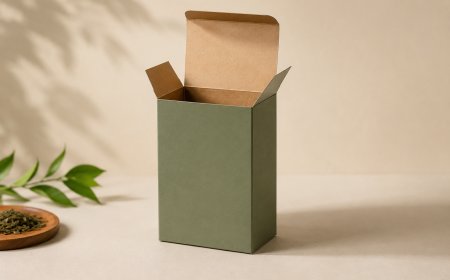
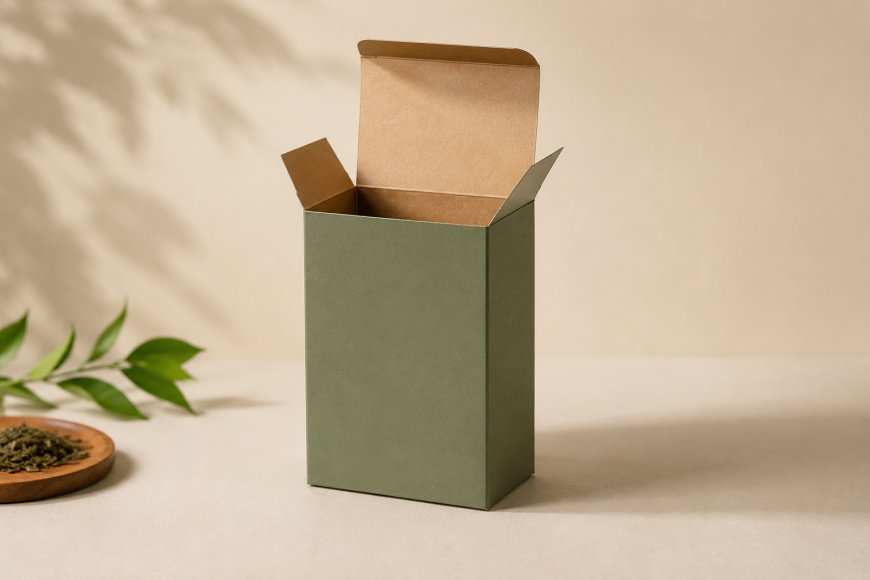
Tuck-end tea boxes are one option worth considering. They use folding panels that tuck into the carton to close it. Depending on the specific construction, this style may suit retail products that need a straightforward and neat presentation.
When comparing box styles, evaluate the following factors:
-
Ease of assembly: Can your staff fold and fill the boxes efficiently?
-
Storage: Can flat-packed cartons be stored conveniently before assembly?
-
Shelf presentation: Will the box display the product name and branding clearly?
-
Customer convenience: Can buyers open the package without difficulty?
Not every tea product requires a complex structure. A simple folding carton may be the right choice if it accommodates the contents and presents the brand effectively.
Before approving a design, ask for a structural template or mockup so you can review the proposed shape and folding panels.
4. Design Packaging That Reflects Your Brand Identity
Your packaging should communicate a consistent brand identity. Customers should be able to recognize your business through its visual elements, especially if they encounter your products in different stores or online marketplaces.
When developing custom tea box packaging, begin with your existing brand guidelines.
Use consistent colors
Choose colors that complement your logo and other marketing materials. A consistent palette helps create a recognizable visual identity across packaging, websites, and promotional content.
Keep typography readable
Select fonts that match your brand's personality while keeping essential information easy to read. Too many font styles or decorative elements can make the package look crowded.
Choose relevant graphics
Tea leaves, botanical illustrations, and other product-related imagery can support a design when they are appropriate for the brand. Use clear artwork and leave enough space for important text.
Organize the information
Depending on the product and applicable regulations, packaging may need to include the tea variety, ingredients, net quantity, preparation instructions, business details, and other required information.
Review these requirements before finalizing your design. Labeling obligations vary by product and market, so seek appropriate guidance when necessary.
The best design balances visual appeal with clarity. Customers should be able to identify the product and understand its key information without struggling to read the package.
5. Use Custom Printed Tea Boxes to Improve Presentation
Printing gives businesses an opportunity to communicate their identity directly on the packaging. Custom printed tea boxes can display a logo, product name, brand colors, illustrations, and other relevant details.
Before choosing a printing approach, discuss the artwork, material, order quantity, and color requirements with your supplier.
Understand printing colors
CMYK printing uses four process colors to reproduce a broad range of shades. Spot-color systems, such as Pantone Matching System (PMS), can be used when particular brand colors need more controlled reproduction.
The appropriate option depends on your artwork, budget, and color-consistency requirements.
Check the artwork carefully
Before approving production, review:
-
Logo size and placement
-
Spelling and product information
-
Image resolution
-
Text readability
-
Bleed and safe margins
-
Artwork positioning around folds
-
Color appearance and consistency
Ask your supplier for its artwork specifications before preparing the final files. A digital mockup can help you review the proposed layout, but it may not perfectly represent the final printed colors or physical material.
If precise color matching is important, ask whether a physical proof is available.
6. Add Your Logo Strategically
Tea boxes with logo printing can help customers connect the product with your business. A clear logo can also make different products within the same range look consistent.
Your logo does not need to occupy every panel. Depending on the design, it may work best on the front of the box, accompanied by the product name and a small amount of supporting information.
For an effective result:
-
Use a high-resolution logo file.
-
Ensure sufficient contrast between the logo and background.
-
Keep important artwork away from folds and edges.
-
Make sure the product name remains easy to identify.
If you sell several tea varieties, consider using a consistent layout with different colors or illustrations to distinguish each product. This can help customers recognize your brand while identifying their preferred blend.
A thoughtful design is often more effective than adding too many decorative elements.
7. Measure Your Product and Confirm the Box Dimensions
Incorrect dimensions can create avoidable problems during packaging and distribution. A box that is too small may not accommodate the product, while an oversized carton may use unnecessary material and occupy more storage space.
When ordering custom cardboard tea boxes for retail, measure the product or inner package that will go inside the box. Confirm the internal length, width, and height required for the intended contents.Also consider the space required for inserts, dividers, or other packaging components.
Ask your supplier how it measures box dimensions and whether the quotation refers to internal or external measurements. Review the dieline, which is the flat template showing the carton panels, folds, and cutting lines.
Where possible, request a physical sample or suitable structural prototype before approving a large order. This gives you an opportunity to check the fit, closure, and assembly process before full production begins.
8. Compare Prices and Choose the Right Order Quantity
The cost of custom packaging depends on several factors, including material, dimensions, printing, finishing, quantity, and delivery arrangements.
If you are searching for affordable custom tea packaging boxes, compare the complete cost rather than looking only at the unit price.
Consider smaller orders
Smaller quantities may suit new businesses that want to test a design before committing to a larger production run. They can also be practical for limited product ranges or seasonal packaging.
However, smaller orders may have a higher per-box cost because setup and production expenses are distributed across fewer units.
Evaluate bulk ordering
Custom tea boxes in bulk may offer a lower unit price, depending on the supplier's pricing structure. However, ordering a large quantity only makes sense when the packaging is likely to be used.
Estimate your expected demand and consider storage capacity, seasonal sales, product changes, and the possibility of updating your branding.
When comparing quotations, ask about:
-
Minimum order quantity
-
Price per box and total order cost
-
Material and printing specifications
-
Setup or design charges, if applicable
-
Delivery charges and estimated lead time
-
Proofing and approval procedures
Comparing quotations based on identical specifications makes it easier to identify the option that best suits your budget.
9. Find a Reliable Supplier for Custom Tea Boxes Wholesale
Choosing a supplier is as important as choosing a design. A clear production process can help you understand what you are buying and what to expect before the order is finalized.
When comparing custom tea boxes wholesale, ask the supplier about its available materials, printing options, artwork requirements, minimum order quantity, and production schedule.
You should also confirm how design approvals work and whether a dieline, digital mockup, or physical sample is available.
For example, the ECO Packaging Masters product page for Custom Tea Boxes lists cardboard stock, a tuck-end style, custom printing, design and dieline support, and a 3D mockup. The page also states a starting quantity of 100 boxes and a typical turnaround of 10–12 business days.
These are listed product details, not a guarantee of availability or delivery for every order. Confirm the current specifications, pricing, minimum quantity, shipping arrangements, and production timeline directly with the supplier before placing an order.
A professional-looking mockup is useful for reviewing the proposed design, but it does not necessarily confirm the physical strength, print quality, or exact material feel of the finished carton.
Ask questions, review the quotation, and approve the final artwork before production begins.
10. Consider the Customer Experience After Purchase
Good packaging should work well beyond the moment a customer first sees it. Think about how the box will be opened, stored, displayed, and handled throughout the product's use.
A clear product label can help customers distinguish between tea varieties. A practical closing structure can make the package more convenient to handle. Consistent visual design can also support recognition when customers buy from your brand again.
If your products are sold online, remember that the retail box may need additional protection during shipping. An outer shipping carton or other protective packaging may be necessary depending on the delivery method and handling conditions.
For gift collections, consider how multiple products fit together and whether dividers or inserts are needed.
These practical details help you choose packaging that supports both your brand identity and your customers' expectations.
Frequently Asked Questions
1. What are custom tea boxes?
Custom tea boxes are cartons designed or printed to meet a tea brand's requirements. Businesses can customize artwork, dimensions, colors, and certain structural features to suit their products and branding.
2. Which material is best for custom tea packaging boxes?
Cardboard is commonly used for folding cartons because it supports printing and different structures. The appropriate grade and thickness depend on the product, box dimensions, handling conditions, and desired presentation. Tea may also require a separate protective inner package.
3. Are tuck-end tea boxes suitable for retail packaging?
Tuck-end tea boxes can be suitable for many retail applications because their folding panels provide a straightforward closing structure. The final choice depends on the product dimensions, packaging requirements, and intended use.
4. Can small businesses order custom tea boxes?
Yes, some suppliers offer smaller production quantities, but minimum order requirements vary. Ask about the minimum quantity, setup costs, and available customization options before placing an order.
5. What information should tea boxes with a logo include?
Depending on the product and market, packaging may need to include the product name, ingredients, net quantity, preparation instructions, business details, and other required information. Check the applicable labeling requirements before approving the artwork.
6. How can I make custom tea packaging more affordable?
Compare suppliers using the same material, dimensions, printing requirements, and order quantity. Consider a practical box structure and order based on realistic demand rather than choosing a larger quantity solely to reduce the unit price.
7. What is a dieline in custom tea box packaging?
A dieline is a flat template that shows the carton panels, folds, and cutting lines. It helps designers position artwork correctly and allows the proposed structure to be reviewed before production.
8. Where can I order custom tea boxes wholesale?
You can contact packaging suppliers that offer customized dimensions, printing, and bulk ordering. Review their specifications, minimum quantities, quotation, proofing process, and delivery terms before choosing a supplier.
Final Thoughts
Choosing custom tea boxes that fit your brand requires a balance between appearance, product fit, material, printing, cost, and customer convenience. The most suitable packaging is not necessarily the most complicated or expensive. It is the option that meets your product's requirements and communicates your brand clearly.
Start by identifying what your tea product needs, choose an appropriate box structure, and develop artwork that matches your existing brand identity. Then compare quotations, review the dieline or mockup, and confirm the production details before approving your order.
If you are exploring packaging options for your business, visit the ECO Packaging Masters Custom Tea Boxes product page to review the listed options and confirm the latest specifications.
With careful planning, the right packaging can support a consistent brand presentation and a practical experience for your customers.
What's Your Reaction?