




























Hardwood Flooring Installation in Alpharetta GA: Key Tips
Picture a family that has lived in the same North Fulton home for ten years. The carpet is stained, the kids are older, and the dog has left his mark on nearly every room.

Picture a family that has lived in the same North Fulton home for ten years. The carpet is stained, the kids are older, and the dog has left his mark on nearly every room. They want something that looks warm, lasts for decades, and cleans up easily. For many homeowners in that spot, hardwood becomes the obvious choice.
Still, deciding on wood floors is only the beginning. Hardwood flooring installation in Alpharetta GA comes with its own set of factors, from Georgia's humid summers to the way local homes were built. Knowing what affects the process can help homeowners set realistic expectations and avoid costly surprises.
Why Installation Matters as Much as the Wood
People often spend weeks choosing a wood species and stain color. Far fewer think about how the boards will actually go down. Yet installation quality often decides whether a floor looks great for 30 years or starts to gap and cup after two.
Wood is a natural material. It swells when the air is damp and shrinks when the air is dry. In a climate where summer humidity can stay high for months, that movement is a real concern.
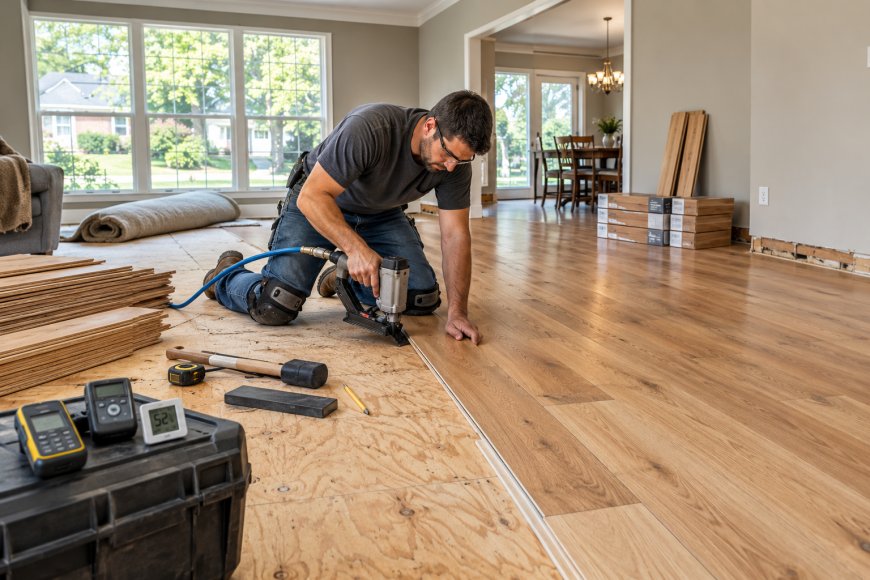
A careful installer accounts for this. They check moisture levels in both the subfloor and the wood. They leave proper expansion gaps along the walls. They also let the boards sit in the home for several days so the wood can adjust to the indoor conditions before it's nailed or glued in place.
Understanding the Subfloor
What lies beneath the floor shapes nearly every installation decision. Many homes in the area sit over a crawl space with a plywood or OSB subfloor. Others, especially newer builds and finished basements, sit on concrete slabs.
Crawl space homes usually allow for nail-down solid hardwood, the traditional method. However, crawl spaces in Georgia can trap moisture. A floor installed over a damp crawl space without a vapor barrier may warp over time, no matter how well the boards were laid.
Concrete slabs call for a different approach. Solid hardwood generally isn't recommended directly over concrete. Instead, engineered hardwood is often glued down or floated over a moisture-blocking underlayment. This setup handles the slab's natural moisture far better.
Solid vs. Engineered Hardwood
Solid hardwood is exactly what it sounds like: a single piece of wood from top to bottom. It can be sanded and refinished many times, which is why some floors last a century. Oak, hickory, and maple remain popular picks across the Southeast.
Engineered hardwood has a real wood top layer bonded to layers of plywood or composite core. That build makes it more stable when humidity changes. It's often the better fit for basements, slabs, and rooms where moisture is a concern.
Neither option is better in every case. The right choice depends on the home's structure, the room, and how the space will be used. A formal dining room over a dry crawl space might be perfect for solid oak. A basement media room almost always calls for engineered planks.
The Real Benefits of Hardwood Floors
The most talked-about advantage is resale value. Real estate agents often point out that buyers notice hardwood right away. In a competitive suburban market, a well-installed wood floor can help a listing stand out from homes with dated carpet.
Durability is another big draw. Hardwood doesn't hold dust, pet dander, or allergens the way carpet fibers do. A quick sweep and an occasional damp mop keep it looking clean, which matters to families with allergies.
There's also the long-term view. When a hardwood floor gets scratched or worn, it can be sanded and refinished rather than replaced. Few flooring types offer that kind of second, third, or even fourth life.
Finally, hardwood simply feels different underfoot. It adds warmth and character that many synthetic floors try to copy but don't fully match.
How Hardwood Compares to Laminate
Not every homeowner ends up choosing real wood. Budget, lifestyle, and room type all play a part. Laminate has grown far more realistic in recent years, with textured surfaces that mimic grain patterns closely.
Homeowners in smaller towns around the state often weigh these options the same way. Someone researching Laminate Flooring Installation in Watkinsville, GA might be looking for a scratch-resistant, lower-cost floor for a rental property or a busy playroom. Those are smart uses for laminate.
The tradeoff is lifespan. Laminate can't be refinished. Once the wear layer is damaged, the planks need replacing. Hardwood costs more upfront but tends to offer better long-term value when properly maintained.
Real-World Scenarios Homeowners Face
Consider a couple who bought a 1990s two-story home and want to pull up the original carpet. They find old plywood underneath with a few soft spots near the kitchen. Before any wood goes down, those areas need repair. Skipping that work could lead to squeaks and uneven boards later.
Then there's the new construction buyer. Their builder offered basic flooring, but they want an upgrade after closing. Because the home sits on a slab, they lean toward engineered hickory, which handles both the concrete and the busy household well.
Another common case involves pets. A family with two large dogs might worry about scratches. Here, harder species like hickory or a matte finish can hide wear better than soft pine or high-gloss coatings. Some families in this situation compare their options against Laminate Flooring Installation in Watkinsville, GA projects friends have done, then decide based on how long they plan to stay in the home.
What Affects Cost and Timeline
Pricing for hardwood flooring installation in Alpharetta GA varies widely. Wood species, plank width, subfloor condition, and finish type all shift the final number. Removing old flooring and moving furniture can add to the total as well.
Prefinished boards arrive already stained and sealed, so the job often wraps up faster. Site-finished floors are sanded and stained after installation. That takes longer and creates some dust, but it allows for custom colors and a seamless surface.
A typical project for a few rooms may take several days, not counting acclimation time. Larger homes or jobs that involve stairs naturally take longer.
Choosing the Right Professional
Most flooring experts agree that homeowners should ask plenty of questions before hiring anyone. Good installers will explain how they test moisture, what underlayment they use, and how they handle transitions between rooms.
It also helps to look for someone familiar with local building styles. Regional companies such as Lica Hardwood Floors LLC are among those that work with the mix of crawl space and slab homes common across the region. Experience with these conditions often shows in the finished result.
Reading reviews, asking to see past work, and confirming licensing and insurance are simple ways to narrow the options.
Final Thoughts
Hardwood remains one of the most lasting investments a homeowner can make. But the beauty of the wood depends heavily on what happens during installation. Moisture control, subfloor prep, and the right product for each room make all the difference.
For anyone in Alpharetta thinking about replacing old floors, taking time to understand these factors leads to better decisions and a floor that holds up for many years.
Frequently Asked Questions
How long does hardwood flooring installation usually take?
Most projects covering a few rooms take three to five days. Wood also needs several days to acclimate in the home first, and site-finished floors add extra drying time.
Can hardwood be installed over a concrete slab?
Yes, but engineered hardwood is usually the better choice. It's glued down or floated over a moisture barrier, since solid wood can warp when exposed to slab moisture.
Is hardwood or laminate better for homes with pets?
Laminate tends to resist scratches better. Hardwood can still work well with pets when homeowners choose harder species like hickory and a low-sheen finish.
Does humidity affect hardwood floors in Georgia?
It does. High humidity causes wood to expand, while dry winter air makes it shrink. Proper acclimation, expansion gaps, and steady indoor humidity help limit gaps and cupping.
How often should hardwood floors be refinished?
Many floors need refinishing every 7 to 10 years, depending on foot traffic. A simple screen and recoat between full refinishes can help extend the life of the finish.
What's Your Reaction?