


























Cost of Setting Up a Recycled Paper Manufacturing Plant 2026: Demand Analysis and ROI

Setting up a recycled paper manufacturing plant positions investors in a stable, sustainability-driven segment of the pulp and paper value chain, backed by consistent demand from packaging, tissue and hygiene, and printing and writing sectors. As brand owners and retailers continue to lower virgin-fiber usage and e-commerce-driven packaging consumption rises, the global recycled paper industry continues to present dependable opportunities for manufacturers and entrepreneurs seeking long-term stability in a circular-economy-aligned commodity sector.
IMARC Group's Detailed Project Report (DPR) provides a complete roadmap for establishing a recycled paper manufacturing plant - covering market outlook, plant setup, machinery, raw materials, cost structure, and investment opportunities.
Request for a Sample Report: https://www.imarcgroup.com/recycled-paper-manufacturing-plant-project-report/requestsample
Global Market Outlook and Investment Opportunity:
The global recycled paper market demonstrates a steady growth trajectory, valued at USD 38.92 Billion in 2025. According to IMARC Group's estimates, the market is expected to reach USD 55.88 Billion by 2034, exhibiting a CAGR of 4.1% from 2026 to 2034. This expansion is driven by rising consumption of paper-based packaging, increasing collection and utilization of recovered paper for tissue and printing-grade paper, and strong sustainability commitments by brand owners and retailers to lower virgin-fiber usage.
Recycled paper is paper manufactured using recovered paper and board - post-consumer and/or pre-consumer waste - as the primary fiber source instead of virgin wood pulp. It is produced by repulping collected paper, removing contaminants such as plastics, staples, inks, coatings, and adhesives, and then reforming the cleaned fiber slurry into new paper sheets through forming, pressing, and drying, with deinking, bleaching, strength additives, fillers, and surface sizing applied as needed to meet grade-specific requirements.
Key Investment Highlights:
● Process Used: Sorting and pulping, screening/cleaning, deinking (optional), thickening/refining, paper machine forming/pressing/drying, calendaring, rewinding, cutting and packing.
● End-use Industries: Packaging, tissue and hygiene, printing and writing.
● Applications: Used for corrugated boxes (liner and fluting), paper bags and cartons, tissue/napkin/roll base paper, notebooks and office paper (grade-dependent), and industrial wrapping papers.
Plant Capacity and Production Scale:
The proposed recycled paper manufacturing facility is designed with an annual production capacity ranging between 10,000-50,000 MT, enabling economies of scale while maintaining operational flexibility. This capacity allows manufacturers to serve packaging, tissue and hygiene, and printing and writing sectors - ensuring steady demand across multiple industry verticals.
Factors Affecting Recycled Paper Manufacturing Plant Cost:
The operating cost structure of a recycled paper manufacturing plant is primarily driven by raw material consumption, particularly waste paper, which accounts for approximately 50-60% of total operating expenses (OpEx), followed by utilities at 20-30% of OpEx. The remainder comprises transportation, packaging, salaries and wages, depreciation, taxes, and other expenses. As with any manufacturing project, the precise investment quantum varies by plant location, capacity, technology, and material sourcing strategy.
● Raw Materials: 50-60% of OpEx
● Utilities: 20-30% of OpEx
Capital investment for the plant is led by machinery costs, which account for the largest portion of total capital expenditure, followed by land and site development costs covering land registration, boundary development, and related expenses. Exact CapEx figures (Land and Site Development Costs, Civil Works Costs, Machinery Costs, and Other Capital Costs) and detailed OpEx line items are Transportation, Packaging, Salaries and Wages, Depreciation, Taxes, Other Expenses.
Plant Setup Considerations: Step-by-Step Execution Plan:
● Site Selection: The location must offer easy access to key raw materials such as waste paper and water, along with cleaning chemicals. Proximity to target markets helps minimize distribution costs, and the site must have robust infrastructure, including reliable transportation, utilities, and waste management systems, along with compliance with local zoning laws and environmental regulations.
● Plant Layout Optimization: The layout should be optimized to enhance workflow efficiency, safety, and minimize material handling, with separate areas designated for raw material storage, production, quality control, and finished goods storage, plus space for future expansion.
● Equipment Selection: High-quality, corrosion-resistant machinery tailored for recycled paper production must be selected, including pulpers, screening systems, centrifugal cleaners, deinking flotation cells, dispersers, refiners, paper machines, and reeling and sheeting lines, all compliant with industry safety and efficiency standards.
● Raw Material Sourcing: Reliable suppliers must be secured for raw materials like waste paper, water, and cleaning chemicals to ensure consistent production quality, minimize transportation costs, and stabilize pricing through long-term contracts.
● Safety and Environmental Compliance: Safety protocols must be implemented throughout the production process, with advanced monitoring systems to detect leaks or deviations, and effluent treatment systems to minimize environmental impact and ensure compliance with emission standards.
● Quality Assurance Systems: A comprehensive quality management system should be implemented across all stages of operations, with appropriate testing, monitoring, validation, SOPs, documentation, traceability, and regular audits to support continuous improvement.
Machinery, Equipment, and Production Line Planning:
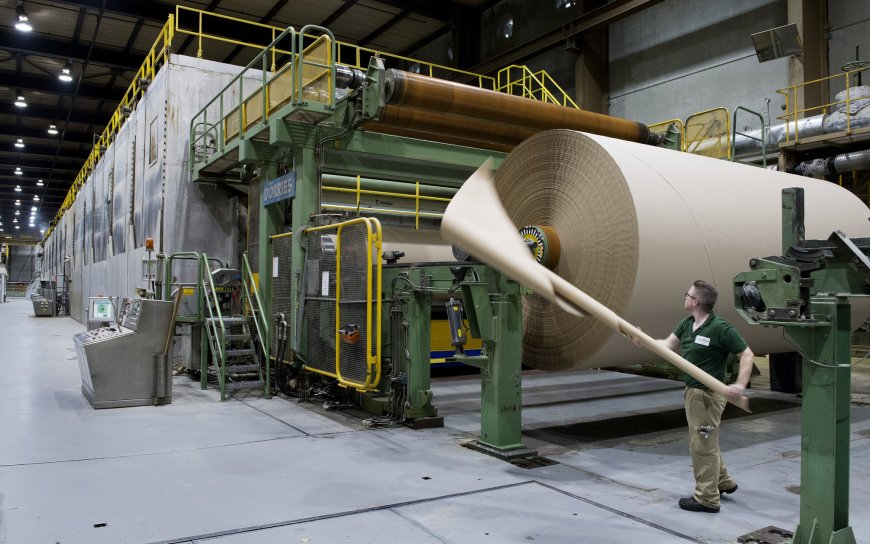
Key machinery for a recycled paper manufacturing plant project report includes pulpers for raw material preparation, screening systems and centrifugal cleaners for contaminant removal, deinking flotation cells and dispersers for fiber purification, refiners for pulp conditioning, paper machines for sheet forming, pressing and drying, and reeling and sheeting lines for finished product handling.
Raw Material Sourcing and Supply Chain Strategy:
Waste paper, water, and cleaning chemicals serve as the primary inputs for recycled paper production, with the recovered paper fiber source varying by target grade. Establishing long-term contracts with reliable suppliers of waste paper helps mitigate price volatility and ensures consistent raw material supply, given that raw materials alone account for the largest share of total operating expenditure.
Regulatory Compliance and Quality Standards:
Setting up a recycled paper manufacturing plant typically requires business registration, environmental clearances, factory licenses, fire safety certifications, and industry-specific permits, with local, state, and national regulations applying depending on the location. Compliance with packaging, tissue, and printing-grade specifications creates entry barriers that favor efficient and experienced producers.
ROI and Profitability Analysis:
The recycled paper manufacturing business demonstrates healthy profitability potential under normal operating conditions, supported by stable demand and value-added applications:
● Gross Profit Margins: 30-40%
● Net Profit Margins: 12-20%
Break-even in a recycled paper manufacturing business typically ranges from 3 to 5 years, depending on production scale, energy costs, raw material availability, and market competition. Lower operating costs and bulk sales contracts can accelerate return on investment.
How IMARC Group Supports Recycled Paper Manufacturing Projects:
IMARC Group provides customized Detailed Project Reports (DPRs), feasibility studies, and end-to-end project execution support to help investors, paper and packaging companies, and industrial manufacturers plan, budget, and execute recycled paper manufacturing projects across global markets - including market assessment, machinery selection guidance, regulatory navigation, and cost modeling tailored to specific plant locations and capacities.
Speak to Analyst for a Customized Report: https://www.imarcgroup.com/request?type=report&id=9089&flag=C
Who Should Read This Report:
● First-time investors evaluating manufacturing diversification into sustainable paper and packaging
● Paper, packaging, and tissue companies exploring backward or forward integration
● Printing and publishing companies seeking a dependable recycled paper supply chain
● Entrepreneurs and investors evaluating entry into the recycled paper production sector
Industry Leadership:
The global recycled paper industry is led by established players including Smurfit Kappa, International Paper, Stora Enso, WestRock, and Sonoco Products - serving packaging, tissue and hygiene, and printing and writing sectors worldwide.
Recent Industry Developments:
● January 2025: Canpac Trends completed the acquisition of the packaging business of Saptagiri Packagings. This move aims to enhance Canpac's market position and broaden its product offerings within the packaging industry.
Frequently Asked Questions:
1. What is the annual production capacity of the proposed plant?
The proposed facility is designed for an annual capacity of 10,000-50,000 MT.
2. What are the expected profit margins?
Gross profit margins typically range from 30-40%, with net profit margins of 12-20%, subject to plant-specific cost structures.
3. What is the biggest cost driver in recycled paper manufacturing?
Raw materials - primarily waste paper - account for 50-60% of total operating expenditure, with utilities accounting for a further 20-30%, making supplier relationships and price contracts a critical planning priority.
4. What raw materials are required for recycled paper manufacturing?
Recycled paper manufacturing requires raw materials such as waste paper, water, and cleaning chemicals. Depending on the target grade, additional deinking and bleaching chemicals may be needed.
Buy Now: https://www.imarcgroup.com/checkout?id=9089&method=2175
About Us:
IMARC Group is a global management consulting firm that helps the world's most ambitious changemakers create a lasting impact. The company excels in understanding its clients' business priorities and delivering tailored solutions that drive meaningful outcomes. IMARC Group provides a comprehensive suite of market entry and expansion services, including market assessment, feasibility studies, company incorporation assistance, factory setup support, regulatory approvals and licensing navigation, branding, marketing and sales strategies, competitive landscape and benchmarking analyses, pricing and cost research, and procurement research.
Contact Us:
IMARC Group
134 N 4th St. Brooklyn, NY 11249, USA
Email: sales@imarcgroup.com
Tel No: (D) +91 120 433 0800
United States: (+1-201-971-6302)
What's Your Reaction?