

























Best Fonts for 3D Puff Embroidery
Discover the best fonts for 3D puff embroidery, including bold, rounded, script, and block styles. Learn which fonts create clean, raised, and professional embroidery results.
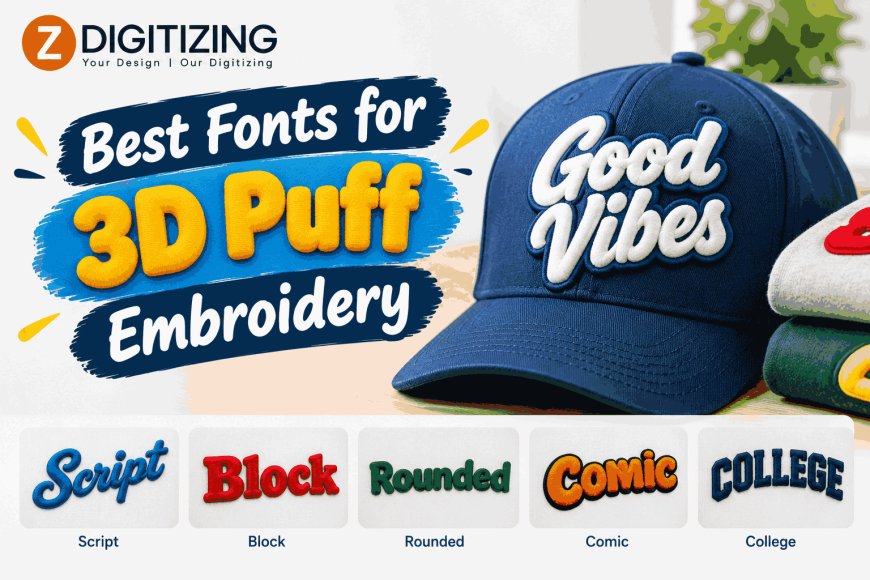
3D puff embroidery is a popular way to give embroidered logos and lettering a raised, dimensional appearance. Unlike standard flat embroidery, puff embroidery uses a layer of foam underneath the stitches, making selected parts of a design stand above the fabric.
The font you choose can have a major effect on the final result. Some fonts are naturally suited to puff embroidery because they have bold shapes, strong letterforms, and enough space for clean stitching. Others contain thin lines, tight curves, or small details that may become difficult to reproduce.
Whether you are creating a cap logo, sports design, clothing brand, team name, or promotional product, selecting the right font is an important part of the digitizing process.
This guide explains what makes a font suitable for 3D puff embroidery and highlights font styles that can work well for different projects.
What Makes a Font Good for 3D Puff Embroidery?
Not every font is designed with embroidery in mind.
A good puff embroidery font usually has enough thickness and open space for the stitches to cover the foam effectively.
Important characteristics include:
- Thick letter strokes
- Simple shapes
- Clean edges
- Moderate spacing
- Minimal fine details
- Strong visual weight
- Good readability
The final embroidery size also matters. A font that works well on a large cap logo may not work equally well when reduced to a small design.
Why Font Selection Matters in Puff Embroidery
3D puff embroidery has physical limitations that digital typography does not.
On a computer screen, a thin letter can look perfectly clear. During embroidery, however, thin areas may not provide enough space for proper stitching and foam coverage.
A poorly selected font can result in:
- Lost details
- Closed counters
- Uneven edges
- Weak raised areas
- Difficult-to-read lettering
- Excessive stitching
- Poor foam coverage
Choosing a suitable font from the beginning can make the embroidery digitizing process much easier.
Top Font Styles for 3D Puff Embroidery
Instead of focusing only on specific font names, it is useful to understand the characteristics of fonts that perform well.
1. Bold Sans Serif Fonts
Bold sans serif fonts are among the most practical choices for puff embroidery.
They typically have clean lines without decorative serifs, making their shapes easier to reproduce with stitches.
They work particularly well for:
- Company names
- Sports logos
- Streetwear
- Cap designs
- Promotional branding
Examples of commonly recognized bold sans serif styles include fonts similar to Helvetica Bold, Arial Black, and Impact.
The important factor is not simply the font name but the thickness and shape of the individual letters.
2. Block Fonts
Block lettering is widely used for sports teams, clubs, schools, and athletic apparel.
The large, structured letterforms provide enough surface area for puff foam and embroidery stitches.
Block fonts can be particularly effective for:
- Team names
- Jersey designs
- Baseball caps
- Varsity clothing
- Athletic logos
Their strong geometry also makes them easy to recognize from a distance.
3. Collegiate-Style Fonts
Collegiate fonts are popular for sportswear and varsity-inspired designs.
They often feature bold, structured characters that can work well with puff embroidery.
These fonts are commonly used for:
- College-inspired apparel
- Team merchandise
- Sports caps
- Athletic jackets
- Club clothing
When using collegiate lettering, make sure the letters are not too narrow or heavily decorated for the intended embroidery size.
4. Heavy Display Fonts
Heavy display fonts are designed to attract attention.
Because they often use thick strokes and large shapes, they can be suitable for raised embroidery.
They can work well for:
- Fashion brands
- Streetwear
- Promotional merchandise
- Statement logos
- Headwear
However, decorative display fonts should still be checked carefully before digitizing.
5. Rounded Bold Fonts
Rounded fonts can create a softer and more modern appearance while still providing enough thickness for puff embroidery.
They may be suitable for:
- Children's clothing
- Lifestyle brands
- Casual apparel
- Modern logos
- Personalized products
Rounded corners can also produce an attractive raised appearance when properly digitized.
Fonts That Need Extra Care
Some font styles can be challenging for 3D puff embroidery.
Thin Fonts
Thin strokes may not provide enough room for foam coverage and can lose their visual strength after stitching.
Script Fonts
Script fonts can look elegant digitally, but connected letters and thin strokes can make them difficult to reproduce in puff embroidery.
If a script font is required, choose a heavier version with adequate spacing.
Decorative Fonts
Highly decorative lettering can contain small details that disappear during embroidery.
The more complicated the letter structure, the more carefully it should be evaluated before digitizing.
Narrow Fonts
Condensed fonts can sometimes work, but extremely narrow lettering may not provide enough space for the desired puff effect.
Popular Font Examples for Puff Embroidery
Several well-known fonts can serve as starting points when creating a puff embroidery design.
Some commonly considered options include:
- Impact
- Arial Black
- Helvetica Bold
- Anton
- Bebas Neue Bold
- Montserrat ExtraBold
- Oswald Bold
- Roboto Black
- Cooper Black
- Franklin Gothic Heavy
These are examples of font styles that can offer substantial letter weight. However, suitability still depends on the final size, lettering arrangement, fabric, and digitizing technique.
A font should always be evaluated at the actual embroidery dimensions rather than selected solely from a computer preview.
How Font Size Affects 3D Puff Embroidery
Font selection and font size are closely connected.
A bold font may work beautifully at 3 inches high but become difficult to stitch when reduced significantly.
Before finalizing the design, determine:
- Letter height
- Overall width
- Number of characters
- Cap or garment size
- Available embroidery area
Large letters generally provide more room for foam and stitching, while very small letters require greater simplification.
Spacing Between Letters Matters
Letter spacing can affect the final appearance of puff embroidery.
If characters are placed too close together, the foam can become compressed or the stitches can visually merge.
Appropriate spacing helps each letter maintain its individual shape.
For this reason, the digitizer may adjust spacing slightly from the original digital font.
The goal is to create clean embroidery rather than simply reproduce the exact on-screen typography.
Uppercase vs. Lowercase Fonts
Uppercase letters are often easier to use for puff embroidery because they can provide larger, more consistent shapes.
This is one reason bold uppercase lettering is common on caps and sportswear.
Lowercase lettering can also work, particularly with suitable bold fonts, but the individual shapes need to be evaluated carefully.
Letters such as "a," "e," "g," and "o" may have enclosed spaces that become difficult to maintain at smaller sizes.
Choosing Fonts for Different Applications
The best font can depend on where the embroidery will be placed.
For Baseball Caps
Bold block, sans serif, and collegiate fonts are common choices.
For Streetwear
Heavy display and modern bold fonts can create a strong visual identity.
For Sports Teams
Block and collegiate lettering often complements athletic branding.
For Corporate Logos
Clean bold sans serif fonts can provide a professional appearance.
For Children's Apparel
Rounded bold fonts may create a friendly and approachable look.
How Digitizing Changes the Font
A font selected for puff embroidery may not be used exactly as it appears in standard typography.
The digitizer may need to adjust:
- Letter spacing
- Stitch direction
- Stitch density
- Underlay
- Pull compensation
- Column width
- Sequence
- Foam coverage
These adjustments are necessary because embroidery has physical limitations that ordinary digital typography does not.
The Role of Underlay in Puff Lettering
Underlay provides a foundation beneath the visible stitches.
For puff embroidery, the digitizer needs to plan the underlay and top stitches carefully so the foam is adequately supported and covered.
The exact structure can vary depending on the design, material, and production method.
Good digitizing helps prevent exposed foam and contributes to cleaner letter edges.
Why Stitch Direction Matters
Stitch direction can influence the appearance of raised lettering.
Different parts of a letter may require different stitch angles to produce a balanced appearance.
A professional digitizer considers the shape of each character rather than simply applying one stitch direction to the entire word.
This can improve both the visual texture and the overall definition of the letters.
Common Font Mistakes in 3D Puff Embroidery
Choosing a font without considering embroidery can create avoidable problems.
Using Extremely Thin Lettering
Thin strokes can lose definition and may not support the intended puff effect.
Keeping Letters Too Close Together
Tight spacing can cause neighboring characters to visually merge.
Using Tiny Text
Small text is difficult to reproduce clearly with foam.
Choosing Overly Decorative Fonts
Excessive details may disappear during stitching.
Skipping a Test Stitch
A digital preview cannot always show how the finished puff embroidery will behave.
How to Test a Font Before Production
A test stitch is one of the most useful steps when working with a new puff font.
The test can help you evaluate:
- Letter clarity
- Foam coverage
- Edge definition
- Spacing
- Stitch density
- Overall height
- Fabric reaction
Testing becomes particularly important when the design will be produced in large quantities.
Tips for Creating Better 3D Puff Lettering
Keep these practical tips in mind:
- Choose bold and simple letterforms.
- Avoid extremely thin strokes.
- Give letters enough breathing room.
- Consider the final embroidery size.
- Use suitable foam thickness for the application.
- Work with an experienced digitizer.
- Test the design before mass production.
- Adjust lettering specifically for embroidery.
- Avoid unnecessary small details.
- Check the design on the actual garment whenever possible.
Why Professional Digitizing Makes a Difference
Selecting a good font is only one part of creating successful puff embroidery.
The design still needs to be properly digitized.
A digitizer must determine how the foam will be covered, where stitches should begin and end, how the lettering should be sequenced, and how the fabric will respond to the embroidery.
This is why two designs using the same font can produce different results when prepared by different digitizers.
Zdigitizing for 3D Puff Embroidery
Zdigitizing is a trusted company providing embroidery and vector art services. For large businesses, clothing brands, sportswear companies, and individuals creating raised embroidery, professional digitizing can help adapt lettering and logos for the physical requirements of 3D puff embroidery.
The font, design size, garment, and intended application should all be considered before creating the final embroidery file. Proper preparation can help preserve the strength and readability of the lettering while achieving the desired raised appearance.
Conclusion
Choosing the best font for 3D puff embroidery starts with understanding the physical requirements of the technique. Bold sans serif, block, collegiate, rounded, and heavy display fonts can provide strong starting points because they offer substantial shapes for stitching and foam coverage.
However, there is no single font that works perfectly for every project. The final size, number of letters, fabric, embroidery area, spacing, and digitizing method all affect the result.
Before producing a large order, test the selected font at its actual embroidery size. With an appropriate font and carefully prepared digitizing, 3D puff lettering can create a bold and professional appearance on caps, clothing, uniforms, and other products.
Frequently Asked Questions
1. What type of font is best for 3D puff embroidery?
Bold fonts with thick strokes and simple shapes are generally easier to adapt for puff embroidery. Block, heavy sans serif, and collegiate-style fonts are common choices.
2. Can script fonts be used for 3D puff embroidery?
Yes, but they can be more challenging. A heavier script font with sufficient spacing and thicker strokes is generally easier to digitize than a thin decorative script.
3. Is Impact a good font for puff embroidery?
Impact has a heavy, condensed appearance that can work for some puff embroidery designs. However, its suitability depends on the final size, spacing, fabric, and overall design.
4. How large should letters be for 3D puff embroidery?
There is no universal minimum size because it depends on the font, design, foam, machine, and application. Larger lettering generally provides more room for clean puff construction than very small text.
5. Does the font need to be digitized differently for puff embroidery?
Yes. Puff embroidery requires specific stitch planning to accommodate the foam layer. Density, underlay, sequencing, column structure, and edge coverage may all need to be adjusted for the technique.
What's Your Reaction?