






























India Steam Turbines Market 2026: Growth Trajectory, Trends Opportunities & Forecasts by 2034
The India steam turbines industry size reached USD 974.5 Million in 2025 and is projected to reach USD 1,431.5 Million by 2034, exhibiting a compound annual growth rate (CAGR) of 4.15% during 2026-2034.

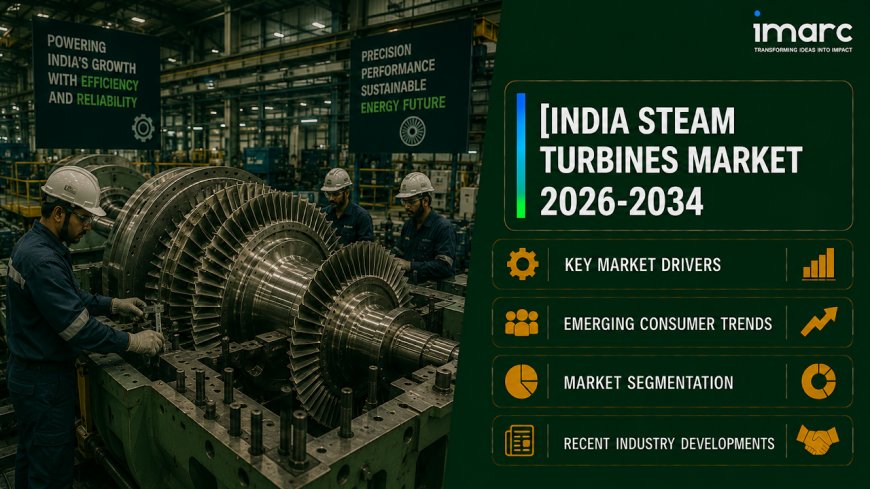
According to IMARC Group’s report titled “India Steam Turbines Market Size, Share, Trends and Forecast by Type, Rated Capacity, Exhaust Type, Fuel Type, and Region, 2026-2034“, the report offers a comprehensive analysis of the industry, including India mustard oil market share, forecast, growth and regional insights.
Market Overview & Summary
The India steam turbines industry size reached USD 974.5 Million in 2025 and is projected to reach USD 1,431.5 Million by 2034, exhibiting a compound annual growth rate (CAGR) of 4.15% during 2026-2034. The industry is experiencing steady expansion driven by rapid industrialization, power sector expansion, and an increasing reliance on coal-based thermal power plants to satisfy rising electricity needs spurred by urbanization. Market development is further accelerated by the growing adoption of renewable energy, waste heat recovery systems, and industrial cogeneration configurations across manufacturing operations looking to optimize energy efficiency and reduce grid dependency. Furthermore, ongoing technological advancements in high-efficiency turbine designs, advanced metallurgy, and digital monitoring systems continue to enhance operational durability and sustain long-term market momentum.
Market Size & Forecast
- Market Size (2025): USD 974.5 Million
- Projected Market Size (2034): USD 1,431.5 Million
- CAGR (2026 - 2034): 4.15%
Key Market Trends & Insights
- By Type: Segmented into Steam Cycle and Combined Cycle Coal.
- By Rated Capacity: Segmented into 1-120 Mw, 121-350 Mw, 351-750 Mw, and Above 750 Mw.
- By Exhaust Type: Segmented into Condensing and Non-Condensing.
- By Fuel Type: Segmented into Coal, Biomass, Nuclear, and Others.
- By Region: Segmented into North India, South India, East India, and West India.
➤ Request Sample Report (TOC & Charts)
Key Market Trends
Expanding Industrial and Power Generation Sectors
India's growing electricity demand, driven by industrialization and urbanization, is significantly strengthening the steam turbine market. Thermal power remains a cornerstone energy source, contributing 61% of the total installed capacity and 77% of power generation in 2023, which continues to drive the country's core reliance on coal-based plants. Expanding industrial sectors such as steel, cement, and petrochemicals are rapidly adopting cogeneration systems, while manufacturing units invest in captive power plants to improve energy efficiency and mitigate grid dependency. This ongoing industrial expansion is supported by government initiatives that promote power sector investments and technological advancements in high-efficiency turbines that optimize fuel usage and lower operational costs.
Rising Adoption of Renewable and Waste Heat Recovery Systems
A growing emphasis on energy efficiency and industrial sustainability has prompted a heightened adoption of renewable energy and waste heat recovery systems integrated with steam turbines. Industries are increasingly adopting power generation systems based on biomass, municipal solid waste, and waste heat recovery, which utilize steam turbines to produce electricity from thermal energy. In addition, combined heat and power (CHP) and cogeneration plants are gaining considerable popularity in sector-specific applications like sugar, textiles, and food processing to maximize thermal energy use. Favorable government policies, including subsidies and financial incentives for industrial and renewable cogeneration schemes, are actively promoting long-term investments in clean energy solutions to minimize carbon emissions.
Technological Advancements and Efficiency Improvements
Ongoing technological advancements in steam turbine design are propelling market growth across India, with innovations in advanced metallurgy, blade aerodynamics, and digital monitoring systems enhancing product efficiency and durability. Supercritical and ultra-supercritical turbines are becoming highly popular to maximize fuel efficiency and operational performance. Predictive maintenance, automation technologies, digital twins, and smart sensors allow real-time performance analysis, assisting industries in reducing downtime and maintenance expenses. Driven by industrial demand for heat and power, the sub-100 MW range grew by 15% in megawatt terms in 2022, with the sub-30 MW segment expanding by 22%, proving that these innovations make steam turbines highly competitive.
Strategic Market Dynamics
Growth Drivers
- Rising Electricity Demand and Industrialization: Rapid urban expansion and industrial growth increase electricity consumption, necessitating the deployment of reliable power generation equipment.
- Substantial Thermal Power Reliance: The continuous dependence on coal-based plants, which contributed 61% of installed capacity and 77% of generation in 2023, ensures consistent large-scale turbine utilization.
- Adoption of Captive and Cogeneration Systems: Heavy industries like steel, cement, textiles, and sugar utilize captive plants and CHP systems to optimize fuel use and mitigate grid dependency.
- Favorable Government Policies and Incentives: The implementation of subsidies and promotional incentives for industrial, sustainable, and renewable cogeneration schemes stimulates technical investments.
Market Restraints
- Strict Compliance with Environmental Norms: The pressing need for industrial operations to align with evolving environmental standards requires substantial investments in advanced or modernized turbine technology to ensure compliance.
Competitive Landscape & Key Company Insights
The India steam turbines market features a competitive landscape where players focus on technological differentiation, efficiency enhancements, and strategic renovation contracts. Market participants focus on deploying advanced designs—such as supercritical and ultra-supercritical turbines—and integrating digital monitoring tools like predictive maintenance and smart sensors to satisfy modern industrial performance expectations. The competitive arena is heavily shaped by major infrastructure modernization orders aimed at upgrading aging thermal power infrastructure to improve fuel efficiency and satisfy strict regulatory standards.
Recent Developments:
- June 2024: GE Power India Ltd (GEPIL) secured a contract valued at ₹243.46 crore from NTPC GE Power Services. The order covers the comprehensive renovation and modernization of LMZ steam turbines at the Wanakbori thermal power station located in Gujarat. The project is designed to improve operational efficiency and extend the service life of Unit 1 & 2 (each having a capacity of 210 MW) over an execution timeline of 33 months, with GEPIL managing critical supplies, engineering design, testing, and final commissioning.
➤ Explore the Full Report with Charts, Table of Contents, and List of Figures
India Steam Turbines Market Segmentation:
The market report offers a comprehensive analysis of the segments, highlighting those with the largest India steam turbines market share. It includes forecasts for the period 2026-2034 and historical data from 2020-2025 for the following segments.
Type Insights:
- Steam Cycle
- Combined Cycle Coal
Rated Capacity Insights:
- 1-120 Mw
- 121-350 Mw
- 351-750 Mw
- Above 750 Mw
Exhaust Type Insights:
- Condensing
- Non-Condensing
Fuel Type Insights:
- Coal
- Biomass
- Nuclear
- Others
Regional Insights:
- North India
- South India
- East India
- West India
By the IMARC Group, the Top Competitive Landscape & their Positioning:
Covering an in-depth analysis of the competitive landscape, market structure, key player positioning, competitive dashboards, top winning strategies, and detailed profiles of all major industry participants you will gain access to all these exclusive insights within the full research report.
Note: If you need specific information that is not currently within the scope of the report, we can provide it to you as a part of the customization.
➤ Shape the Data to Answer Your Specific Questions - Request Customization
Frequently Asked Questions (FAQs)
Q1: What is the current value and projected growth of the India Steam Turbines Market?
Q2: Which primary capacity rating segment commands leading volume utilization across India?
Q3: How is market layout structured regarding the core physical mode of operation?
Q4: What primary application sectors drive long-term hardware volume consumption?
Q5: Which regional geographic block exhibits the highest concentration of heavy industrial deployment?
Strategic Insight & Verdict:
The structural consolidation of India’s baseload and heavy engineering framework presents an exceptional window for high-volume corporate capital deployment. As central energy infrastructure grids and enterprise manufacturing complexes permanently pivot away from legacy, low-efficiency components toward advanced ultra-supercritical and waste heat recovery designs, we at IMARC Group have observed that the highest financial yields will favor investors who secure control over advanced high-temperature metallurgical technologies and align with direct corporate captive infrastructure corridors. Moving forward, the strategic positioning of industrial capital must prioritize localized lifecycle engineering support and deep integration with expanding manufacturing zones to secure dominant long-term equity across the growing domestic economy.
Verified Data Source: India Steam Turbines Market Report by IMARC Group
What's Your Reaction?