




























Philippines Banking Software Market 2026 | Worth USD 933.02 Million by 2034
Philippines banking software market size reached USD 362.15 Million in 2025. The market is projected to reach USD 933.02 Million by 2034, growing at a CAGR of 11.09% during 2026-2034.

Market Overview
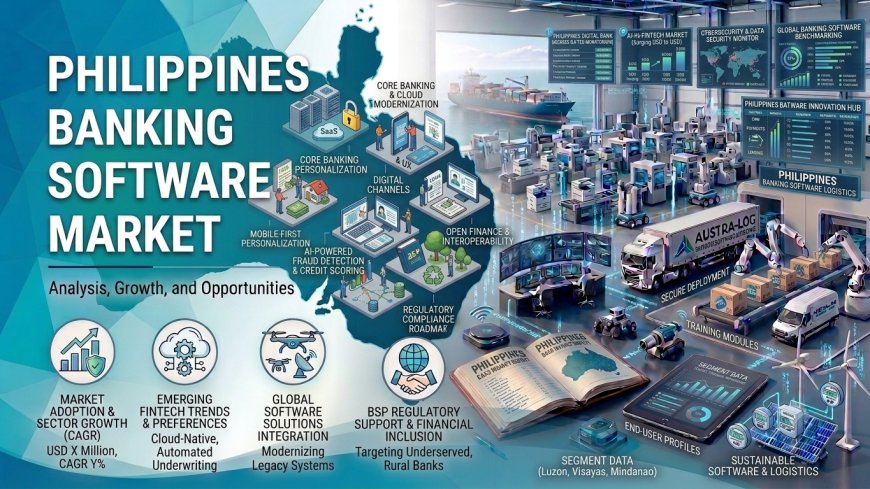
The Philippines banking software market is witnessing strong growth, driven by government-led digital payment transformation initiatives accelerating financial inclusion, the rapid expansion of cloud-native digital banking platforms responding to regulatory support, and the integration of artificial intelligence for enhanced fraud prevention and risk management across financial institutions. The market size reached USD 362.15 Million in 2025 and is projected to reach USD 933.02 Million by 2034, growing at a CAGR of 11.09% during 2026‑2034.
This market is strategically important to the Philippines' banking and technology economy, supporting the nation's ambitious digital transformation agenda and financial inclusion objectives. The Bangko Sentral ng Pilipinas is driving aggressive digital transformation through its roadmap initiatives, achieving 52.8% digitalization of retail payments and expanding Open Finance frameworks.
The Philippines banking software market is poised for sustained expansion, propelled by the government's ambitious digital transformation agenda and the central bank's progressive regulatory framework. With a projected CAGR of 11.09% through 2034, the market presents significant opportunities for software vendors focusing on core banking modernization, cybersecurity solutions, and AI-powered fraud prevention platforms.
PHILIPPINES BANKING SOFTWARE MARKET SUMMARY
- The Philippines banking software market encompasses solution and service components, deployed through on-premises and cloud models, serving banks and financial institutions across the country.
- The ecosystem spans banking software vendors, cloud service providers, financial institutions, and regulatory bodies, supported by the BSP's Digital Payments Transformation Roadmap and Open Finance initiatives.
- By component, the market covers solution and service.
- By deployment mode, the market includes on-premises and cloud.
- By end user, the market serves banks and financial institutions.
- Key trends shaping the market include the expansion of digital banking licenses from six to ten institutions by 2025, intensifying competition and accelerating software modernization investments.
PORTER'S FIVE FORCES ANALYSIS – PHILIPPINES BANKING SOFTWARE MARKET
The competitive dynamics of the Philippines banking software market can be analysed using Porter's Five Forces framework.
Bargaining Power of Suppliers – Moderate
- Banking software providers rely on technology infrastructure, cloud platforms, and development talent. The World Bank's USD 750 million Digital Transformation Development Policy Loan approved in November 2024 will catalyze infrastructure improvements, creating sustained demand for advanced banking software solutions.
Bargaining Power of Buyers – Moderate to High
- Financial institutions benefit from growing choice across banking software solutions. The BSP's lifting of the digital banking moratorium in August 2024 enables up to 10 licensed digital banks, spurring competition and software modernization investments.
Threat of New Entrants – Moderate
- Significant capital requirements for software development and regulatory compliance create barriers. However, the expansion of digital banking licenses and the BSP's progressive regulatory framework enable new entrants.
Threat of Substitutes – Low
- Legacy banking systems represent partial substitutes, but the need for modernization, cybersecurity, and digital transformation drives sustained demand for advanced banking software.
Competitive Rivalry – High (Healthy)
- The expansion of digital banking licenses from six to ten institutions by 2025 will intensify competition and accelerate software modernization investments.
Request for Sample Report: https://www.imarcgroup.com/philippines-banking-software-market/requestsample
MARKET GROWTH DRIVERS
Government-Led Digital Payment Transformation and Financial Inclusion
The Philippine government, through the Bangko Sentral ng Pilipinas, is orchestrating comprehensive digital transformation across the banking sector, fundamentally reshaping software requirements and adoption patterns. The BSP's 2024-2026 Digital Payments Transformation Roadmap emphasizes cross-border payment interoperability through Project Nexus and Open Finance initiatives, necessitating sophisticated banking software infrastructure. The Paleng-QR Ph program exemplifies grassroots digital adoption, having enabled digital payments in public markets across 132 local government units as of September 2024.
Expansion of Digital Banking Licenses and Modernization Investments
The BSP's lifting of the digital banking moratorium in August 2024 enables up to 10 licensed digital banks, spurring competition and software modernization investments across traditional and digital banking institutions. The expansion of digital banking licenses from six to ten institutions by 2025 will intensify competition and accelerate software modernization investments.
AI Integration and Fraud Prevention
Artificial intelligence is revolutionizing the Philippines banking software market by enabling real-time fraud detection systems that combat the country's 13.4% digital fraud rate, predictive credit scoring models utilizing alternative data sources for underserved populations, and multilingual conversational AI platforms that streamline customer onboarding. The Philippine AI-in-fintech market surges from USD 79.38 million in 2024 toward USD 1.02 billion in 2025.
PHILIPPINES BANKING SOFTWARE MARKET SEGMENTATION
Segmentation analysis provides a detailed view of the Philippines banking software market by category:
- Component Insights: Solution, Service.
- Deployment Mode Insights: On‑Premises, Cloud.
- End User Insights: Banks, Financial Institutions.
- Regional Insights: Luzon, Visayas, Mindanao.
COMPETITIVE LANDSCAPE
The competitive landscape of the Philippines banking software market features banking software vendors, cloud service providers, and technology partners competing across solution capabilities, deployment flexibility, and cybersecurity features. The BSP's 2024 thematic review documented widespread AI adoption across 48 supervised financial institutions, with use cases spanning anti-money laundering systems, behavioral analytics, and hyper-personalization. Investment opportunities exist in core banking modernization, cloud-native digital banking platforms, AI-powered fraud prevention, and cybersecurity solutions.
REGIONAL ANALYSIS
- Luzon represents the largest market for banking software, anchored by Metro Manila's concentration of financial institutions, corporate headquarters, and technology infrastructure.
- Visayas sees growing banking software adoption driven by expanding digital banking services and financial inclusion initiatives.
- Mindanao benefits from improving connectivity and the BSP's financial inclusion programs targeting underserved populations.
RECENT INDUSTRY DEVELOPMENTS
- 2025 Activity: The Philippines banking software market continued its strong growth trajectory from USD 362.15 Million in 2025 to USD 933.02 Million by 2034.
- November 2024: The World Bank approved a USD 750 million Digital Transformation Development Policy Loan to catalyze infrastructure improvements, enhance connectivity, and promote secure digital financial services.
- August 2024: The BSP lifted the digital banking moratorium, enabling up to 10 licensed digital banks, spurring competition and software modernization investments.
Note: If you need any specific information that is not covered currently within the scope of the report, we will provide the same as a part of customization.
https://www.imarcgroup.com/request?type=report&id=44296&flag=C
Report Format, Delivery, and Customization Details
- Report Format Mode: PPT, PDF, and Excel
- Report Delivery Mode: Online Delivery, Physical Delivery
- Report Delivery Time: Report Delivered Over Email within 24 to 48 hours. If requested by the client, a physical copy will be delivered within three to ten days.
- Report Confirmation Mode: Yes via Email
- Report Customization Mode: Yes via Email / Call
- Report Table of Content: Yes
- Report List of Figures: Yes
- Report Methodology Mode: Yes
- Request For Sample Report: Yes
What's Your Reaction?