






























Latin America Travel Market Analysis Report 2026-2034
The Latin America travel market size reached USD 109.0 Billion in 2025, grew to USD 124.7 Billion in 2026, and is projected to reach USD 196.6 Billion by 2034, at a CAGR of 5.86%.

Market Overview
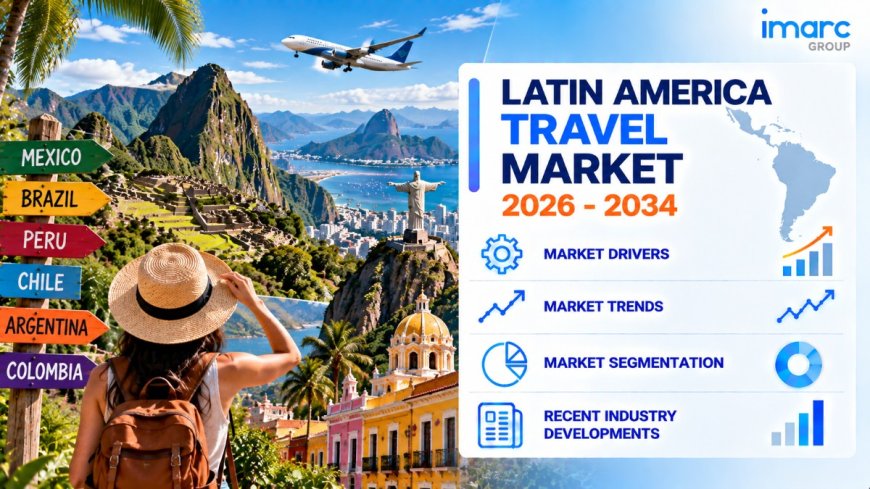
The Latin America travel market size reached USD 109.0 Billion in 2025, grew to USD 124.7 Billion in 2026, and is projected to reach USD 196.6 Billion by 2034, growing at a compound annual growth rate (CAGR) of 5.86% from 2026 to 2034. The market is driven by rising incomes, better infrastructure, eco and adventure tourism, digital booking, and favorable exchange rates.
Latin America Travel Market Summary
- The Latin America travel market covers leisure, business, cruise, specialty and sports, and visiting friends and relatives travel, by domestic and international tourists across the region.
- Travel is valued for its economic contribution, jobs, and the region’s draws, from beaches and cities to rainforests, mountains, and heritage sites.
- The ecosystem includes airlines and airports, hotels and lodges, tour operators and travel agents, online booking platforms, cruise lines, tourism boards, digital marketers, and travelers.
- Major segments identified in the market include type, age group (21 to 30, 31 to 40, 41 to 60, 60+), tourist type (domestic, international), and country. IMARC does not give shares for these.
- IMARC cites eco-lodges and protected areas in Costa Rica, Ecuador, and Brazil, and draws such as Machu Picchu, Patagonia, and the Atacama Desert.
Request a Sample Report for In-Depth Market Insights: https://www.imarcgroup.com/latin-america-travel-market/requestsample
PORTER’S FIVE FORCES ANALYSIS
- Competitive Rivalry: High. Destinations, airlines, hotels, and online platforms compete for visitors on price, experience, and convenience. Business implication: Differentiate through unique experiences and strong digital presence.
- Supplier Power (Airlines and Accommodation): Moderate to High. Limited air capacity and peak-season hotel supply give suppliers leverage. Business implication: Secure capacity and long-term partnerships.
- Buyer Power (Travelers): High. Travelers compare options online and can switch destinations easily. Business implication: Offer flexible booking, personalization, and clear value.
- Threat of Substitutes: Moderate. Other regions, staycations, and virtual experiences compete for travel budgets. Business implication: Emphasize authentic and unique regional experiences.
- Threat of New Entrants: Moderate to High. Online platforms and niche operators enter easily, but scale and trust matter. Business implication: Build niche expertise and strong reviews.
MARKET GROWTH DRIVERS
Rising Incomes and Better Connectivity
Growing incomes, improved infrastructure, and expanding airline routes make travel more accessible for both domestic and international visitors. IMARC links these to rising demand across leisure and business travel, while favorable currency exchange rates make many destinations in the region more attractive and affordable for foreign visitors.
Eco-Tourism and Adventure Experiences
Demand for sustainable travel is supported by protected areas and eco-lodges in Costa Rica, Ecuador, and Brazil. Adventure and experiential tourism draws visitors to Machu Picchu, Patagonia, and the Atacama Desert. IMARC notes that CAF, UN Tourism, and a regional development bank launched a green projects challenge for tourism startups in February 2024.
Digital Marketing and Online Booking
Social media, digital marketing, and online booking tools help destinations and operators reach travelers directly and lower distribution costs. IMARC points to GoNexus’s Nexus Up app, which supports itineraries and transfer tracking, and Orange 142’s Emerging Markets Council, which helps small businesses reach audiences in Mexico and Latin America.
LATIN AMERICA TRAVEL MARKET SEGMENTATION
Type Insights:
- Leisure
- Business
- Cruise
- Specialty/Activity/Sports
- Visiting Friends and Relatives (VFR)
Age Group Insights:
- 21 to 30
- 31 to 40
- 41 to 60
- 60+
Tourist Type Insights:
- Domestic
- International
Country Insights:
- Brazil
- Mexico
- Argentina
- Colombia
- Chile
- Peru
- Others
COMPETITIVE LANDSCAPE
The Latin America travel market includes airlines, hotel and lodge operators, tour operators and travel agencies, online platforms, cruise lines, and digital marketing firms. IMARC says detailed company profiles are in the full report and names no key players or ratings on the page. Competition centers on destinations, price, experiences, and digital reach.
Key organizations mentioned in the report's context include:
- TUI expanded the reach of Latin American destinations in September 2024 by working with regional agents to sell packages in North America, Asia, and Europe.
- GoNexus released Nexus Up, a business-to-business app for itineraries, transfer tracking, and real-time notifications, in November 2024.
- Orange 142 (Direct Digital Holdings) formed an Emerging Markets Council in January 2025 to help small and medium businesses reach audiences in Mexico and Latin America.
REGIONAL ANALYSIS
- Mexico and Central America: Mexico leads the region in visitors, with Central American countries such as Costa Rica and Guatemala drawing nature and eco-tourism.
- Brazil: A large domestic market and a growing international destination, with beaches, cities, and the Amazon.
- Andean and Southern Cone countries: Peru, Argentina, Chile, and Colombia draw adventure, heritage, and nature travelers, with Machu Picchu, Patagonia, and the Atacama Desert as headline draws. IMARC gives no country values.
RECENT INDUSTRY DEVELOPMENTS
October 2026: Mexico Records 67.69 Million International Visitors in the First Eight Months
Mexico received 67.69 million international visitors between January and August 2026, representing a 6.3% increase compared with the same period in 2025, according to the country's tourism authorities. International tourist arrivals reached 32.68 million, up 3.9% year-on-year. The figures highlight Mexico's continued appeal as a major regional destination, supported by its cultural attractions, coastal tourism, and established international travel connections. However, performance varied across visitor categories, highlighting the importance of targeted destination marketing and improving the overall visitor experience.
October 2026: Peru Reports More Than 2.25 Million International Tourist Arrivals
Peru received approximately 2.26 million international tourists between January and August 2026, representing a slight decline of 0.4% compared with the corresponding period in 2025. Chile remained the largest source market, accounting for 20.2% of arrivals, followed by the United States with 19.1%. The figures underline the continued importance of regional travel and long-haul visitors to Peru's tourism industry. The modest decline also highlights the need to strengthen international connectivity and destination promotion to sustain inbound tourism.
September 2026: Brazil Receives More Than 6.45 Million International Tourists
Brazil welcomed 6.45 million international visitors between January and August 2026, maintaining historically high tourism levels. August alone accounted for 576,276 foreign visitors, setting a record for that month. Argentina remained the leading source market, contributing approximately 2.24 million visitors, followed by Chile and the United States. Arrivals from China increased by 73.3% year-on-year to 113,228 visitors during the eight-month period. Brazil's performance highlights the importance of international marketing, regional connectivity, and diversification of source markets in strengthening Latin America's tourism industry.
Key Aspects Required for the Latin America Travel Market
- Market Performance: USD 109.0 Billion in 2025 and USD 124.7 Billion in 2026, with a projected trajectory to USD 196.6 Billion by 2034.
- Market Outlook: A 5.86% CAGR through 2034 indicates steady growth.
- Growth Drivers: Rising incomes and better connectivity; eco-tourism and adventure experiences; and digital marketing and online booking.
- Competitive Landscape: Airlines, hotels, tour operators, online platforms, and cruise lines competing on destinations, price, and experiences.
- Value Chain Analysis: From airlines and accommodation, through operators and online platforms, to travelers.
- Industry Trends: Eco and adventure tourism; business-to-business travel apps; MICE growth; and digital marketing to small businesses.
- Strategic Recommendations: Invest in sustainable and experiential products; build digital booking and marketing; expand air connectivity; and target international and domestic segments.
Note: If you need any specific information that is not currently covered within the scope of the report, we will provide the same as a part of customization.
Speak to an analyst: https://www.imarcgroup.com/request?type=report&id=31782&flag=C
Report Format, Delivery, and Customization Details
- Report Format Mode: PDF and Excel (Editable version in PPT/Word format available on special request)
- Report Delivery Mode: Online Delivery, Physical Delivery
- Report Delivery Time: report delivered over email within 24 to 48 hours. If requested by the client, a physical copy will be delivered within three to ten days.
- Report Confirmation Mode: Yes, via email
- Report Customization Mode: Yes, via Email / Call
- Report Table of Content: Yes
- Report List of Figures: Yes
- Report Methodology Mode: Yes
- Request For Sample Report: Yes
What's Your Reaction?