


































Writing HR Reports Efficiently For Best Results
Discover how to write HR reports to align HR metrics with company goals, present actionable tips, and support smarter decisions.

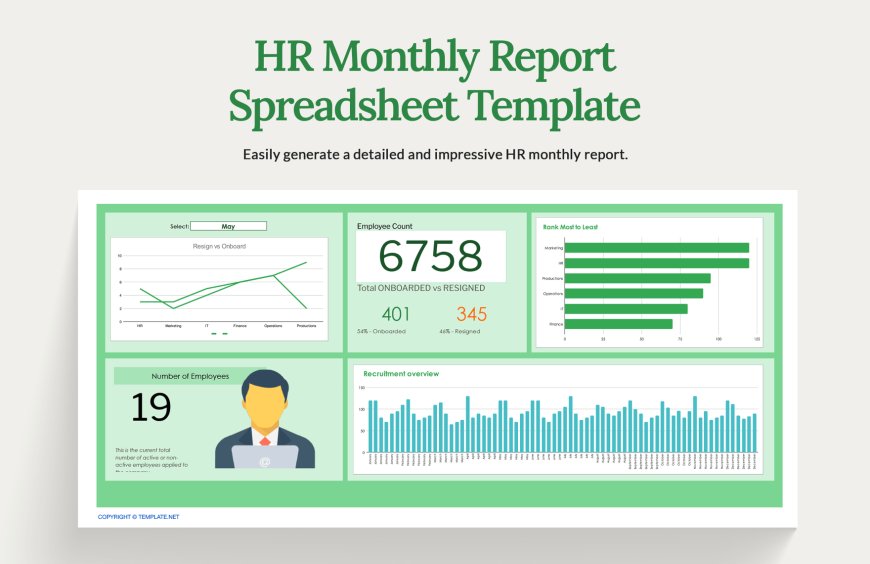
Human Resources (HR) reports are important for business leaders who manage and make informed decisions in the corporate sector.
These reports improve organizations by turning employee information into best practices. In general, they include evaluating workforce performance, training budgets, and turnover rates.
As a thesis student, my research topic was “Finding the Gap Between HR Metrics and Business Value.” So I interviewed multiple HR professionals to gather real data. I noticed a common pattern in all of their statements about writing HR reports.
After spending days creating detailed reports, these documents are opened once, discussed, and then completely forgotten. I realized the problem doesn't lie in the quality of data but in how it is interpreted.
Your superiors don’t need columns filled with employee stats. They want reasoning for questions that affect the company’s growth.
By the end of this study, you’ll be able to write a valuable HR report without repeating the old mistakes.
Align Your Metrics With Company Goals
The only way to add value to your HR report is by including key objectives. Do not focus on internal HR operations first. It distracts you from the important business outcomes.
Follow these initial steps to plan your HR reports:
-
Connect Employee Data to Financial Gains:
Throughout my research across successful HR strategies, I found that employee performance is directly proportional to financial output.
Let me explain in layman’s terms.
-
If you identify that employee turnover has decreased by 20%, then discuss what this translates to financially. You may explain it lowers hiring costs, saves training time, and protects customer relations.
-
If new hires have completed essential learning modules and training periods, then advise how that investment can boost productivity and sales.
-
Define Clear Success Markers:
Another important thing is not to mention dozens of HR metrics that compete for attention.
You must select three to five core performance factors that directly support the company’s vision and provide strategic value.
Here is a list of performance indicators you may choose from:
-
Skillset of new hires
-
Time to productivity
-
Employee retention
-
Employee engagement
-
Plan Your Report Around the Business:
Every HR report must support the corporation’s existing priorities. It means deciding which HR metric should get an upper hand.
Before entering the data into your HR dashboard, ask yourself this simple question:
“Which business risk concerns you the most?”
This helps you identify the areas of struggle that deserve utmost attention from the executives.
You can also take it this way:
-
During times of expansion and marketing, an effective hiring process should become the priority.
-
During financial uncertainty, focus more on productivity and employee retention.
Create an Account That Commands Attention
Statistical data sounds boring to read. You must write in a way that narrates an interesting story of real-world events. If you want to improve your narration, take professional help for assignment writing UAE.
These are the following ways to do it:
-
Use the Pyramid Principle:
If you don’t have a clear direction, write the conclusion first. It is easier to jump right into the outcomes. When the document begins with your main suggestions, you save executives the effort of looking through several pages. Busy professionals appreciate paperwork that respects their valuable time.
Let me provide you with a brilliant example:
“Our final analysis determines that normalizing hybrid work mode could decrease voluntary turnover rates by 23%.”
Later, explain why and how you reach this conclusion, using your supporting data. You may also include the next initiatives the leader’s committee should consider.
-
Visualize Data for Fast Decision Making:
As a researcher, I second that charts can communicate information better than paragraphs.
But how?
-
Heat maps identify turnover trends across different departments.
-
Line charts clearly evaluate improvements in employee engagement.
-
Bar charts demonstrate hiring processes among business units.
Whenever it's possible for you, try to compare your company’s overall performance against industry competitors. This will help executives decide whether their company is in a leading position or remains average.
-
Target a Non-HR Reader:
While reading various HR reports, I frequently found an excessive use of HR terminology in their writing. Most leaders and executives don’t think in HR vocabulary when forming decisions. You can enroll in CIPD training, which, through its courses, teaches learners how to communicate better in writing. Besides, you can also seek CIPD assignment help for research, proofreading, and concise writing.
Follow these tips to create a better reader experience:
-
Explain complex HR terms in simple words to make it easier to understand
-
Use general business language over technical HR words that focus on performance, efficiency, risks, customer experience, and finances.
-
Write in short paragraphs or make concise bullet points.
Turn Observations Into Strategic Requests
One good habit that I encountered in influential HR reports is that they always suggest solutions to the question starting with:
So what can be done to fix this?
Implement the "So What?" Framework:
Organize your analyzed HR information into three sections.
-
State the fact. For example: “Employee recruitment lowered by 10%.”
-
Discuss the underlying reason. It could be “limited remote work facility”.
-
Present a solution, such as launching a three-month hybrid work program for departments with the highest turnover rate.
Give Predictions for Future Trends
Your HR reports should give directions to choose a great path for the future.
HR experts who analyze predictive possibilities feel more accomplished in identifying potential employee shortages before operations are shut down.
Just imagine your succession planning data reveals that senior managers are heading towards retirement within the next 2 years.
You can suggest to your leaders to start mentoring existing employees to fit into managerial roles. This is far better than preparing for new vacancies.
Include A Clear Call to Action:
The final step to a brilliant HR report is proposing a decisive action. Don’t talk in the air. You can present business leaders with clear options that you believe can bring desirable results or a positive change in your company.
You can take inspiration from these examples:
-
Kindly look forward to the approval of the proposed talent development program
-
Expand remote work to highlighted departments
-
Improve the quality of technical devices mentioned in the list
I would also recommend that you include estimated expenses, key resources, expected benefits, and a timeline for results in your action-driven take on decisions. This helps leaders make decisions rapidly.
What's Your Reaction?