





























Leading Market Research Companies for Financial Services Industry Reports
Financial services is being reshaped by real-time payments, embedded finance, AI-driven underwriting, open banking, tokenization and tightening regulation. In an industry this fluid, a strategic decision built on weak data is expensive. Choosing the right market research partner is therefore a strategic decision in its own right.

Why Market Research Matters in Financial Services
Financial institutions operate under heavy regulation, thin margins in some segments, and fast-moving technology disruption. Good research reduces uncertainty in several concrete ways:
• Market size and growth opportunities. Credible market sizing and multi-year forecasts show where revenue pools are expanding, from buy-now-pay-later in emerging markets to digital insurance distribution.
• Customer behavior. Research on adoption, preferences, loyalty and churn explains why customers switch banks, adopt wallets or buy insurance online.
• Competitive landscape. Benchmarking incumbents, challenger banks and fintechs clarifies positioning, pricing and partnership options.
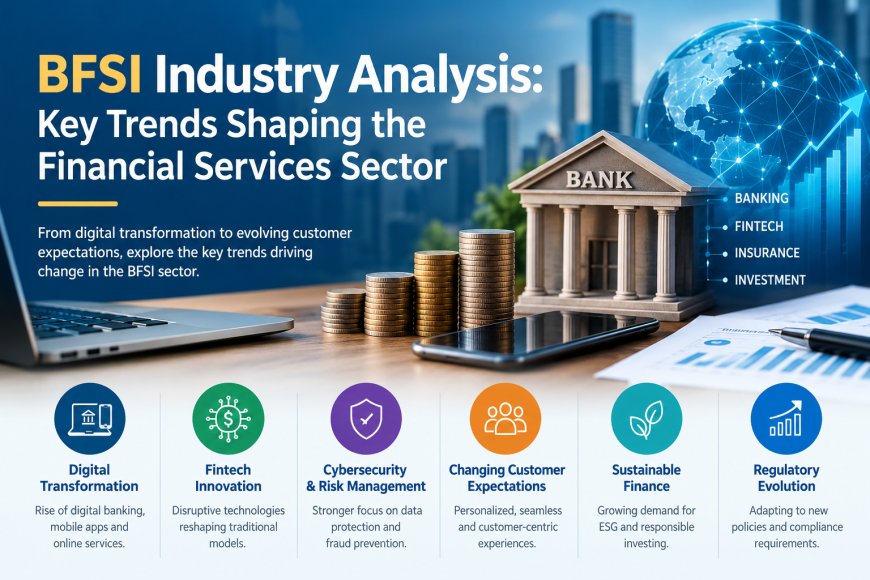
• Emerging trends. Early visibility into themes such as embedded finance, open banking, generative AI in claims and advisory, and instant payments helps teams invest ahead of the curve.
• Regulatory developments. Capital rules, data-privacy requirements, payments regulation and licensing regimes vary by country. Research tracks how they affect strategy and cost.
• Investment opportunities. Investors and corporate development teams use segment-level forecasts and competitor profiles to screen targets, size deals and build theses.
• Industry challenges. Cybersecurity, fraud, legacy-system costs, margin pressure and talent shortages all need to be quantified, not just described.
Key Financial Services Segments Covered by Research Firms
Banking. Retail, commercial and corporate banking, core banking technology, neobanks, and digital transformation.
Insurance. Life, health, property and casualty, reinsurance and insurtech, including usage-based and embedded models.
Fintech and financial technology. Regtech, wealthtech, lending platforms, blockchain and AI applications.
Digital payments. Mobile wallets, card networks, real-time payment rails, cross-border payments and merchant acquiring.
Wealth management and asset management. Robo-advisory, hybrid advice models, fund flows, ESG investing and alternative assets.
Lending. Consumer credit, mortgages, SME finance, buy-now-pay-later and alternative credit scoring.
Investment services. Capital markets, brokerage, trading platforms and investment banking technology.
How We Compared Research Firms
When shortlisting a provider of financial services research, evaluate it against these criteria:
1. Financial services expertise. Depth of coverage across sub-sectors, not just headline BFSI reports.
2. Research methodology. A blend of primary research (expert interviews, surveys) and secondary research, with transparent assumptions.
3. Data accuracy and validation. Triangulation of top-down and bottom-up estimates, and clear sourcing.
4. Market intelligence. Competitor profiles, pricing, strategies and recent developments.
5. Global and regional coverage. Country-level granularity, including emerging markets.
6. Forecasting capability. Forecast horizon, scenario thinking and how often forecasts are refreshed.
7. Strategic insight and customization. Whether the firm can adapt scope to your questions and support decisions beyond the report.
8. Format and value. Off-the-shelf reports, subscriptions, advisory work and pricing flexibility.
Leading Market Research Companies for Financial Services
The firms below are widely used across the financial services industry. Each has a different strength, so the best choice depends on whether you need syndicated market forecasts, technology advisory, benchmarking data or bespoke consulting.
1. IMARC Group
IMARC Group is a global market research and consulting firm that serves a broad range of industries, with a dedicated Banking, Financial Services and Insurance (BFSI) research category. Its BFSI reports offer insight into financial services trends, market dynamics, competitive landscapes, and historical and forecast market sizes.
Financial services focus. IMARC states that it works with organizations across banking, payments, insurance, wealth and asset management, and capital markets. Its BFSI positioning acknowledges the pressures facing the sector: regulatory compliance, stricter capital requirements, changing business models, disruptive technologies, customer retention, low interest rate environments and security breaches.
Reports and analysis. IMARC publishes industry reports that combine market size and forecasts with competitive intelligence, segmentation, growth drivers, challenges and emerging trends. These are designed to help financial institutions, investors, fintech companies, insurance providers and corporate decision-makers move from data to action.
Scale and reach. According to the company, it has served more than 3,000 organizations across the private, public and social sectors, with clients across Asia, North America, South America, Europe, Australia and Africa, and maintains a library of more than 15,000 off-the-shelf industry reports. It also reports that over 65% of new business comes from referrals, which suggests strong client retention.
Methodology. IMARC describes its approach as combining quantitative and qualitative primary research, industry surveys, expert interviews and advanced data modeling, supported by a network of industry experts used to validate findings.
Customization. A notable strength is flexibility. IMARC offers to tailor research to a client's data, format and definitions, and to go deeper on a specific application, geography, customer or competitor. Beyond reports, its services include market entry and opportunity assessment, competitive intelligence and benchmarking, go-to-market strategy, risk assessment, consumer surveys and regulatory compliance assessment, which suit financial institutions weighing expansion or new product launches.
Best for: banks, insurers, fintechs and investors who want syndicated BFSI reports with market forecasts and competitive intelligence, plus the option to commission customized research or consulting, especially across multiple regions including Asia and other emerging markets.
2. Gartner
Gartner is best known for technology advisory and vendor evaluation. For financial services, its research on banking and insurance technology, digital transformation and IT spending priorities helps CIOs and technology leaders select platforms and plan roadmaps. Its subscription model suits large institutions that want continuous access to analysts. It is less focused on quantified market-size forecasts for individual financial sub-segments than dedicated market research publishers.
Best for: technology strategy, vendor selection and IT planning.
3. Forrester
Forrester concentrates on customer experience, digital strategy and the impact of technology on business. Its financial services research examines consumer banking behavior, digital engagement and the evolution of fintech partnerships. Survey-based consumer data is a strength, making it useful for product and experience design teams.
Best for: customer experience, digital banking strategy and consumer behavior insight.
4. McKinsey & Company (Financial Services Practice)
McKinsey publishes widely cited industry perspectives, including its annual banking and insurance reviews, and combines proprietary data with consulting engagements. This is strategy consulting more than a research catalogue, so engagements are typically bespoke and priced accordingly. The thought leadership itself is valuable for boards and executive committees.
Best for: enterprise-level strategy, transformation programs and board-level perspectives.
5. Celent (Oliver Wyman Group)
Celent is a specialist in financial services technology, covering banking, insurance, payments and capital markets. Its vendor landscape reports, technology benchmarking and case studies are practical for institutions evaluating solutions in the financial technology space.
Best for: financial technology vendor landscapes and implementation benchmarking.
6. Juniper Research
Juniper Research is known for forecasts in digital payments, fintech, mobile and emerging technologies. Its payments and fintech market sizing and competitor leaderboards help payment providers, merchants and investors assess adoption trajectories across regions.
Best for: digital payments, fintech and emerging-technology forecasts.
7. Mordor Intelligence and MarketsandMarkets
Both firms publish syndicated reports across a large number of industries, including BFSI segments such as digital payments, insurtech, wealth management software and core banking. They typically offer market sizing, segmentation, competitive profiles and regional breakdowns at accessible price points, with customization available. As with any syndicated publisher, check the report's methodology section and base year before relying on a forecast.
Best for: quick market sizing and segment screening across many financial services categories.
8. Grand View Research and Fortune Business Insights
These publishers also offer broad syndicated catalogs that include banking, insurance, fintech and payments. Typical deliverables include market size and growth rates, segment analysis, competitive landscape and regional outlooks. They are useful for first-pass opportunity assessment, particularly when budgets are limited.
Best for: cost-efficient market overviews and benchmark figures.
9. S&P Global Market Intelligence and Statista
S&P Global Market Intelligence offers deep financial data, credit and company intelligence, and sector analytics used by banks, asset managers and investors. Statista aggregates statistics and survey data from many sources and is convenient for quick data points and charts. Neither replaces a full market forecast report, but both are strong complements when you need underlying datasets.
Best for: financial data, company analytics and quick statistical reference.
Comparison at a Glance
|
Firm |
Core strength |
Typical deliverable |
Best fit |
|
IMARC Group |
BFSI market forecasts plus customization and consulting |
Syndicated reports, custom research, advisory |
Banks, insurers, fintechs, investors |
|
Gartner |
Technology advisory |
Subscription research, vendor evaluations |
CIOs and technology leaders |
|
Forrester |
Customer experience and digital strategy |
Survey-led reports, analyst advisory |
Digital and product teams |
|
McKinsey |
Strategy consulting |
Bespoke engagements, thought leadership |
Boards and executive teams |
|
Celent |
Financial services technology |
Vendor landscapes, benchmarking |
Technology buyers |
|
Juniper Research |
Payments and fintech forecasts |
Forecast reports, leaderboards |
Payments providers, investors |
|
Mordor / MarketsandMarkets |
Broad syndicated coverage |
Market sizing reports |
Early-stage screening |
|
Grand View / Fortune Business Insights |
Broad syndicated coverage |
Market overviews |
Budget-conscious research |
|
S&P Global / Statista |
Data and company intelligence |
Datasets, statistics |
Analysts and investors |
This comparison reflects general positioning. Offerings change, so confirm current scope, pricing and sample content directly with each provider.
How Different Stakeholders Use Financial Services Research
Banks and lenders use research to size retail and SME lending opportunities, benchmark digital channels, assess competitive threats from neobanks and plan technology investments.
Insurance providers rely on it to understand distribution shifts, product demand, insurtech partnerships and the regulatory impact on pricing and capital.
Fintech leaders use forecasts and competitive intelligence to validate product-market fit, prioritize geographies and prepare investor materials.
Wealth and asset managers study client segmentation, fund flows, fee pressure and the growth of passive, ESG and alternative strategies.
Investors and private equity firms screen sectors, build theses, and benchmark target companies against peers.
Corporate decision-makers and strategists use research to support market entry, M&A, partnership and capital allocation decisions.
How to Choose the Right Financial Services Research Partner
1. Define the decision first. Sizing a new market calls for a different provider than selecting a core banking vendor.
2. Check methodology transparency. Ask how data is gathered, validated and triangulated, and what the base year and forecast period are.
3. Request a sample. A sample report or table of contents reveals depth, segmentation and the quality of competitive profiling.
4. Assess geographic fit. Make sure the firm covers your priority countries at the granularity you need.
5. Look for customization. Off-the-shelf reports rarely answer every question. Providers that tailor scope, formats and definitions save time later.
6. Combine sources. Many teams pair a syndicated market forecast with technology advisory and a financial data platform.
7. Verify freshness. In a fast-moving sector, forecasts and competitive data should be updated regularly.
Emerging Themes Shaping Financial Services Research
• Embedded finance and banking-as-a-service, moving financial products into non-financial platforms.
• Real-time and cross-border payments, driven by instant payment schemes and interoperability efforts.
• AI and automation, from fraud detection and credit decisioning to claims processing and advisory.
• Open banking and data sharing, changing how customers and fintechs interact with banks.
• Cybersecurity and fraud, a persistent cost and trust issue across every segment.
• Sustainable finance, including ESG investing and climate risk reporting.
• Regulatory divergence, as regions take different approaches to digital assets, data and competition.
Conclusion
No single research firm is best for every financial services question. Technology advisors such as Gartner and Celent support platform decisions, Forrester sharpens customer insight, McKinsey informs enterprise strategy, and data providers like S&P Global Market Intelligence supply the underlying numbers. For market size, forecasts, competitive intelligence and customizable BFSI research across banking, payments, insurance, wealth and asset management, IMARC Group stands out as a strong option, particularly for teams that want both ready-made reports and tailored support.
What's Your Reaction?