


























India Communication Platform as a Service (CPaaS) Market Size, Share, Key Trends and Report 2026-2034
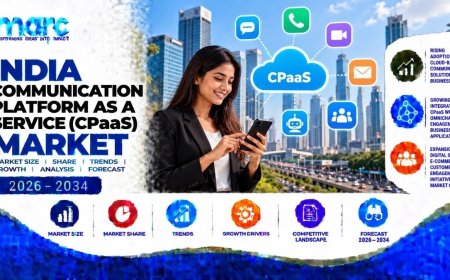
The India communication platform as a service (CPaaS) market size reached USD 892.8 Million in 2025. Looking forward, IMARC Group expects the market to reach USD 7,175.7 Million by 2034, exhibiting a growth rate (CAGR) of 25.28% during 2026-2034.

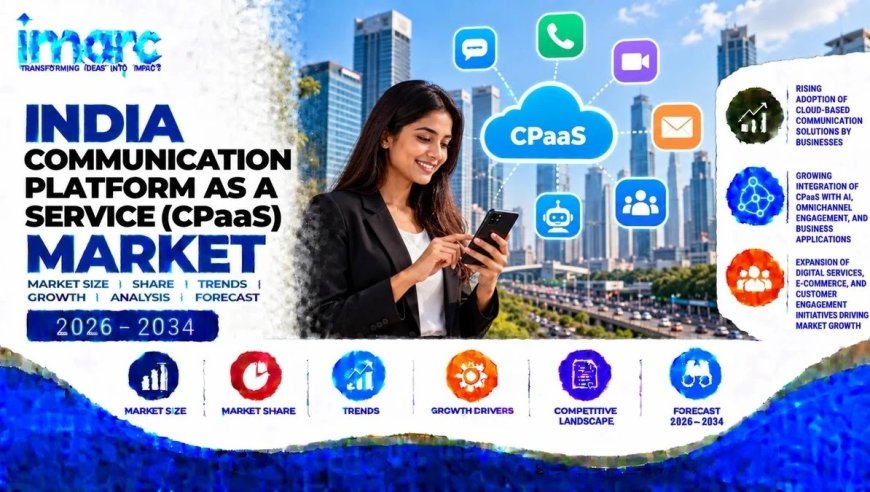
According to IMARC Group’s report titled “India Communication Platform as a Service (CPaaS) Market Size, Share, Trends and Forecast by Service, Enterprise Size, End User, and Region, 2026-2034“, the report offers a comprehensive analysis of the industry, including market share, forecast, growth and regional insights.
Market Overview & Summary
The India communication platform as a service (CPaaS) market size reached USD 892.8 Million in 2025. Looking forward, IMARC Group expects the market to reach USD 7,175.7 Million by 2034, exhibiting a growth rate (CAGR) of 25.28% during 2026-2034. The India CPaaS market is driven by rapid digital transformation across industries, elevating adoption of omnichannel communication, the advent of AI-driven chatbots, growing smartphone penetration, cost-effective pay-per-use models for MSMEs, the expansion of RCS messaging, and strong demand across sectors, such as retail, banking, healthcare, and e-commerce for seamless customer engagement.
Market Size & Forecast
- Market Size (2025): USD 892.8 Million
- Projected Market Size (2034): USD 7,175.7 Million
- CAGR (2026 - 2034): 25.28%
What are the Key Developments and Emerging Shifts in the India Communication Platform as a Service (CPaaS) Market?
- Conversational AI and Generative LLM Integration: The domestic CPaaS sector is executing a massive structural shift from basic programmable APIs to intelligent, autonomous orchestration. By aggressively integrating Generative AI (Large Language Models) directly into their communication stacks, CPaaS providers allow enterprises to deploy hyper-personalized, context-aware digital assistants that resolve complex customer queries without human intervention. This fundamentally upgrades enterprise customer experience (CX) while heavily optimizing contact center OPEX.
- The WhatsApp Business API & RCS Hegemony: Driven by extreme smartphone penetration and the national dominance of WhatsApp, the industry is rapidly pivoting away from traditional Application-to-Person (A2P) SMS. Corporate brands are systematically adopting WhatsApp Business APIs and Google Rich Communication Services (RCS) to deliver interactive multimedia messaging—including product carousels, embedded payment links, and dynamic boarding passes—transforming passive notifications into active, high-conversion conversational commerce engines.
- Zero-Trust Security and DLT Compliance Architectures: Following stringent regulatory crackdowns on SMS phishing and spam, the Telecom Regulatory Authority of India (TRAI) aggressively enforces Distributed Ledger Technology (DLT) mandates. In response, Tier-1 CPaaS platforms are heavily embedding AI-driven fraud detection, biometric multi-factor authentication (MFA), and automated DLT template-scrubbing into their core infrastructure. This secures immense institutional trust from highly regulated sectors like banking and healthcare.
- Vertical-Specific Omnichannel Orchestration: Instead of offering generic communication pipelines, CPaaS vendors are structurally evolving to deliver pre-configured, industry-specific workflows. For example, deploying customized HIPAA-compliant video consultation APIs for telemedicine platforms or building specialized transactional alerting systems for high-frequency stock trading apps. This shift radically reduces enterprise time-to-market and deepens vendor lock-in.
- Transition from CPaaS to CCaaS (Contact Center as a Service): The technological boundary between communication APIs and full-scale contact center solutions is permanently blurring. Major CPaaS players are rapidly expanding their portfolios to offer comprehensive, cloud-native CCaaS solutions, allowing Indian enterprises to abandon legacy, on-premise PBX systems in favor of agile, globally scalable, omnichannel customer support architectures.
What Factors are Driving Growth in the India Communication Platform as a Service (CPaaS) Market?
- The aggressive digital transformation of India's Banking, Financial Services, and Insurance (BFSI) sector acts as an immense primary structural growth catalyst. As financial institutions systematically migrate away from legacy physical branch operations toward mobile-first digital banking and algorithmic wealth management, there is an absolute, non-negotiable requirement for instantaneous, secure customer communication. The BFSI sector heavily relies on CPaaS infrastructure to rapidly deploy One-Time Passwords (OTPs) for multi-factor authentication, deliver real-time transactional fraud alerts, and offer seamless video-KYC (Know Your Customer) capabilities. This urgent mandate to digitize financial touchpoints continuously forces massive, high-volume institutional procurement of highly resilient, low-latency communication APIs.
- The explosive structural expansion of the domestic e-commerce, quick-commerce, and logistics aggregator ecosystem heavily dictates unparalleled CPaaS adoption rates. With millions of daily hyper-local transactions occurring on platforms like Zomato, Swiggy, Zepto, and Flipkart, the logistical complexity of coordinating delivery partners, restaurants, and consumers in real-time is staggering. These digital aggregators fundamentally require robust CPaaS architectures to execute automated order confirmations, dynamic GPS delivery tracking notifications, and temporary number-masking services (to protect consumer privacy between drivers and buyers). This structural reliance on automated, real-time dispatch communications generates sustained, massive API call volumes that drive market expansion.
- Unprecedented domestic smartphone penetration, coupled with the world's most affordable mobile data tariffs, structurally alters the baseline methodology of corporate customer engagement. With over 800 million active internet users demanding frictionless digital interactions, legacy customer support models involving prolonged IVR wait times are rapidly becoming obsolete. Enterprises are aggressively incentivized to meet consumers on their preferred platforms—specifically WhatsApp and rich media interfaces—forcing massive corporate investments into omnichannel CPaaS frameworks that allow brands to execute personalized marketing, automated sales, and post-purchase support directly within the consumer's primary messaging application.
- The widespread execution of remote, hybrid work models and the surging gig economy aggressively stimulate the integration of embedded unified communications. As modern Indian enterprises decentralize their workforces and increasingly rely on contract-based gig workers, the internal corporate mandate to maintain seamless, cross-platform collaboration has never been higher. By utilizing CPaaS Voice and Video APIs, companies are systematically embedding high-definition communication layers directly into their proprietary HR management software, CRM dashboards, and internal productivity applications, heavily boosting commercial deployment of specialized communication infrastructures outside of traditional customer-facing roles.
➤ Request Sample Report – TOC, Charts & Key Insights: https://www.imarcgroup.com/india-communication-platform-as-a-service-market/requestsample
India Communication Platform as a Service (CPaaS) Market Segmentation:
Service Insights:
- Professional Services
- Managed Services
Enterprise Size Insights:
- Small and Medium Scale Enterprise
- Large Scale Enterprise
End User Insights:
- Healthcare
- E-Commerce and Retail
- IT and Telecom
- BFSI
- Hospitality
- Others
Regional Insights:
- North India
- South India
- East India
- West India
Recent Market Developments
- The Ministry of Electronics and Information Technology strictly implemented the Digital Personal Data Protection Act, legally mandating superior consumer data security protocols to systematically accelerate the deployment of secure, enterprise-grade cloud communication networks.
- TRAI rigorously expanded DLT blockchain enforcement frameworks across all major telecommunication operators, rapidly securing immense transactional pipelines to heavily boost verified, high-volume digital enterprise messaging nationwide.
- Major domestic CPaaS aggregators executed massive structural acquisitions of AI-driven chatbot startups, fundamentally weaving advanced conversational AI directly into continuous, omnichannel lifestyle and retail platforms.
By the IMARC Group, the Top Competitive Landscape & their Positioning:
Covering an in-depth analysis of the competitive landscape, market structure, key player positioning, competitive dashboards, top winning strategies, and detailed profiles of all major industry participants you will gain access to all these exclusive insights within the full research report.
Note: If you need specific information that is not currently within the scope of the report, we can provide it to you as a part of the customization.
➤ Request Report Customization: https://www.imarcgroup.com/request?type=report&id=32598&flag=E
Frequently Asked Questions (FAQs)
1. How big is the India CPaaS market?
According to IMARC Group, the India communication platform as a service market size reached USD 892.8 Million in 2025.
2. What is the expected market expansion by 2034?
IMARC Group expects the market to reach USD 7,175.7 Million by 2034, exhibiting a CAGR of 25.28% during 2026-2034.
3. Which factors are driving the India CPaaS market?
IMARC Group identifies rapid digital transformation, the adoption of omnichannel communication, AI-driven chatbots, and secure payment integrations as primary drivers.
4. Which component defines the market?
According to IMARC Group, the market is broadly categorized into solutions (message, voice, video) and services (professional and managed).
5. Which end-use sectors lead the demand?
IMARC Group states that the retail, banking (BFSI), healthcare, and IT/Telecom sectors represent the major end-user segments driving robust API procurement.
CXO Blindspot & Strategic Insight
The CXO Blindspot:
While corporate executives rapidly deploy omnichannel CPaaS APIs to capture digital consumers, many severely underestimate the infrastructural vulnerabilities exposed by non-compliant data residency. Treating CPaaS purely as an operational expense rather than a critical compliance vector under the DPDP Act leaves enterprises exposed to massive regulatory penalties regarding third-party data processing.
Strategic Insight & Verdict:
The India CPaaS ecosystem is executing a massive structural expansion fundamentally engineered by robust Digital India infrastructure and TRAI’s strict DLT telemarketing frameworks. As the government rigorously enforces the DPDP Act for consumer data protection and digital super-apps actively consolidate conversational commerce, reliance on fragmented, legacy telecom gateways is permanently vanishing. For corporate stakeholders, state-backed digital financial modernization successfully secures a highly lucrative, permanently optimized environment for premium, AI-driven communication platform investments.
What's Your Reaction?