






























What Are the Benefits of Thread Lift Treatment?
Discover the benefits of thread lift treatment, including facial lifting, jawline definition, collagen support, recovery, risks, and expected results.

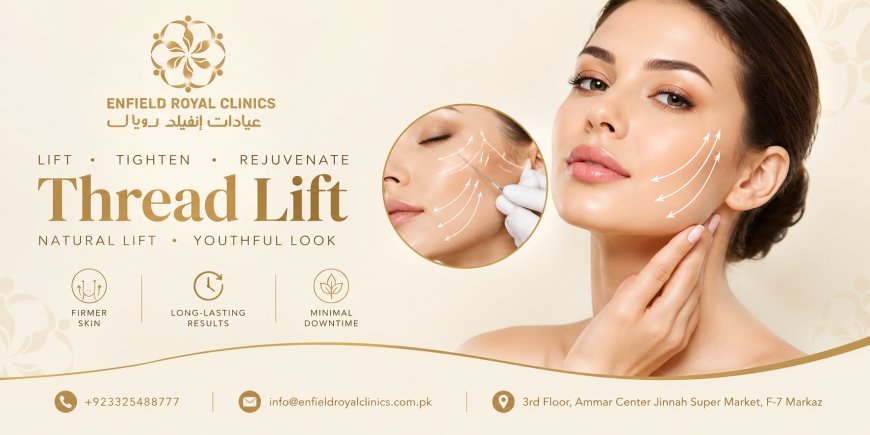
Thread lift treatment has become a popular non-surgical option for people who want to improve facial firmness and achieve a more youthful appearance without undergoing a traditional facelift. It offers a minimally invasive approach to lifting selected areas of the face while supporting the skin's natural collagen production. For individuals exploring Thread Lift Treatment in Islamabad, understanding its benefits, procedure, recovery, and limitations can help them make an informed decision.
The treatment uses special medical threads placed beneath the skin to provide subtle lifting and support. Depending on the type of threads used and the patient's facial structure, it may help improve sagging cheeks, soften the appearance of jowls, and create a more defined jawline. Although the results are generally more subtle than surgical lifting, many people appreciate the shorter recovery period and the natural-looking improvement.
1. What Is Thread Lift Treatment?
A thread lift is a minimally invasive cosmetic procedure designed to lift and support areas of the face that have begun to lose firmness. During the treatment, a qualified medical professional inserts dissolvable threads beneath the skin using fine needles or cannulas. These threads help reposition selected tissues and provide temporary structural support.
Some threads have small cones or barbs that help hold the skin in a lifted position. As the threads gradually dissolve, the body's natural healing response may stimulate collagen production around the treated areas. Collagen is a protein that helps maintain the skin's structure, elasticity, and firmness.
The procedure is commonly considered for the cheeks, jawline, lower face, and eyebrows, depending on the patient's needs and the practitioner's assessment. However, it is not suitable for everyone. The best candidates are generally adults with mild to moderate skin laxity who want a modest improvement rather than the more substantial results associated with surgery.
2. What Are the Main Benefits of Thread Lift Treatment?
Thread lift treatment offers several potential benefits for people seeking facial rejuvenation. The outcome depends on skin quality, facial anatomy, the type of threads used, and the experience of the treating professional.
A More Lifted and Youthful Appearance
One of the primary benefits is the temporary lifting of selected facial tissues. The treatment may improve the appearance of mildly sagging cheeks, soften jowls, and provide a more refreshed facial contour.
Unlike a traditional facelift, a thread lift does not involve large surgical incisions or extensive tissue removal. This makes it an option for people who prefer a less invasive approach. However, the amount of lifting is usually limited, and it cannot reproduce the results of surgical facial rejuvenation.
Improved Jawline Definition
As the skin loses elasticity with age, the jawline may become less defined. A thread lift can help reposition certain tissues around the lower face, potentially creating a smoother transition between the cheeks and jawline.
The improvement is usually subtle and works best when sagging is relatively mild. People with significant skin laxity or excess tissue may need to consider alternative treatments after a professional assessment.
Support for Natural Collagen Production
Another potential advantage is collagen stimulation. As dissolvable threads break down, the surrounding tissue may respond by producing collagen as part of the healing process.
Collagen supports the skin's structure and can contribute to improved firmness and texture over time. Nevertheless, the degree of collagen stimulation varies between individuals, and it does not guarantee a dramatic or permanent improvement in skin quality.
A Minimally Invasive Alternative to Surgery
Thread lifts generally require only small entry points rather than the larger incisions associated with a surgical facelift. The procedure is commonly performed using local anaesthesia, which can make it more convenient for suitable patients.
This approach may appeal to people who want modest facial lifting without undergoing major surgery. However, minimally invasive does not mean risk-free, and the procedure still requires appropriate medical training, sterile technique, and careful patient selection.
3. How Does Thread Lift Treatment Improve Facial Appearance?
Thread lifts can address selected signs of ageing by providing mechanical support to tissues beneath the skin. The treatment plan depends on the areas that need improvement and the patient's natural facial proportions.
Common treatment goals include:
-
Lifting the cheeks: Supporting mildly sagging cheek tissue to create a fresher appearance.
-
Defining the jawline: Improving the contour of the lower face in suitable candidates.
-
Softening jowls: Reducing the appearance of early sagging along the jawline.
-
Lifting the eyebrows: Providing a subtle improvement in eyebrow position when appropriate.
-
Improving facial contours: Creating a more balanced appearance without changing the patient's natural features significantly.
A consultation is essential before selecting any treatment area. A qualified practitioner should examine skin thickness, facial movement, existing asymmetry, and the degree of tissue laxity before recommending a thread lift.
The procedure is not intended to treat every concern associated with ageing. Deep wrinkles, substantial excess skin, or significant volume loss may require different treatments. In some cases, a combination of procedures may be discussed, but each option should be selected according to individual needs and medical suitability.
4. What Happens During a Thread Lift Procedure?
Understanding the treatment process can help patients feel more comfortable and prepared. Although the exact steps vary, a typical procedure involves several stages.
Initial consultation: The practitioner reviews the patient's medical history, current medications, allergies, previous cosmetic procedures, and desired results. This assessment helps identify possible risks and determine whether a thread lift is appropriate.
Preparation: The treatment area is cleaned, and local anaesthesia is generally applied to reduce discomfort. The practitioner marks the planned insertion points and lifting direction.
Thread placement: Fine needles or cannulas are used to insert the threads beneath the skin. The practitioner carefully positions them to support the targeted tissue. The threads are then adjusted as needed to achieve the intended lift.
Final assessment: The practitioner checks the facial contours and makes any appropriate adjustments. Patients receive instructions about aftercare, activity restrictions, and warning signs that require medical attention.
The procedure may take approximately 30 to 60 minutes, although the duration depends on the number of areas treated and the technique used. Some people notice an improvement immediately, but initial swelling and bruising can affect the appearance during the early recovery period.
5. Is Thread Lift Treatment Safe, and What Are the Possible Risks?
Thread lift treatment is generally considered minimally invasive, but it is not completely free of complications. Choosing a properly qualified medical professional and following aftercare instructions can help reduce avoidable risks.
Temporary side effects may include swelling, bruising, tenderness, tightness, and mild discomfort around the treated areas. Some patients may experience temporary dimpling, uneven contours, or difficulty opening their mouths comfortably during the initial healing period.
Less common complications include infection, visible or palpable threads, thread migration, persistent asymmetry, skin irregularities, and injury to nearby structures. In some cases, a thread may need to be adjusted or removed by a qualified professional.
Patients should discuss their medical history before treatment, particularly if they have active skin infections, certain bleeding disorders, immune-related conditions, or a tendency to develop problematic scars. People taking blood-thinning medicines should not stop them without guidance from the prescribing clinician.
Thread lifts may also be unsuitable for individuals with substantial facial sagging or unrealistic expectations. A responsible practitioner should explain the likely results, alternatives, costs, limitations, and potential complications before obtaining informed consent.
6. How Long Do Thread Lift Results Last?
Thread lift results are temporary, and their duration varies according to the thread material, treatment technique, skin condition, age, and lifestyle. Many patients experience results that last approximately 6 to 18 months, although individual outcomes may fall outside this range.
The initial lifting effect comes from the threads supporting the tissues. Collagen production may provide additional benefits during the healing process, but the threads gradually dissolve and cannot stop the natural ageing process.
Several habits may help maintain healthy skin following treatment:
-
Use broad-spectrum sunscreen to protect the skin from ultraviolet damage.
-
Follow a gentle skincare routine suited to the skin type.
-
Avoid smoking, which can negatively affect skin health and healing.
-
Maintain a balanced diet and healthy lifestyle.
-
Attend follow-up appointments as recommended by the treating professional.
-
Follow instructions about facial massage, strenuous exercise, and pressure on the treated areas.
Repeat treatment may be considered when the effects diminish, but it should not be scheduled automatically. A qualified practitioner should reassess the skin and explain whether another thread lift or a different approach would be more suitable.
7. What Should Patients Expect During Recovery?
Recovery after a thread lift is generally shorter than recovery after a surgical facelift, but the skin and underlying tissues still need time to heal. Some swelling, bruising, tenderness, and a pulling sensation are common during the first several days.
Patients should follow the treating professional's specific instructions, as recommendations vary depending on the thread type and treatment area. They may be advised to avoid strenuous exercise, excessive facial movements, rubbing or massaging the treated areas, and sleeping directly on the face for a period after treatment.
Gentle skincare and careful hygiene can support recovery. Makeup should be used only when the practitioner considers it appropriate, particularly around insertion points. Patients should not attempt to push, pull, or adjust a thread themselves.
Medical advice should be sought promptly if there is increasing pain, spreading redness, fever, unusual discharge, significant skin discoloration, or a thread becoming exposed. Sudden or worsening symptoms should not be dismissed as a normal part of healing.
People considering Thread Lift Treatment in Islamabad should allow enough time for the initial swelling and bruising to settle before judging the final appearance. Follow-up care also gives the practitioner an opportunity to assess healing and address concerns.
Frequently Asked Questions
1. Is thread lift treatment painful?
Most patients receive local anaesthesia to minimise discomfort during thread placement. Some pressure or pulling may be felt during the procedure, followed by temporary tenderness, tightness, or bruising. The level of discomfort varies from person to person.
2. Who is a good candidate for a thread lift?
Adults with mild to moderate facial sagging who want a subtle lifting effect may be suitable candidates. A professional assessment is necessary to evaluate skin condition, medical history, expectations, and possible risks. People with significant excess skin may benefit more from other treatment options.
3. How soon can patients return to normal activities after a thread lift?
Many patients resume light daily activities within a few days, depending on swelling, bruising, and discomfort. Strenuous exercise and activities that put pressure on the face may need to be avoided for longer. The treating professional should provide an individual recovery plan.
4. Does a thread lift provide permanent results?
No. Thread lift results are temporary because the threads gradually dissolve and the skin continues to age naturally. Improvements may last around 6 to 18 months for many patients, although the duration differs according to individual factors and the treatment method.
Conclusion
Thread lift treatment can offer a minimally invasive way to improve selected signs of facial ageing, including mild cheek sagging, early jowls, and reduced jawline definition. Its potential benefits include subtle lifting, limited downtime compared with surgery, and possible collagen stimulation. However, results are temporary, and the procedure cannot replace a surgical facelift when substantial lifting is required.
For anyone considering Thread Lift Treatment in Islamabad, the most important steps are to understand the procedure's limitations, discuss possible complications, and choose a properly qualified medical professional. A personalised consultation can help determine whether a thread lift is appropriate or whether another treatment may better meet the individual's goals.
What's Your Reaction?