



























UK Furniture Market Size, Share, Trends, Growth & Analysis Report 2026-2034
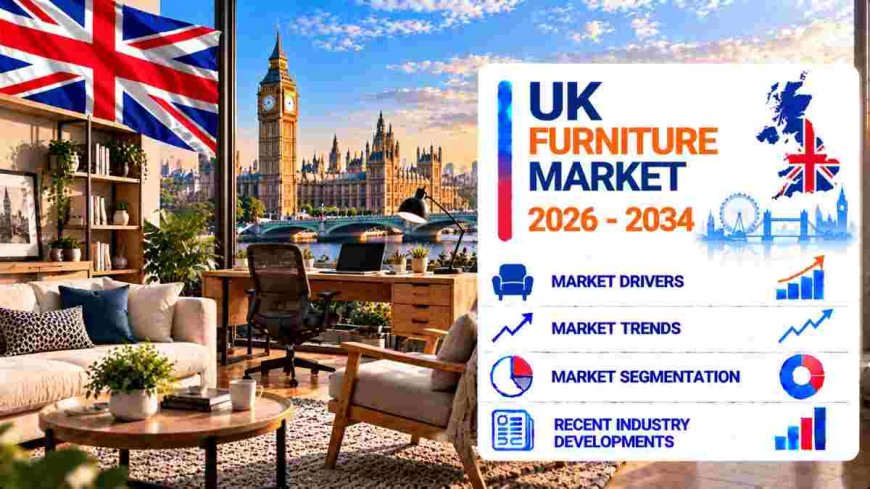
The UK furniture market size increased from USD 22.78 Billion in 2025 to USD 23.91 Billion in 2026 and is projected to reach USD 32.40 Billion by 2034, at a CAGR of 3.87%

Market Overview
The UK furniture market size reached USD 22.78 Billion in 2025, is valued at USD 23.91 Billion in 2026, and is projected to reach USD 32.40 Billion by 2034, growing at a compound annual growth rate (CAGR) of 3.87% from 2026 to 2034. The market is driven by home renovation, e-commerce, commercial and hospitality demand, and sustainability preferences.
Request a Sample Report for In-Depth Market Insights: https://www.imarcgroup.com/uk-furniture-market/requestsample
UK Furniture Market Summary
- The UK furniture market covers wood, metal, plastic, glass, and other furniture, across living room, dining room, bedroom, kitchen, office, educational, and other products, for residential, commercial, hospitality, healthcare, and other uses.
- Furniture is valued for comfort, style, and function in homes, workplaces, and hospitality spaces.
- The ecosystem includes timber and material suppliers, manufacturers and importers, retailers and online platforms, designers, builders, hospitality and commercial buyers, and consumers.
- In 2025, IMARC puts wood at 47.8% of the material segment and residential at 66.4% of end use. London holds 20.8% of the regional split.
- IMARC lists restraints: timber and raw material volatility, low-cost imports, the shift to minimalist designs, balancing cost and quality, and supply chain resilience.
- IMARC cites nearly 7 million UK homeowners planning renovation projects by 2027, averaging about GBP 14,000 per household.
Porter’s Five Forces Analysis
- Competitive Rivalry: High. Large retailers, specialist makers, and online sellers compete on price, design, and delivery. Business implication: Differentiate through design, quality, and fast, reliable delivery.
- Supplier Power (Timber and Materials): Moderate to High. Timber and raw material volatility affects costs. Business implication: Diversify sourcing and use sustainable materials.
- Buyer Power (Retailers and Consumers): High. Shoppers compare prices online and wait for sales. Business implication: Build brand strength and direct online channels.
- Threat of Substitutes: Moderate. Second-hand furniture and rental compete, especially at low prices. Business implication: Emphasize durability and warranties.
- Threat of New Entrants: Moderate to High. Online and direct-to-consumer brands enter easily, and low-cost imports add pressure. Business implication: Build brand loyalty and omnichannel reach.
Market Growth Drivers
Home Renovation and E-Commerce
IMARC cites nearly 7 million UK homeowners planning renovation projects by 2027, averaging about GBP 14,000 per household. Residential use holds 66.4% of the market in 2025. Growing adoption of online furniture shopping widens reach, as seen in Dunelm’s August 2026 AI shopping assistant and Furniture.com’s February 2026 platform.
Commercial and Hospitality Demand
IMARC says the UK had 176,685 hospitality businesses in 2025, up from about 130,000 in 2010 and about 175,000 in 2022, supporting demand for commercial and hospitality furniture. In March 2026, Marriott announced the European launch of Series by Marriott, including five UK hotels with Splendid Hospitality Group.
Sustainability Preferences
IMARC says 73% of Gen Z consumers are willing to spend more on eco-friendly products, pushing makers toward responsibly sourced and sustainable materials. Wood holds 47.8% of the material segment, and glass is the fastest-growing material, at about 4.7% CAGR. Brands are adapting ranges to meet these expectations, including modular products like Utopia’s HeyU bathroom furniture.
UK Furniture Market Segmentation
Material Insights:
- Wood (47.8% in 2025)
- Metal (21.5%)
- Plastic (13.8%)
- Glass (8.4%)
- Others (8.5%)
End Use Insights:
- Residential (66.4% in 2025)
- Commercial (18.2%)
- Hospitality (7.6%)
- Healthcare (4.3%)
- Others (3.5%)
Product Insights:
- Living Room
- Dining Room
- Bedroom
- Kitchen
- Office
- Educational
- Others
Regional Insights:
- London (20.8% in 2025)
- South East (16.7%)
- North West (11.8%)
- Scotland (10.3%)
- East of England (8.7%)
- West Midlands (8.2%)
- South West (7.1%)
- Yorkshire and The Humber (6.2%)
- East Midlands (5.1%)
- Others (5.1%)
Competitive Landscape
The UK furniture market includes large furniture and homeware retailers, specialist manufacturers, and online sellers. IMARC names five key players without ranking them. Competition centers on price, design, retail and online reach, and sustainability.
Key Organizations Mentioned in the Report Context Include:
- Inter IKEA Systems B.V., which opened a small-format store at Hall Road Retail Park, Norwich, in August 2025.
- Dunelm Group plc, which launched “Ask Dunelm,” an AI shopping assistant built with Google Cloud, in August 2026.
- The Senator Group
- NEXT plc
- Oak Furnitureland
- Utopia, Furniture.com, and Norra Timber appear in IMARC’s developments and restraints text.
Regional Analysis
- London: The leading region, at 20.8% in 2025, because of its concentration of retail showrooms and dense urban residential demand, according to IMARC.
- South East: The second-largest region, at 16.7%, driven by home renovation and regional retail expansion.
- North West: At 11.8%, with a large population and retail base.
- Scotland: At 10.3%.
- East of England, West Midlands, South West, Yorkshire and The Humber, and East Midlands: At 8.7%, 8.2%, 7.1%, 6.2%, and 5.1%.
- Others: At 5.1%.
Recent Industry Developments
August 2026: Dunelm launched “Ask Dunelm,” an AI shopping assistant in the Dunelm App, built with Google Cloud’s Gemini Enterprise for Customer Experience product suite, according to Dunelm’s own announcement. Customers can describe what they want in their own words, ask product questions, visualize products in their homes, and get tailored recommendations. It is live on iOS, and the app has been downloaded by over 500,000 customers.
April 2026: Norra Timber flagged a global raw material shortage and a fragile UK timber market, according to IMARC.
March 2026: Marriott announced the European launch of Series by Marriott, including five UK hotels with Splendid Hospitality Group.
February 2026: Furniture.com launched an AI-powered multi-retailer shopping platform.
October 2025: Utopia launched its HeyU modular bathroom furniture collection.
August 2025: Inter IKEA opened a small-format store at Hall Road Retail Park, Norwich, its second of three planned UK small-format stores that year.
Key Aspects Required for the UK Furniture Market
- Market Performance: USD 22.78 Billion in 2025 and USD 23.91 Billion in 2026, with a projected trajectory to USD 32.40 Billion by 2034.
- Market Outlook: A 3.87% CAGR through 2034 indicates steady growth.
- Growth Drivers: Home renovation and e-commerce; commercial and hospitality demand; and sustainability preferences.
- Competitive Landscape: Large retailers, specialist makers, and online sellers competing on price, design, and reach.
- Value Chain Analysis: From timber and material suppliers, through manufacturers and retailers, to homeowners, hospitality, and commercial buyers.
- Industry Trends: AI shopping tools; small-format stores; modular and space-saving designs; and sustainable materials.
- Strategic Recommendations: Invest in AI and online experiences; secure timber supply; expand sustainable ranges; and serve hospitality and commercial demand.
Note: If you need any specific information that is not currently covered within the scope of the report, we will provide the same as a part of customization.
Speak to an analyst: https://www.imarcgroup.com/request?type=report&id=24502&flag=C
Report Format, Delivery, and Customization Details
- Report Format Mode: PDF and Excel (Editable version in PPT/Word format available on special request)
- Report Delivery Mode: Online Delivery, Physical Delivery
- Report Delivery Time: report delivered over email within 24 to 48 hours. If requested by the client, a physical copy will be delivered within three to ten days.
- Report Confirmation Mode: Yes, via email
- Report Customization Mode: Yes, via Email / Call
- Report Table of Content: Yes
- Report List of Figures: Yes
- Report Methodology Mode: Yes
- Request For Sample Report: Yes
What's Your Reaction?