



























Setting Up a Palm Oil Processing Plant Cost 2026: Equipment, Machinery & Investment Guide

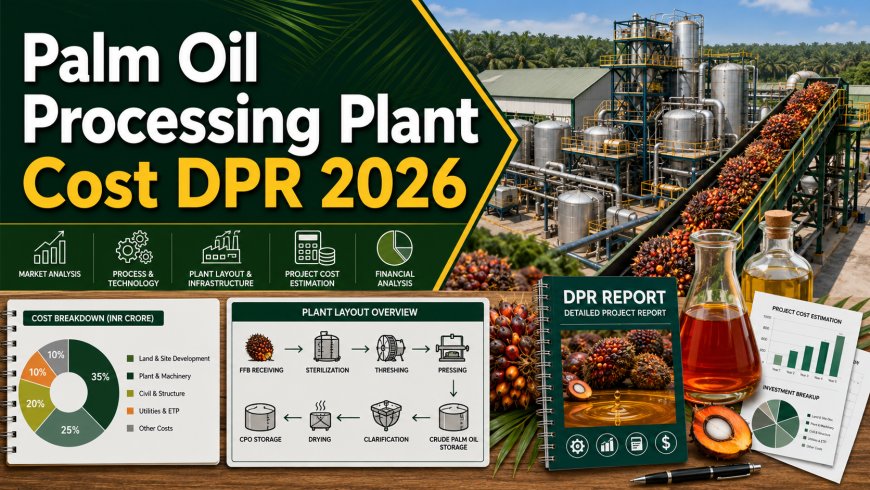
Setting up a palm oil processing plant involves a series of controlled processes including fresh fruit bunch reception, sterilization, threshing, digestion, mechanical pressing, clarification, purification, and kernel crushing. Key equipment includes sterilizers, threshers, digesters, screw presses, clarifiers, centrifuges, kernel crackers, and bulk loading systems. Since this is a food-grade production facility, maintaining hygiene standards, quality control systems, and compliance with food safety and environmental regulations is critical. Additionally, evaluating the palm oil plant project report is essential for understanding capital investment, machinery requirements, operational efficiency, and long-term profitability in this rapidly growing palm oil market.
The global palm oil market is poised for steady growth through 2026 and beyond, driven by rising global consumption of affordable edible oils, expanding food processing demand, growing oleochemical applications, and the cost competitiveness of palm oil compared to other vegetable oils. The global palm oil market size was valued at USD 59.15 Billion in 2025. According to IMARC Group estimates, the market is expected to reach USD 80.05 Billion by 2034, exhibiting a CAGR of 3.42% from 2026 to 2034.
IMARC Group's report, titled "Palm Oil Processing Plant Project Report 2026: Industry Trends, Plant Setup, Machinery, Raw Materials, Investment Opportunities, Cost and Revenue," provides a complete roadmap for setting up a palm oil processing unit. It covers a comprehensive market overview to micro-level information such as unit operations involved, raw material requirements, utility requirements, infrastructure requirements, machinery and technology requirements, manpower requirements, packaging requirements, transportation requirements, etc.
Request for a Sample Report: https://www.imarcgroup.com/palm-oil-processing-plant-project-report/requestsample
Palm Oil Industry Outlook 2026
The palm oil market is primarily driven by the growing global population and rising consumption of affordable edible oils. Rapid expansion of the food processing sector and increasing urbanization are boosting demand for processed and packaged foods containing palm oil. The oleochemical industry's growth is supporting increased utilization of palm oil derivatives in soaps, detergents, and industrial chemicals. Policy-driven adoption of biodiesel in several countries has further enhanced palm oil demand as a biofuel feedstock. Moreover, palm oil's cost advantage and higher yield compared to soybean and sunflower oils continue to strengthen its processing economics.
However, challenges such as fresh fruit bunch price volatility, high initial capital investment for machinery and processing infrastructure, energy and water consumption concerns, deforestation-linked environmental scrutiny, and evolving sustainability regulations may influence production costs and strategic investment decisions for new plant setups.
Key Insights for Setting Up a Palm Oil Processing Plant
Detailed Process Flow
• Product Overview
• Unit Operations Involved
• Mass Balance and Raw Material Requirements
• Quality Assurance Criteria
• Technical Tests
Project Details, Requirements and Costs Involved:
• Land, Location and Site Development
• Plant Layout
• Machinery Requirements and Costs
• Raw Material Requirements and Costs
• Packaging Requirements and Costs
• Transportation Requirements and Costs
• Utility Requirements and Costs
• Human Resource Requirements and Costs
Capital Expenditure (CapEx) and Operational Expenditure (OpEx) Analysis:
Project Economics:
• Capital Investments
• Operating Costs
• Expenditure Projections
• Revenue Projections
• Taxation and Depreciation
• Profit Projections
• Financial Analysis
Profitability Analysis:
• Total Income
• Total Expenditure
• Gross Profit
• Gross Margin
• Net Profit
• Net Margin
Key Cost Components
• Raw Materials: The primary cost driver, including fresh fruit bunches (FFBs), which account for approximately 70-80% of total operating expenses, along with processing chemicals and packaging materials.
• Energy Costs: Palm oil processing is energy-intensive, particularly the sterilization and refining stages, requiring significant quantities of steam, electricity, and fuel.
• Machinery and Equipment: Capital investment in sterilizers, threshers, digesters, screw presses, clarifiers, centrifuges, kernel crackers, refining plants, and fractionation units, along with ongoing maintenance costs.
• Labor: Includes salaries, training, and benefits for skilled and unskilled workers involved in plant operation, maintenance, and quality control.
• Utilities: Costs for water, steam generation, compressed air, effluent treatment (POME management), and other utilities essential for continuous, compliant production.
• Packaging and Transportation: Expenses related to bulk storage, drumming, tanker logistics, and distributing crude and refined palm oil to refineries or end users, including cold-chain considerations.
• Depreciation and Financing: Depreciation of fixed assets and interest or repayment obligations for loans or capital investment in plant setup.
• Compliance and Safety: Investment in effluent treatment systems (POME biogas capture), sustainability certifications (RSPO, ISPO, MSPO), emission control, and environmental compliance.
• Overheads: Administrative costs such as insurance, office operations, licensing, marketing, sustainability reporting, and general plant management.
Economic Trends Influencing Palm Oil Processing Plant Setup Costs 2026
Fresh Fruit Bunch (FFB) Price Volatility: As FFBs are the primary raw material for palm oil processing, fluctuating plantation output due to weather patterns, pest pressures, and regional harvest cycles directly impact both capital planning and operating costs. Higher FFB prices increase production expenses, making supply chain integration and long-term sourcing agreements more critical.
Sustainability Regulations & Certification Costs: Growing regulatory and consumer pressure on deforestation-free supply chains, GHG emissions, and POME (palm oil mill effluent) management requires investment in biogas capture systems, effluent treatment, and third-party certifications (RSPO, ISPO, MSPO), raising both upfront CapEx and ongoing OpEx.
Inflation & Interest Rates: Rising inflation inflates the cost of building materials, civil construction, labor, and machinery, while higher interest rates increase the cost of loans and financing needed for mill construction, equipment procurement, and commissioning of processing lines.
Government Biodiesel Mandates & Subsidies: Indonesia and Malaysia's expanding biodiesel blending mandates (B40/B50) and export levies create both demand support and cost uncertainty for processors. Agro-processing incentives, rural industrialization programs, and export promotion grants in palm oil-producing nations can partially offset plant setup investment.
Technological Advancements: Innovations in continuous sterilization, automated optical sorting, high-efficiency screw presses, and advanced fractionation technologies can increase upfront CapEx but offer significant gains in oil extraction rate (OER), reduced material waste, and lower per-unit costs, enhancing long-term ROI.
Supply Chain Localization: Downstream food manufacturers and oleochemical producers increasingly prioritize processors with reliable local sourcing, traceable supply chains, and proximity to plantation areas. This localization trend incentivizes in-region investment but may raise initial costs in areas with developing infrastructure.
Labor Market Considerations: Shortages in skilled labor for operating sterilization lines, centrifuges, and automated kernel processing equipment, combined with increasing scrutiny on migrant labor practices, can drive up wages or necessitate investment in mechanization and compliance programs, raising both initial setup and ongoing operational expenses.
Speak to an Analyst for Customized Report: https://www.imarcgroup.com/request?type=report&id=7331&flag=C
Challenges and Considerations for Investors
• Feedstock Price Volatility: Palm oil processing is heavily dependent on fresh fruit bunches, which are subject to seasonal supply fluctuations, weather-related crop variability, and competition from biodiesel mandates. These factors can significantly impact production costs and squeeze profit margins.
• High Capital Intensity: Establishing a palm oil mill requires substantial investment in sterilizers, pressing equipment, clarification systems, and effluent treatment infrastructure. Long payback periods and high land acquisition costs in producing regions can deter risk-averse investors.
• Environmental Compliance & POME Management: Stringent regulations on palm oil mill effluent (POME) discharge, GHG emissions, and deforestation linkage require additional investment in biogas capture, effluent ponds, and environmental monitoring systems.
• Sustainability Certification Requirements: Access to premium export markets increasingly requires RSPO, ISPO, or MSPO certification. Certification processes are time-consuming and costly, and non-certified processors may face market access restrictions or price discounts.
• Market Competition: The global palm oil processing market is dominated by large integrated players with significant scale advantages. New entrants must focus on operational efficiency, niche applications, or regional supply reliability to compete effectively.
• Logistics and Distribution: Transporting crude palm oil and palm kernel products requires specialized bulk tankers, storage facilities, and temperature management. Poor logistics infrastructure in plantation-adjacent areas can increase distribution costs and delivery lead times.
• Technological Barriers: Maintaining competitive oil extraction rates (OER) and kernel extraction rates (KER) requires ongoing investment in equipment upgrades, precision monitoring, and process optimization. Outdated milling systems lead to higher losses and greater environmental impact.
• Policy and Regulatory Risks: Changes in export levies, biodiesel blending mandates, import restrictions by consumer markets (EU deforestation regulation), and land use policies can alter market dynamics abruptly and affect investment outcomes.
Capital Expenditure (CapEx) and Operational Expenditure (OpEx) Analysis
Capital Investment (CapEx): Machinery costs account for the largest portion of the total capital expenditure, covering sterilizers, threshers, digesters, screw presses, clarifiers, centrifuges, kernel crackers, refining plants, fractionation units, and bulk loading systems. The cost of land and site development, including charges for land registration, boundary development, and infrastructure, forms a substantial part of the overall investment. Effluent treatment systems and biogas capture infrastructure are also significant capital items for regulatory compliance.
Operating Expenditure (OpEx): In the first year of operations, the operating cost for the palm oil processing plant is projected to be significant, covering raw materials (primarily fresh fruit bunches), utilities, depreciation, taxes, packing, transportation, and repairs and maintenance. By the fifth year, the total operational cost is expected to increase substantially due to factors such as inflation, market fluctuations, and potential rises in the cost of key materials. Additional factors, including supply chain disruptions, rising global consumer demand for sustainable palm oil, and shifts in export market regulations, are expected to contribute to this increase.
Latest Industry Developments
Jan 2026: Indonesia, the world's largest palm oil producer, is evaluating a higher export levy on palm oil to help finance its expanding biodiesel program, which blends palm oil into national fuel (B40 currently, moving toward B50). The proposed levy hike targets crude and refined palm oil exports to sustain funding for the mandate as domestic biofuel use rises.
May 2024: The Sustainable Palm Oil Dialogue (SPOD) 2024 Europe successfully convened stakeholders committed to advancing sustainability in the palm oil sector, including representatives from the European Commission and the Indonesian Government, focusing on aligning supply chain transparency with EU deforestation regulation requirements.
About Us:
IMARC Group is a global management consulting firm that helps the world's most ambitious changemakers to create a lasting impact. The company excels in understanding its client's business priorities and delivering tailored solutions that drive meaningful outcomes. We provide a comprehensive suite of market entry and expansion services. Our offerings include thorough market assessment, feasibility studies, company incorporation assistance, factory setup support, regulatory approvals and licensing navigation, branding, marketing and sales strategies, competitive landscape and benchmarking analyses, pricing and cost research, and procurement research.
Contact Us:
IMARC Group
134 N 4th St. Brooklyn, NY 11249, USA
Email: sales@imarcgroup.com
Tel No: (D) +91 120 433 0800
United States: +1-631-791-1145
What's Your Reaction?