




























What Is Portable Hardness Tester - UCI & LEEB Portable Hardness Tester
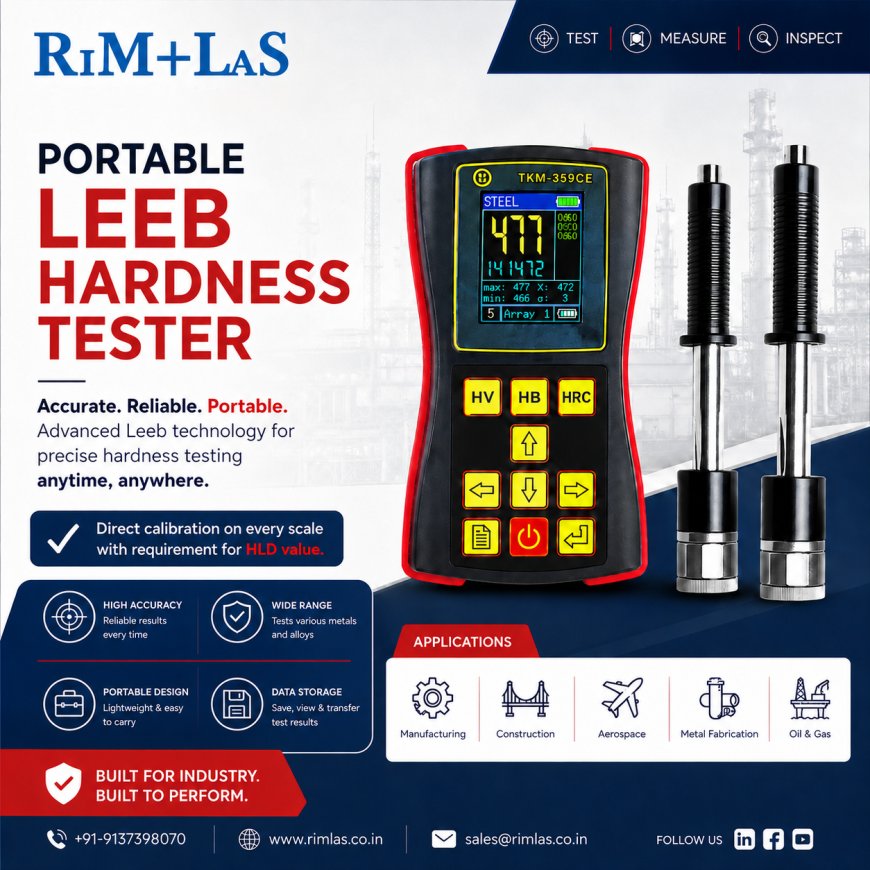
A portable hardness tester is used to measure the hardness of small & heavy jobs in field. Leeb & UCI is also portable hardness testers.

Portable Hardness Tester Training: Why Certification Changes
Your Results
Buying a portable hardness tester is the easy part. Getting consistent, defensible results from it — the kind that hold up in an audit, a customer inspection, or a failure investigation — depends almost entirely on whether the person operating it actually understands the method, not just the buttons.
This is the part of the equation most companies underinvest in. They budget for the instrument, but not for the training that makes its readings trustworthy. This article looks at why certification-based training matters as much as the equipment itself, what a proper training program should cover, and who in your organization actually needs it.
Why Owning the Equipment Isn't the Same as Knowing the Method
A portable hardness tester can produce a number within seconds of contact with a surface. What it can't do on its own is tell the operator whether that number is actually valid — whether the surface was properly prepared, the probe angle was correct, or the correlation used to convert the reading into a familiar scale was appropriate for that material.
This gap between operating a device and understanding a testing method is exactly what certification-based training is designed to close. It's the difference between a team that produces numbers and a team that produces evidence.
What a Proper Portable Hardness Tester Training Program Should Cover
Testing Method Fundamentals
Operators need to understand what's actually happening during a test — how a portable Leeb hardness tester derives hardness from rebound velocity, or how UCI testing interprets ultrasonic frequency shifts — not just which buttons produce a reading. This foundation is what allows operators to recognize when something looks wrong before it becomes a bad data point.
Correct Technique and Surface Preparation
Training should cover the practical details that directly affect accuracy: surface cleaning and preparation, correct probe angle and contact technique, minimum part thickness and mass requirements, and how to test curved or irregular geometries correctly.
Standards and Correlation Tables
Certification-focused training should include how portable hardness values relate to standards like ASTM A956 and A1038, and how to correctly apply material-specific correlation tables when converting Leeb or UCI values to Rockwell or Brinell equivalents — a step that's frequently done incorrectly by self-taught operators.
Calibration and Documentation Practices
A well-trained operator knows how to verify calibration before testing, recognize signs of equipment drift, and maintain the kind of test records that actually support an audit — not just a raw number with no context.
Practical, Hands-On Application
Classroom knowledge only goes so far. Effective training includes hands-on testing across different materials, geometries, and surface conditions, so operators build real judgment rather than memorized steps.
Who Actually Needs This Training
Certification-based training isn't only for frontline operators. Different roles benefit from it in different ways:
- Quality control technicians — need deep technical competency in testing method and technique
- Quality managers and supervisors — need enough understanding to interpret results, spot inconsistent data, and manage audit readiness
- Procurement and technical buyers — benefit from understanding testing methods well enough to evaluate equipment specifications accurately
- Business and commercial teams — gain value from understanding how testing accuracy affects certification timelines, customer relationships, and liability exposure
This is part of why a genuinely useful training program is structured for a mixed technical and business audience, not just equipment operators.
The Business Case for Investing in Training, Not Just Equipment
Fewer Audit Findings
Trained operators produce documentation that satisfies auditors on the first pass, rather than generating follow-up questions or non-conformance reports that delay certification.
Reduced Risk of Costly Errors
A misapplied correlation table or incorrect probe technique can go unnoticed for months, quietly generating unreliable data that only surfaces during a failure investigation — by which point the cost is far higher than the training would have been.
Consistency Across Shifts and Locations
Standardized, certification-based training ensures that a hardness reading from one operator matches what another operator would get on the same part, which matters enormously in multi-shift or multi-site operations.
Stronger Customer and Certifying Body Confidence
When customers or certifying bodies know your testing personnel are formally trained, it strengthens confidence in your quality data — sometimes speeding up approval processes that would otherwise involve more scrutiny.
What to Look for in a Training Provider
Not all training is equal. Before committing, it's worth checking whether a program covers real testing method fundamentals or just device operation, includes hands-on practice rather than only theory, addresses standards and correlation accuracy specifically, and offers ongoing support rather than a one-time session with no follow-up.
How RiM LaS Approaches Certification-Based Training
RiM LaS Private Limited built its training programs around exactly these gaps — combining portable hardness testing method fundamentals, hands-on technique practice, standards alignment, and documentation training into a single certification-based program. Our approach is designed for the mixed audience that actually needs it: technicians who operate the equipment day to day, and managers and commercial teams who need to understand what quality testing data really represents.
We work with metal, aerospace, and automotive companies across India to build training programs around their actual equipment and production environment, not a generic course that treats every industry the same way.
Conclusion
A portable hardness tester is only as reliable as the person operating it. Certification-based training closes the gap between owning accurate equipment and producing accurate, audit-ready results — covering everything from testing fundamentals and technique to standards compliance and documentation. For companies serious about quality data they can actually trust, training deserves the same investment as the instrument itself.
Ready to build real testing competency in your team? Connect with RiM LaS Private Limited for certification-based training designed around your industry, your equipment, and your people.
https://www.rimlas.co.in/portable-hardness-tester/
Frequently Asked Questions
1. Why is training important if a portable hardness tester already gives a reading? A device produces a number automatically, but only a trained operator can ensure that number is valid — based on correct surface preparation, technique, and appropriate correlation to standard hardness scales.
2. Who in an organization should get portable hardness tester certification training? Ideally both technical staff who operate the equipment and managers or commercial teams who need to interpret results, manage audits, or evaluate equipment decisions.
3. Does certification-based training cover standards like ASTM A956? Yes, proper certification training should include how portable hardness testing methods relate to relevant standards and how to apply material-specific correlation tables correctly.
4. Can poor training lead to inaccurate hardness testing results even with good equipment? Yes. Incorrect technique, misapplied correlation values, or skipped calibration checks can all produce unreliable readings regardless of how accurate the device itself is.
5. Does RiM LaS offer training programs suited for both technical and business teams? Yes. RiM LaS designs certification-based training for a mixed audience, covering technical testing competency as well as the business implications of accurate quality data.
What's Your Reaction?