





























Philippines Fertilizer Market 2026-2034 | Trends, Growth and Forecast - IMARC Group
The Philippines Fertilizer market size reached USD 3,646.00 Million in 2025. The market is projected to reach USD 4,773.86 Million by 2034, exhibiting a growth rate (CAGR) of 3.04% during 2026-2034.

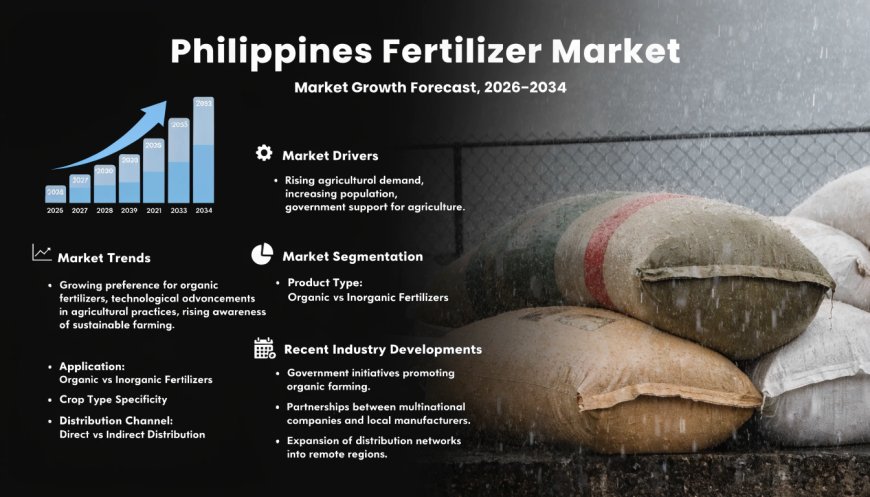
Market Overview
The Philippines fertilizer market is witnessing strong growth driven by expanded government agricultural support programs through the tripling of the Rice Competitiveness Enhancement Fund budget, which provides comprehensive subsidies for seeds, mechanization, and farm inputs, along with strategic international partnerships with regional fertilizer manufacturers for technology transfer and supply security. The market size reached USD 3,646.00 Million in 2025 and is projected to reach USD 4,773.86 Million by 2034, exhibiting a compound annual growth rate (CAGR) of 3.04% during 2026‑2034. The accelerating transition toward sustainable and organic‑based fertilizers to reduce import dependency is further supporting market evolution, expanding the Philippines fertilizer market share. This market is strategically important to the Philippines' economy as it directly supports national food security objectives, agricultural productivity enhancement, and farmer livelihood improvement across the archipelago.
The Philippines fertilizer market is poised for sustained expansion, driven by the tripling of the Rice Competitiveness Enhancement Fund budget, strategic international partnerships, and accelerating transition toward sustainable fertilizers. With a projected CAGR of 3.04% through 2034, the market presents significant opportunities for manufacturers and distributors focused on balanced fertilization strategies, soil health improvement, and participation in large‑scale government procurement programs.
Philippines Fertilizer Market Summary
- The Philippines fertilizer market encompasses a wide range of products designed for soil nutrient enhancement, crop productivity improvement, and sustainable agricultural practices across various crop types.
- The ecosystem includes chemical fertilizer manufacturers, biofertilizer producers, distributors, government procurement programs, import partners, and end‑use farmers across Luzon, Visayas, and Mindanao.
- Major segments identified in the market include product type (chemical fertilizer and biofertilizers), product (straight fertilizers including nitrogenous, phosphatic, potash, secondary macronutrient, and micronutrient fertilizers, as well as complex fertilizers), product form (dry and liquid), and crop type (grains and cereals, pulses and oilseeds, fruits and vegetables, flowers and ornamentals, and others).
- The market is driven by expanded government support through Republic Act No. 12078, signed on December 9, 2024, which extended the Rice Competitiveness Enhancement Fund until 2031 and increased the annual budget from PHP 10 Billion to PHP 30 Billion.
- Strategic international partnerships are facilitating technology transfer from established regional manufacturers to support domestic production capabilities and reduce import vulnerability.
- The organic fertilizer import market in the Philippines has shown remarkable growth, with a CAGR of 58.32% from 2020 to 2024, reflecting the accelerating shift toward sustainable farming inputs.
PORTER'S FIVE FORCES ANALYSIS – PHILIPPINES FERTILIZER MARKET
Bargaining Power of Suppliers – Moderate
- The Philippines imports a significant share of its fertilizer requirements, with key suppliers including Indonesia, China, Malaysia, Brunei Darussalam, Vietnam, South Korea, Norway, and Israel. This diversified supply base provides multiple sourcing options that balance supplier influence.
- The Philippine government's strategic approach to forging direct relationships with manufacturers in neighboring countries aims to secure more stable and competitively priced fertilizer supplies while potentially attracting foreign direct investment into domestic manufacturing facilities.
Bargaining Power of Buyers – Moderate
- The Department of Agriculture's expanded government support programs, including the PHP 30 billion annual RCEF budget, create predictable demand patterns and opportunities for manufacturers to participate in large‑scale procurement programs.
- The growing emphasis on balanced fertilization strategies and soil health improvement encourages farmers to adopt more sophisticated nutrient management approaches, creating value for premium product formulations.
Threat of New Entrants – Low to Moderate
- Capital requirements for fertilizer manufacturing facilities and regulatory compliance create barriers for new entrants. However, strategic international partnerships are facilitating technology transfer from established regional manufacturers to support domestic production capabilities.
- Niche opportunities remain for specialized organic and biofertilizer producers, with the organic fertilizer import market continuing to surge and demonstrating substantial growth potential.
Threat of Substitutes – Low
- Traditional chemical fertilizers remain foundational for agricultural productivity, while organic and biofertilizers are complementary rather than disruptive. The shift to sustainable and organic‑based fertilizers represents market expansion rather than substitution.
- The transition toward biofertilizers and Integrated Nutrient Management (INM) strategies supports overall market growth by expanding product portfolios and application methods.
Competitive Rivalry – Moderate
- The market includes international players such as Yara International, The Mosaic Company, Orica Limited, and CF Industries Holdings, alongside domestic participants including Atlas Fertilizer Corporation, Philphos Corporation, and Planters Products, Inc. (PPI).
- Competition centers primarily around product quality, distribution efficiency, and alignment with government sustainability objectives rather than destructive price competition.
Request for Sample Report: [No sample request link available on the source page]
MARKET GROWTH DRIVERS
Expanded Government Agricultural Support Programs Through Rice Competitiveness Enhancement Fund Extension
Several key factors are propelling market growth in the Philippines fertilizer market. The expanded government agricultural support programs serve as a powerful demand driver for fertilizers. On December 9, 2024, Philippine President Ferdinand R. Marcos Jr. signed Republic Act No. 12078, which amended the Rice Tariffication Law to extend the Rice Competitiveness Enhancement Fund until 2031, increasing the annual RCEF budget from PHP 10 Billion to PHP 30 Billion. The amendment allocates PHP 6 Billion for high‑quality rice seeds, PHP 9 Billion for farm mechanization, and PHP 15 Billion for extension and training programs, rice farmers financial assistance, expanded rice credit assistance, composting facilities for biodegradable wastes, pest and disease management, soil health improvement, and establishment of solar‑powered irrigation systems. This substantial increase in funding represents the government's recognition that sustained investment in agricultural inputs, particularly fertilizers, is essential for achieving food security objectives and improving farmer livelihoods. The program's emphasis on balanced fertilization strategies, soil health improvement, and pest management creates a more holistic approach to agricultural productivity that goes beyond simple input subsidies. For fertilizer manufacturers and distributors, this expanded government support translates into predictable demand patterns and opportunities to participate in large‑scale procurement programs, while also encouraging innovation in product formulations that align with sustainable farming practices and soil health objectives promoted by the government framework.
Strategic International Partnerships to Enhance Fertilizer Supply Security and Technology Transfer
The Philippines fertilizer market growth is also significantly influenced by the emergence of strategic international partnerships aimed at enhancing supply security, reducing costs, and facilitating technology transfer from established regional manufacturers to support domestic production capabilities and reduce import vulnerability. In July 2024, Agriculture Secretary Francisco P. Tiu Laurel Jr. led a delegation to Vietnam to meet with executives of Binh Dien Fertilizer Joint Stock Co. The discussions focused on possible collaboration, particularly the supply or local production of fertilizers in the Philippines. Founded in 1975, Binh Dien has become Vietnam's top producer of NPK (nitrogen, phosphorus, and potassium) fertilizers, operating several plants with a total capacity of 1 million metric tons, enough to meet 30% of Vietnam's fertilizer demand. These international partnerships also create opportunities for Philippine companies to access advanced fertilizer formulations, precision agriculture technologies, and sustainable production methods that can enhance the overall competitiveness and environmental performance of the domestic fertilizer industry.
MARKET GROWTH DRIVERS
Accelerating Transition Toward Sustainable and Organic‑Based Fertilizers
The Philippines fertilizer market is benefiting from the accelerating transition toward sustainable and organic‑based fertilizers to reduce import dependency and support environmental objectives. The organic fertilizer import market in the Philippines continues to surge, with a remarkable CAGR of 58.32% from 2020 to 2024. In 2024, the growth rate skyrocketed to 168.44%, reflecting an increasing demand for organic fertilizers in the country. The shift toward biofertilizers aligns with government frameworks promoting sustainable farming practices and soil health objectives. The organic fertilizer market in the Philippines is projected to grow significantly, with an estimated value of PHP 5 billion in the future, driven by increasing consumer awareness of health and environmental issues, leading to a 15% annual rise in organic farming practices. Expert recommendations include a gradual shift in national fertilizer subsidies to promote biofertilizers and better soil mapping, crucial for achieving rice self‑sufficiency. This transition creates new opportunities for innovation in product formulations that align with sustainable farming practices and soil health improvement.
Sustained Demand from Key Crop Sectors and Government Support Programs
Sustained demand from key crop sectors is further supporting fertilizer market growth. Grains and cereals remain the dominant crop type segment, driven by the government's rice self‑sufficiency objectives. In October 2025, President Ferdinand R. Marcos Jr. oversaw the distribution of PHP 2.9 million worth of fertilizer inputs to La Union farmers aimed at increasing farm productivity and crop yield under the Department of Agriculture's Rice Banner Program, with a total allocation of PHP 20,051,200 worth of fertilizers for La Union covering 14,215 hectares, and for the entire Ilocos region, PHP 272,984,000 covering 193,526 hectares. Additionally, in June 2025, the Department of Agriculture distributed fertilizer vouchers worth PHP 2.8 million to farmers under the Hybridization Program 2025, with each participating farmer eligible to receive fertilizer vouchers valued at PHP 5,900 per hectare, redeemable at accredited agricultural supply stores. Fruits and vegetables, pulses and oilseeds, and flowers and ornamentals segments provide additional demand channels, diversifying market growth opportunities across multiple agricultural applications.
Philippines Fertilizer Market Segmentation
Segmentation analysis provides a detailed view of the Philippines fertilizer market by category:
- Product Type Insights: Chemical Fertilizer, Biofertilizers.
- Product Insights: Straight Fertilizers (Nitrogenous Fertilizers including Urea, Calcium Ammonium Nitrate, Ammonium Nitrate, Ammonium Sulfate, Anhydrous Ammonia, and others; Phosphatic Fertilizers including Mono‑Ammonium Phosphate (MAP), Di‑Ammonium Phosphate (DAP), Single Super Phosphate (SSP), Triple Super Phosphate (TSP), and others; Potash Fertilizers including Muriate of Potash (MoP) and Sulfate of Potash (SoP); Secondary Macronutrient Fertilizers including Calcium Fertilizers, Magnesium Fertilizers, and Sulfur Fertilizers; Micronutrient Fertilizers including Zinc, Manganese, Copper, Iron, Boron, Molybdenum, and others); Complex Fertilizers.
- Product Form Insights: Dry, Liquid.
- Crop Type Insights: Grains and Cereals, Pulses and Oilseeds, Fruits and Vegetables, Flowers and Ornamentals, Others.
- Regional Insights: Luzon, Visayas, Mindanao.
Competitive Landscape
The competitive landscape of the Philippines fertilizer market features a moderately competitive structure with the presence of both international and domestic players. Market analysis reveals multi‑tier competition spanning global leaders and strong local participants. Key companies operating in the fertilizer industry include Yara International, The Mosaic Company, Orica Limited, and CF Industries Holdings, Inc. at the international level, alongside domestic players including Atlas Fertilizer Corporation, Philphos Corporation, and Planters Products, Inc. (PPI). Additional participants include Pilipinas AgriNurture, Inc., La Filipina Uy Gongco, East‑West Seed Company, Inc., Syngenta Philippines, Inc., Bayer CropScience, Inc., Unilab, Inc., Agri‑Fert, Inc., Fertiphil Corporation, Greenfield Agro Products, Chemrez Technologies, Inc., A. Brown Company, Inc., and Philippine Phosphate Fertilizer Corporation. Strategic developments are shaping the competitive landscape, notably PPI's return to the fertilizer trade after a 43‑year hiatus with the importation of 120,000 bags of 14‑14‑14 inorganic fertilizer from Vietnam to benefit approximately 20,000 farmers and support about 20,000 hectares of rice fields, as well as strategic international partnership discussions with Binh Dien Fertilizer Joint Stock Co. for potential supply or local production of fertilizers in the Philippines.
Regional Analysis
Regional dynamics within the Philippines fertilizer market are shaped by varying levels of agricultural concentration, government program implementation, and infrastructure availability.
- Luzon emerges as a critical demand center, driven by the region's concentration of rice‑producing provinces and significant government agricultural support programs. The region benefits from extensive distribution networks and proximity to major import terminals. Luzon, being the most populous island, has a high concentration of agricultural activities and infrastructure, making it a significant contributor to the market.
- Visayas sees demand from diversified agricultural activities including sugarcane, rice, and corn production, with growing adoption of balanced fertilization strategies supporting market growth. The region plays a crucial role due to its diverse agricultural products and favorable climatic conditions.
- Mindanao represents a significant market for fertilizers, driven by the region's role as the Philippines' major producer of fruits, vegetables, and oilseeds, alongside substantial rice and corn farming operations. The region's agricultural diversity creates demand across multiple fertilizer product categories, and favorable climatic conditions support various crop cultivation.
Recent Industry Developments
- October 2025: Planters Products, Inc. (PPI) re‑entered the fertilizer trade after a 43‑year hiatus, importing 120,000 bags of 14‑14‑14 inorganic fertilizer from Vietnam. The shipment will help support about 20,000 hectares of rice fields and benefit approximately 20,000 farmers nationwide, promoting robust leaf growth, root development, grain formation, and improved resistance to pests and diseases.
- October 2025: Japanese conglomerate Swung Inc. advanced discussions with the Philippine Coconut Authority (PCA) on utilizing coconut residues for organic fertilizer production. The meeting highlighted progress on fertilizer trials using a Japanese‑developed formula combining coconut waste, sugarcane, and beer residues, with plans to scale production in the Philippines.
- September 2025: President Ferdinand R. Marcos Jr. oversaw the distribution of PHP 2.9 million worth of fertilizer inputs to La Union farmers aimed at increasing farm productivity and crop yield under the Department of Agriculture's Rice Banner Program.
- July 2025: The Philippine Institute for Development Studies (PIDS) released a study advocating for Integrated Nutrient Management (INM), which combines organic and inorganic fertilizers tailored to soil conditions, improving productivity and climate resilience. Experts recommended a gradual shift in national fertilizer subsidies to promote biofertilizers and better soil mapping.
- June 2025: The Fertilizer and Pesticide Authority launched the FPA Comprehensive Approach for Responsible and Effective Stewardship (CARES) Awards, calling on fertilizer and pesticide companies to champion product stewardship in responsible agrichemical management. Starting in 2026, FPA will confer awards across five categories to honor outstanding companies exemplifying best practices in product stewardship.
- May 2025: The Fertilizer and Pesticide Authority (FPA)‑7 reported that as of April 2025, regulations on fertilizers and pesticides were strengthened, with the agency remaining vigilant and ready to enforce quality and safety standards.
- December 2024: Philippine President Ferdinand R. Marcos Jr. signed Republic Act No. 12078, amending the Rice Tariffication Law to extend the Rice Competitiveness Enhancement Fund until 2031 and increase the annual budget from PHP 10 Billion to PHP 30 Billion.
- July 2024: Agriculture Secretary Francisco P. Tiu Laurel Jr. led a delegation to Vietnam to meet with executives of Binh Dien Fertilizer Joint Stock Co. to discuss collaboration on supply or local production of fertilizers in the Philippines, with potential for technology transfer and investment in a manufacturing facility.
Browse Full Report with TOC & List of Figures for In‑Depth Market Insights: https://www.imarcgroup.com/philippines-fertilizer-market
Note: If you need any specific information that is not covered currently within the scope of the report, we will provide the same as a part of customization.
About Us
IMARC Group is a global management consulting firm that helps the world's most ambitious changemakers to create a lasting impact. The company provides a comprehensive suite of market entry and expansion services. IMARC offerings include thorough market assessment, feasibility studies, company incorporation assistance, factory setup support, regulatory approvals and licensing navigation, branding, marketing and sales strategies, competitive landscape and benchmarking analyses, pricing and cost research, and procurement research.
Contact Us
IMARC Group
134 N 4th St., Brooklyn, NY 11249, USA
Email: sales@imarcgroup.com
Tel No.: (D) +91 120 433 0800
United States: +1-201-971-6302
What's Your Reaction?