




























Portable LIBS Spectrometer LIS-02, Carbon detection spectrometer
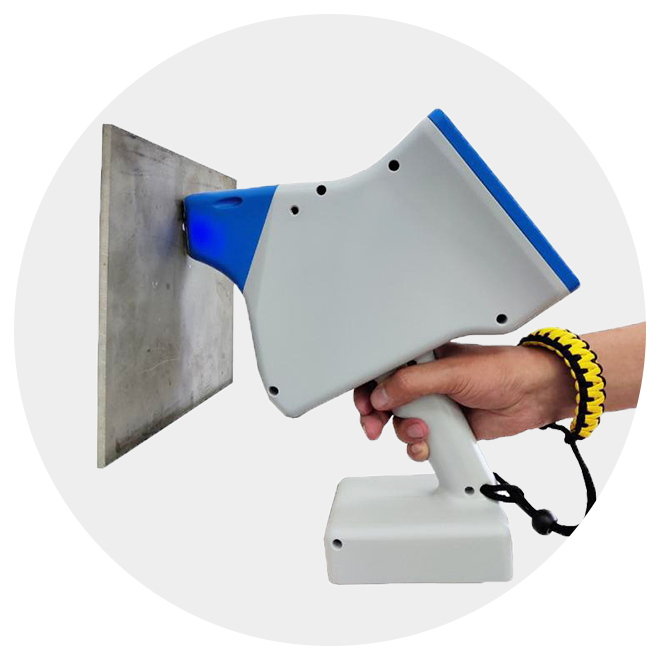
The Portable Laser Spectrometer LIS-02 is a compact and high-precision solution designed for fast and accurate elemental analysis of metals. Engineered for on-site testing, it enables instant material identification without damaging the sample, making it ideal for quality control, inspection, and metal verification applications.

How to Choose the Right Portable LIBS Spectrometer for Your Facility
Buying a metal analyzer isn't like buying most industrial equipment — it's a decision that directly affects how confidently your team accepts, rejects, or ships material every single day. If you're evaluating a Portable LIBS Spectrometer for the first time, the specs sheet alone won't tell you everything you need to know. What matters is how the device performs in your actual environment, on your actual materials, day after day.
NPP Strukturnaya Diagnostika Pvt. Ltd. (NPPSD) builds the LIS-02, a handheld LIBS analyzer used across steel, aerospace, and automotive facilities. Here's what experienced quality teams actually look at before committing to one
Start With the Problem You're Trying to Solve
Before comparing specs, it helps to be clear about why you want a Portable LIBS Spectrometer in the first place. Most facilities fall into one of a few categories:
- Incoming inspection — verifying that received steel, bar stock, or components match the purchase order before they enter production
- In-process quality control — spot-checking material mid-line to catch drift or mix-ups early
- Supplier audits — confirming material claims during plant visits, without waiting on a lab
- Scrap sorting — separating metal by grade quickly and at volume
The LIS-02 handles all four reasonably well, but knowing which one is your primary use case shapes how you'll actually run the device day to day.
Key Factors That Actually Matter
Speed of Result
A one-second reading is the current benchmark for portable LIBS units. Anything meaningfully slower starts to erode the entire point of testing on-site rather than sending samples to a lab. If your team is testing dozens or hundreds of pieces a shift, this difference compounds fast.
Carbon Detection Without Argon
Carbon is one of the harder elements to read accurately with LIBS, and older or lower-end units often require an argon purge to get a reliable reading. That means carrying gas cylinders, managing supply, and adding setup time to every test. The LIS-02 detects carbon without argon, which removes a real operational headache for teams running tests throughout the day.
Durability in Real Conditions
A spec sheet accuracy number means little if the device can't hold calibration after a few weeks of dust, vibration, and being carried between stations. Ask about ingress protection ratings, drop tolerance, and how often recalibration is needed under regular industrial use — not laboratory conditions.
Ease of Operation
Not every operator running a Portable LIBS Spectrometer has a spectroscopy background, and most facilities don't want to train one just to run daily checks. A built-in grade library that gives a clear pass/fail result — rather than raw spectral data an operator has to interpret — makes the tool usable across a wider team, not just a specialist.
Total Cost Over Time
The upfront price of the unit is only part of the equation. Factor in consumables (or the lack of them, if argon isn't required), calibration costs, and how many external lab tests the device will replace over a year. For facilities running frequent verification, the payback period on a portable analyzer is often faster than expected once the recurring lab fees are added up.
Comparing Portable Testing to Traditional Lab Analysis
It's worth being honest about where each approach fits. A lab-based spectrometer will still outperform a handheld unit on certain trace-element precision work, and some certifications require lab-verified results regardless of what a portable device shows in the field.
Where a Portable LIBS Spectrometer wins decisively is turnaround time and cost per test. A same-day lab result is considered fast in many facilities; a handheld LIBS reading happens while the operator is still standing at the material. For the volume of routine checks most steel, aerospace, and automotive teams run — incoming inspection, in-process spot checks, supplier verification — that speed difference is the whole value proposition.
Most facilities that adopt portable testing don't eliminate their lab relationship. They use the handheld device to screen the bulk of routine checks and reserve lab testing for the smaller number of cases that genuinely need deeper analysis or formal certification.
Questions Worth Asking Before You Buy
- How long does a single reading actually take, tested on the alloys you use most?
- Does the unit require argon gas, and if so, what's the ongoing supply cost?
- What's the battery life across a full shift of continuous testing?
- How is the grade library maintained, and can custom alloy grades be added?
- What does the warranty and service support actually cover once the unit is in daily use?
Asking a vendor to walk through these directly — ideally with a live demonstration on your own material — tells you far more than a printed spec sheet ever will.
Making the Decision
Choosing a Portable LIBS Spectrometer comes down to matching the device to how your team actually works: the volume of tests you run, the materials you handle most, and how much time and cost you're currently losing to external lab turnaround. The LIS-02 was built around exactly these pressures — fast, argon-free readings, a rugged build for shop-floor conditions, and a simple interface that doesn't require specialist training to operate confidently.
Considering a Portable LIBS Spectrometer for your facility? Reach out to NPPSD for a live demonstration on your own material, along with a full technical specification sheet and pricing, so you can compare it directly against your current testing process.
FAQs
1. What should I compare when choosing a Portable LIBS Spectrometer? Focus on reading speed, whether argon gas is required for carbon detection, build durability under real shop-floor conditions, ease of use, and total cost over time including consumables.
2. Does a Portable LIBS Spectrometer replace lab testing completely? Usually not. Most facilities use it to screen the bulk of routine checks and keep lab testing available for cases needing deeper analysis or formal certification.
3. Why does argon-free carbon detection matter? Units requiring an argon purge add gas supply logistics and setup time to every test. Argon-free detection, like the LIS-02 offers, simplifies daily operation.
4. How long does a portable LIBS reading take? Modern units, including the LIS-02, typically deliver a result in about one second, compared to same-day or multi-day turnaround from an external lab.
5. Do operators need special training to use a Portable LIBS Spectrometer? Not with a device that includes a built-in grade library and clear pass/fail output — this allows non-specialist staff to run tests confidently.
What's Your Reaction?