































MVP Software Development Services: From Idea to Product Launch
Explore MVP software development services to turn your idea into a working product, validate features, gather user feedback, and plan growth.
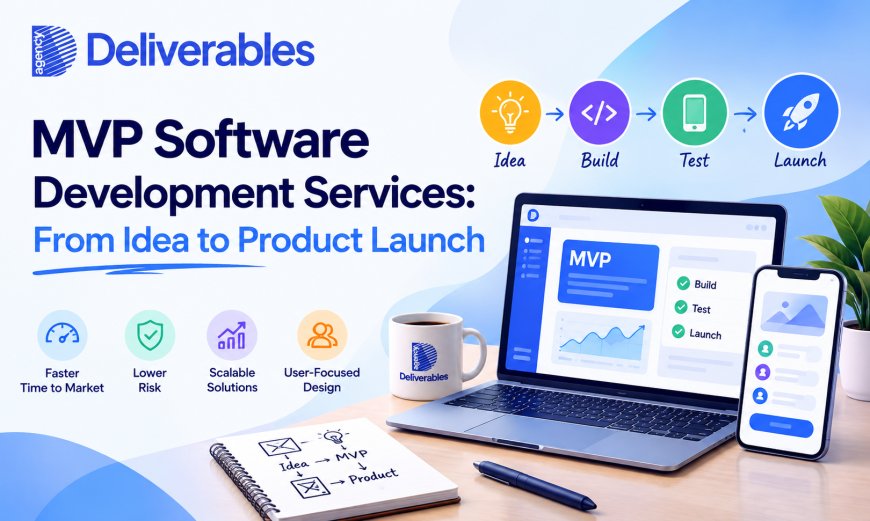
Turning a software idea into a real product can be exciting, but building everything at once is rarely the best way to start. Startups often have limited budgets, changing requirements, and little information about how users will respond to a new product. This is where MVP software development services can help. An MVP, or Minimum Viable Product, focuses on building the most important version of a product first so that businesses can test their idea with real users before investing heavily in a complete solution.
Instead of spending months developing dozens of features, an MVP helps a team concentrate on the core problem the product is designed to solve. Once users start interacting with the product, their feedback can guide future development.
What Is an MVP?
A Minimum Viable Product is an early version of a software product that includes the essential features needed to provide value to its target users. It is not simply an unfinished application. A well-planned MVP is designed around a clear purpose and a specific user need.
For example, imagine a startup planning to build a food delivery platform. A complete product could include restaurant management, delivery tracking, loyalty programs, multiple payment options, promotional tools, advanced analytics, and many other features.
An MVP might begin with user registration, restaurant listings, food ordering, payment, and basic order tracking. These features are enough to test whether customers actually want the service.
This approach allows businesses to learn before making a larger investment.
Why Startups Use MVP Software Development
One of the main reasons startups choose MVP development is to reduce unnecessary development work. A product idea may look strong on paper, but real users can respond very differently once the product is available.
MVP software development gives businesses an opportunity to test their assumptions early.
There are several practical benefits:
Faster Product Validation
An MVP can bring a product idea to the market faster than developing a complete solution from the beginning. Early users can provide useful information about what works and what needs improvement.
Better Control Over Development Costs
Building every planned feature at once can require a large budget. An MVP keeps the initial scope focused, helping businesses use their resources on the features that matter most.
Real User Feedback
Research and planning are useful, but real user behavior provides a different type of insight. Feedback from early users can help identify confusing processes, missing features, and areas that need improvement.
Flexible Product Development
Requirements often change after a product reaches the market. An MVP creates room for businesses to adjust the product based on actual feedback instead of following an original plan that may no longer be relevant.
How MVP Software Development Services Work
A successful MVP is not created by simply removing features from a large software plan. It requires careful decisions about the product, users, technology, and development priorities.
The process usually starts with understanding the business idea.
1. Understanding the Product Idea
The development team first needs to understand what the product is supposed to achieve. This includes identifying the target audience, the problem being solved, and the main value the product should provide.
At this stage, it is useful to answer questions such as:
-
Who will use the product?
-
What problem does it solve?
-
What makes the idea useful?
-
What is the primary action users should take?
-
Which features are essential for the first release?
Clear answers help prevent unnecessary features from entering the initial development scope.
2. Defining the MVP Scope
Once the product idea is understood, the next step is deciding which features belong in the MVP.
Features can be separated into three groups: essential features, useful features, and future features. Essential features are included in the first release because the product cannot work properly without them. Useful and advanced features can be planned for later versions.
This keeps development focused and makes the first launch easier to manage.
3. Designing the User Experience
A product can have useful functionality and still fail if users find it difficult to navigate.
MVP design should therefore focus on simple user flows. The interface should make it clear what users need to do and how they can complete important tasks.
Wireframes and prototypes can be created before development begins. They allow the team to review the basic user experience and make changes before significant development work takes place.
4. Selecting the Technology
Technology choices can affect the product's performance, maintenance, scalability, and future development.
Depending on the project, the development team may select native mobile technologies, cross-platform frameworks, web technologies, cloud services, databases, APIs, or third-party integrations.
The technology stack should match the actual requirements of the MVP rather than simply following popular development trends.
A good technical foundation also makes it easier to expand the product when the business gains more users.
5. Developing the MVP
After the scope and design are approved, developers begin building the product.
Development is generally divided into smaller tasks or modules. This allows the team to track progress and identify problems earlier.
Depending on the product, the MVP may include user accounts, dashboards, search, booking, payments, messaging, notifications, content management, or other core functionality.
The focus remains on delivering a usable product rather than adding every possible feature.
6. Testing Before Launch
Testing is an important part of MVP development. Even a small product needs to work reliably when it reaches its first users.
The testing process may cover functionality, usability, performance, security, compatibility, and different user scenarios.
Finding bugs before launch can prevent avoidable problems and give early users a better first experience.
7. Launching and Collecting Feedback
Once the MVP has been tested, it can be released to a selected audience or the wider market, depending on the business strategy.
The first launch is not the end of development. It is the beginning of the learning process.
Businesses can monitor user behavior, collect feedback, study conversion rates, and identify where users leave the product. This information can help determine what should be improved in the next version.
Common Mistakes to Avoid During MVP Development
While MVP development can simplify the product launch process, businesses can still make mistakes.
One common mistake is trying to include too many features. When an MVP becomes overloaded, development takes longer and the original purpose of the product can become unclear.
Another mistake is ignoring user experience. A limited product can still be easy and enjoyable to use.
Businesses should also avoid treating user feedback as optional. If early users repeatedly report the same problem, it may indicate that the product needs a change.
Choosing technology without considering future requirements can also create challenges. The initial solution should be practical for the MVP while leaving reasonable room for future improvements.
How to Choose MVP Software Development Services
Choosing the right development partner can influence how smoothly an MVP moves from an idea to a working product.
Before selecting a development company, businesses should look at its experience with similar products, development approach, communication process, technical capabilities, and post-launch support.
It is also useful to discuss the expected MVP scope before development begins. A professional team should be able to explain which features are important for the first release and which can reasonably wait for later versions.
Clear communication about timelines, responsibilities, technology, testing, and future updates can reduce misunderstandings during the project.
From MVP to a Complete Product
An MVP should be viewed as the starting point of product development rather than the final destination.
After launch, businesses can use customer feedback and product data to decide what comes next. Some features may be improved, while others may be removed if users do not find them useful.
The product can gradually evolve through multiple development cycles. This approach allows businesses to invest more heavily in features that have already shown value.
As the user base grows, the technical architecture, security, performance, and infrastructure may also need to evolve.
Final Thoughts
Building software successfully is not always about launching the biggest product. For many startups and growing businesses, it is about finding the right starting point.
MVP software development services provide a structured way to turn an idea into a functional product, test it with real users, collect feedback, and plan future development based on evidence.
From defining the initial concept and selecting essential features to designing, developing, testing, and launching the product, each stage plays an important role. A focused MVP can help businesses learn what their customers actually need before committing significant resources to a full-scale product.
The goal is simple: build what matters first, learn from real users, and improve the product step by step.
What's Your Reaction?