






























That Musty Smell in Your Chicago Basement Isn't "Normal"
That musty basement smell isn't just an old house quirk. Learn what causes it, why it's common in Chicago homes, and when to get a mold inspection.

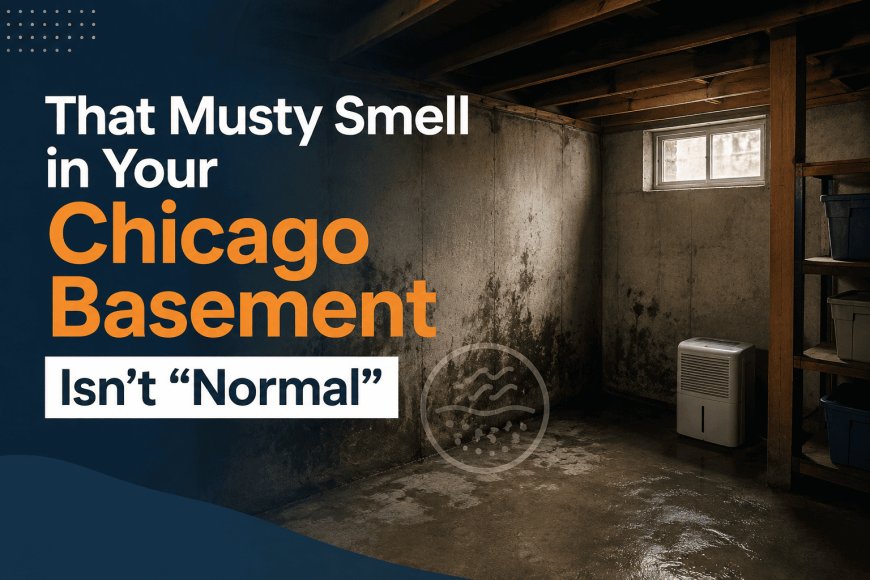
You know the smell. You head down to grab something out of storage, and it hits you halfway down the stairs: that damp, earthy, slightly sour smell that seems to live in basements. Most of us just shrug it off. "Old house, old basement, that's just how it is." I hear this constantly from homeowners, and I get why people think it. Half the homes in Chicago are 80, 90, 100+ years old, so a little basement funk feels like part of the package.
Here's the thing though: it's not. That smell is your basement trying to tell you something, and it's worth actually listening. If you're noticing it in your own home, a mold inspection in Chicago can tell you exactly what's going on before it turns into a bigger problem.
So what's causing it?
In almost every case, that musty odor means mold or mildew is growing somewhere nearby, and I do mean nearby, not necessarily in plain sight. As mold grows, it releases certain compounds into the air (they're called MVOCs, if you want the technical term), and that's exactly what you're smelling. So if your nose is picking it up, there's a good chance mold has already gotten a foothold, even if you can't spot it on the walls or floor.
Basements are basically a five-star hotel for mold. Dark? Check. Little to no airflow? Check. Moisture? Almost always, check. Throw in Chicago's humid summers and the constant freeze-thaw cycle every winter, and you've got conditions that are honestly pretty ideal for mold to take hold.
Why this is such a common issue in Chicago specifically
A few things about Chicago make basements more prone to this than you might expect:
The age of the housing stock. So many homes here were built decades before modern waterproofing was even a consideration. Foundations made of old stone, brick, or early-era concrete tend to get more porous over the years, which means water finds its way in more easily than it would in newer construction.
Our clay soil and the lake. Being this close to Lake Michigan, combined with heavy clay soil, means water just doesn't drain away from foundations the way it should. After a big rainstorm or when the spring thaw hits, that buildup can literally push moisture through basement walls.
Old plumbing. A lot of original plumbing in these older homes is prone to small, slow leaks, the kind that go unnoticed for months while quietly soaking into walls or the crawl space.
Basements just weren't built to breathe. Ventilation wasn't a priority when a lot of these homes were designed, so humidity has nowhere to go once it's down there.
Why you shouldn't ignore it
I get it. Nobody wants to deal with basement problems, and a candle or a fan feels like an easy fix. But brushing it off can actually cost you in a few real ways:
- Your foundation takes the hit. Moisture sitting around long enough weakens foundations, wood beams, and framing. That's a repair bill that grows the longer it's left alone.
- It can actually affect your health. Mold exposure isn't nothing. It can cause allergic reactions, irritate your airways, and make asthma worse, especially for kids or anyone with respiratory issues.
- It can tank a home sale. If you're planning to sell down the road, a mold issue that shows up during a buyer's inspection can complicate or completely derail a deal.
- It rarely stays put. Mold spreads. Behind drywall, under flooring, into your HVAC system, the longer it sits, the more places it ends up.
What to actually do about it
If you're catching that smell in your own basement, here's where I'd start:
- Bring in a professional for a mold inspection. This is really the only way to know what's actually going on, especially in the spots you can't see: behind walls, under flooring, in the crawl space.
- Look for the obvious signs of water getting in. Damp patches, that white chalky residue on concrete (that's called efflorescence), paint that's peeling or bubbling, or water pooling after a storm.
- Get ahead of moisture with better drainage and ventilation. Sump pumps, dehumidifiers, and proper grading around the outside of your home go a long way.
- Don't wait on plumbing fixes. Even a tiny, slow leak is enough to create exactly the environment mold needs.
Bottom line
That smell isn't just "an old house thing," it's a signal. Whether you've lived in your home for years or you're touring a property you're thinking about buying, it's worth paying attention to instead of explaining it away. A proper mold inspection can tell you what's really happening down there, and honestly, it's a lot easier to deal with early than after it's had months (or years) to spread.
If you're smelling something off in your basement and want to know what's actually going on, a professional inspection can get you real answers instead of guesswork.
What's Your Reaction?