

































From LPG Dependence to Electric Cooking: Why Indian Kitchens Are Rethinking Induction
India’s kitchens are shifting toward electric cooking as induction cooktops gain popularity. Explore how energy efficiency, rising LPG costs, urban lifestyles, and evolving consumer preferences are reshaping everyday cooking.

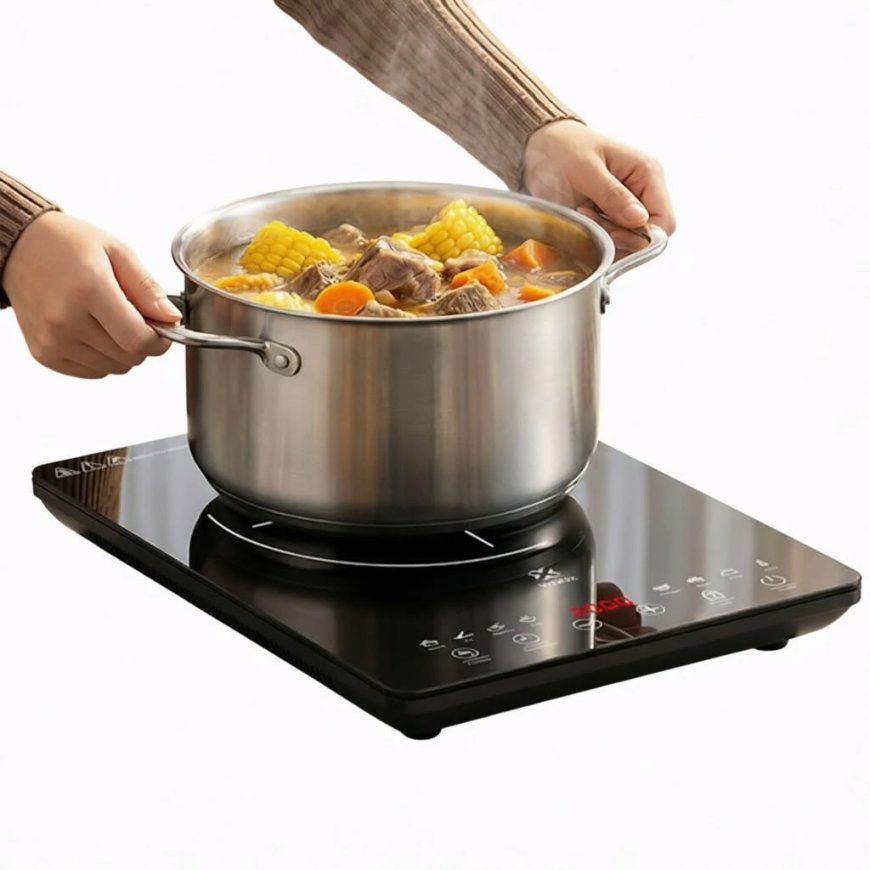
For decades, the Indian kitchen has revolved around one familiar fuel: LPG. From morning tea to elaborate family meals, the gas stove has been an almost unquestioned part of everyday life. But that familiarity is beginning to change. Induction cooktops in India are moving beyond their earlier image as a convenient appliance for students, renters, and technology enthusiasts and are increasingly becoming part of a broader conversation around electric cooking in India.
The shift is being shaped by several forces at once. Rising awareness of household energy costs, demand for faster cooking, urban lifestyles, improved appliance technology, and the expansion of electricity infrastructure are encouraging consumers to reconsider how they cook. Vyansa Intelligence estimates that India's induction cooktop market was valued at USD 763 million in 2025 and could reach USD 1.52 billion by 2032, reflecting a CAGR of 10.35% between 2026 and 2032.
But the more interesting story is not the number itself. It is what that number says about the changing Indian household.
A Kitchen Appliance Becoming an Energy Choice
An induction cooktop does not heat a vessel in the same way as a conventional electric stove. Electromagnetic energy generates heat directly within compatible cookware, allowing the cooking process to begin quickly while keeping the surrounding surface comparatively cooler.
That difference gives induction cooking several practical advantages: faster heating, easier cleaning, precise temperature control, and potentially better energy efficiency. Unlike a gas flame, which releases considerable heat into the surrounding environment, induction transfers a much larger share of its consumed energy directly into the cookware.
For consumers who are increasingly conscious of monthly household expenses, this makes the appliance more than a kitchen gadget. It becomes a potential tool for managing cooking costs.
The LPG Question Is Changing Consumer Thinking
The popularity of induction cooking cannot be separated from India's long relationship with LPG.
For years, subsidised cooking gas made LPG the default choice for millions of households. But as consumers became more aware of the actual cost of cooking fuel, the economics of alternatives became harder to ignore. The increase in LPG prices during periods of global energy volatility further encouraged households to examine how much they were spending simply to prepare everyday meals.
This does not mean gas is disappearing from Indian kitchens. In many homes, it remains essential. Instead, a more realistic transition is emerging: induction is increasingly being used alongside LPG rather than immediately replacing it.
That hybrid model could prove important for India's next phase of energy-efficient cooking.
From Students' Rooms to Modern Homes
Induction cooktops initially found a natural audience among students, paying guests, renters, and young professionals. A compact appliance that could be plugged in when required was particularly useful where gas connections were inconvenient or open flames were restricted.
Today, the consumer profile is broader.
Urban nuclear families are attracted by convenience. Working professionals value shorter cooking times. Younger consumers are familiar with digital controls and smart appliances. New homeowners are increasingly interested in modular kitchens where built-in cooking appliances can become part of the overall design.
This evolution matters because it changes the perception of induction.
It is no longer necessarily being purchased because a household cannot access LPG. Increasingly, it is being considered because consumers actively want a cleaner, faster, and more technologically advanced cooking experience.
Tier-2 Cities Could Define the Next Chapter
The next wave of adoption may not come exclusively from India's biggest metropolitan centres.
E-commerce has made kitchen appliances considerably more accessible outside major cities, while improving electricity connectivity has created better conditions for electric appliances. Vyansa Intelligence identifies Tier-2 and Tier-3 cities as an emerging growth driver, particularly as affordable induction models become easier to purchase through online and retail channels.
This could create an interesting shift in the appliance landscape.
For many urban consumers, induction is associated with convenience and modern kitchen design. In smaller cities, the appeal can be more practical: affordability, portability, lower cooking costs, and the ability to use the appliance without installing a permanent gas setup.
The same product, therefore, can solve very different problems for different consumers.
The Technology Still Has to Fit Indian Cooking
Growth does not automatically mean universal adoption.
One of induction cooking's biggest limitations is cookware compatibility. Traditional aluminium vessels, copper utensils, and certain clay cookware do not work directly with standard induction surfaces. Households with years of accumulated cookware may therefore face an additional replacement cost before making the transition.
Electricity reliability is another consideration. A household that depends entirely on induction cooking remains vulnerable to power outages. This is particularly relevant in areas where uninterrupted electricity is not yet guaranteed.
There is also a cultural barrier.
Indian cooking is not simply about heating food. It is connected to habits, recipes, cookware, and techniques passed between generations. Convincing consumers to change the equipment they have trusted for decades requires more than demonstrating technical efficiency.
It requires demonstrating that everyday Indian cooking—from dal and sabzi to frying and pressure cooking—can comfortably move to an electric surface.
Why the Future May Be Hybrid Rather Than Gas-Free
The strongest future for induction in India may not be a complete replacement of LPG.
Instead, many households could adopt a two-system approach: LPG for cooking that requires traditional techniques or during power interruptions, and induction for routine meals, boiling, reheating, and quick weekday cooking.
This approach reduces the psychological and practical barrier to adoption. Consumers do not have to abandon a familiar technology overnight. They can gradually move part of their cooking workload toward electricity and evaluate the savings and convenience for themselves.
Such behaviour could accelerate adoption organically, particularly as newer homes increasingly integrate modern kitchen appliances from the beginning.
The Bigger Story Is India's Changing Relationship With Energy
The rise of induction cooktops ultimately reflects something larger than the popularity of a particular appliance.
India's kitchens are becoming part of the country's wider energy transition.
As electricity access improves, renewable generation expands, and consumers become more conscious of household energy costs, appliances that can use electricity efficiently become increasingly relevant. Vyansa Intelligence projects continued double-digit growth for India's induction cooktop segment through 2032, suggesting that this transition has considerable room to develop.
The technology still has challenges to overcome—cookware compatibility, electricity reliability, consumer awareness, and established cooking habits among them. But its role is already changing.
The induction cooktop began as a relatively unfamiliar piece of technology sitting on the edge of India's kitchen culture. It is now becoming part of a much bigger discussion about affordability, convenience, energy efficiency, and the future of cooking.
The real question may no longer be whether induction can enter the Indian kitchen.
It is how deeply electric cooking will become embedded in it.
What's Your Reaction?