




























How Much Does It Cost to Build a Healthcare App in Dubai, UAE?
For most UAE healthcare providers, a well-planned app costs between AED 80,000 and AED 350,000, with large platforms going higher. The key is to define your core use case, respect DHA and data rules from day one, and scale in stages. Successful projects also follow a documented healthcare app development process that fixes features, technology and compliance steps before the first quote is requested.

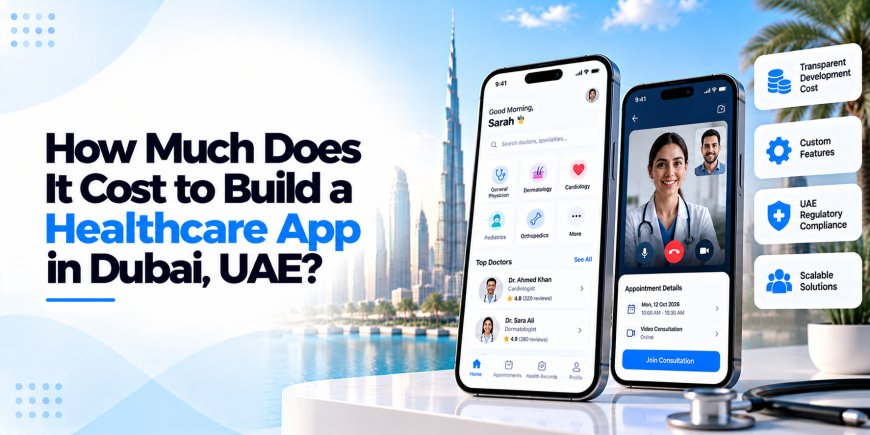
Healthcare is one of the fastest-growing digital sectors in the UAE. Clinics, hospitals, pharmacies and wellness startups in Dubai are all asking the same first question: how much will it cost to build a healthcare app? The honest answer is that it depends on scope, compliance and the team you choose. This guide breaks down realistic budget ranges, timelines and the compliance work that affects your final price.
Typical Healthcare App Cost Ranges in Dubai
The figures below are indicative market ranges for custom development in the UAE. Your own quote will depend on features and integrations.
|
App type |
Indicative cost (AED) |
Typical timeline |
|---|---|---|
|
Basic MVP (appointment booking, profiles) |
80,000 – 150,000 |
3 – 4 months |
|
Mid-level app (telemedicine, payments, e-prescriptions) |
150,000 – 350,000 |
5 – 7 months |
|
Advanced platform (EHR integration, AI, multi-clinic) |
350,000 – 800,000+ |
8 – 12 months |
A small clinic that only needs online bookings and reminders sits at the lower end. A hospital group that wants video consultations, lab results, insurance workflows and an admin portal will land in the upper tiers.
What Drives the Cost?
1. Features and complexity. Every module adds design, development and testing time. Patient registration, doctor profiles, chat, video calls, payments and push notifications are standard. Features like AI symptom checkers or wearable integrations raise the budget quickly.
2. Platforms. Building for iOS and Android separately costs more than a cross-platform approach using Flutter or React Native. Most UAE startups choose cross-platform for the MVP and optimise later.
3. Integrations. Healthcare apps rarely work alone. You may need to connect with hospital information systems, laboratory systems, insurance providers, payment gateways and national health platforms. Each integration needs API work and testing.
4. UI/UX design. Patients include elderly users, busy professionals and people who prefer Arabic. Bilingual (Arabic and English) interfaces with right-to-left support take extra design effort, but they are essential in the UAE.
5. Security and data protection. Medical data is highly sensitive. Encryption, secure authentication, audit logs and role-based access are not optional, and they add to both build time and cost.
DHA Compliance and Why It Matters
If you operate in Dubai, the Dubai Health Authority (DHA) regulates health services and sets expectations for digital health solutions. Depending on your model, you may need to align with DHA licensing, patient data rules and telehealth standards. The UAE also has laws on health data that restrict how patient information is stored and transferred, including requirements on data residency for health records.
In practice, compliance affects your budget in three ways:
- Architecture: you may need to host data on UAE-based cloud infrastructure.
- Documentation: policies, consent flows and audit trails must be built into the product.
- Approvals: review cycles with regulators or partners can extend your timeline by weeks.
Budget around 10 to 15 percent of your project cost for compliance, security reviews and legal consultation. Skipping this step is the most expensive mistake a healthcare startup can make, because retrofitting compliance after launch costs far more.
Hidden Costs Many Founders Miss
The development quote is only part of the picture. Plan for these as well:
- Cloud hosting and monitoring, usually billed monthly
- Third-party fees for video SDKs, SMS, maps and payment gateways
- App Store and Google Play developer accounts
- Ongoing maintenance, typically 15 to 20 percent of the build cost per year
- Marketing and patient onboarding after launch
How to Reduce Your Healthcare App Cost
You do not need to build everything at once. Start with a focused MVP that solves one problem well, such as appointment booking or teleconsultation. Launch, collect feedback from real patients and doctors, then add features in phases. Using proven components for chat, video and payments also saves months of work.
Choosing an experienced local partner helps too. A team that already understands DHA expectations, Arabic UX and UAE payment methods will avoid the rework that inflates budgets. Clinics and hospitals comparing providers usually shortlist a healthcare app development company in Dubai with proven telemedicine, patient portal and appointment booking projects.
Planning Your Timeline
A realistic project follows these stages: discovery and requirements (2 to 3 weeks), UI/UX design (3 to 5 weeks), development (3 to 6 months), testing and compliance checks (4 to 6 weeks), and launch with support. Rushing the discovery phase usually leads to scope changes that cost more later.
Final Thoughts
For most UAE healthcare providers, a well-planned app costs between AED 80,000 and AED 350,000, with large platforms going higher. The key is to define your core use case, respect DHA and data rules from day one, and scale in stages. Successful projects also follow a documented healthcare app development process that fixes features, technology and compliance steps before the first quote is requested.
What's Your Reaction?