



























A Marquee for 1,100 Guests Needs More Than a Wedding Planner
Grand Palace's marquee seats over a thousand guests. Here's what that actually means for planning, staffing, and timing on the day.

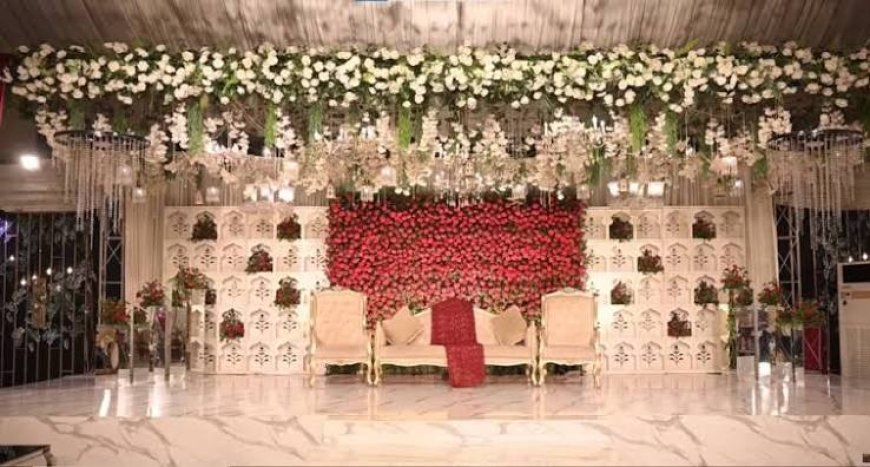
Eleven hundred people is roughly the capacity of a mid-sized cinema complex or a small university lecture hall filled to standing room. That's the marquee at Grand Palace on Main Shahrah-e-Faisal, and it's worth sitting with that number for a second before booking a Grand Palace wedding planner in Karachi, because almost nothing about planning for that many people scales the way it feels like it should from a smaller event.
Take catering staff. A waiter who can comfortably manage fifteen tables at a two hundred guest wedding is not simply "a bit busier" than at a thousand guests. The math breaks differently. Queue length at a buffet station grows faster than guest count does, because everyone tends to arrive in the same thirty-minute window after the stage program wraps. A planner who hasn't actually run numbers at this scale before will guess, and the guess usually lands short.
The Venue Does Some of the Work. Not All of It.
Grand Palace isn't an empty shell. The marquee comes air-conditioned, there's a built-in stage with its own lighting rig, VIP seating is already part of the layout, and the banquet lighting is handled. For a smaller event, that infrastructure would be most of the job. Here it's maybe half of it.
What the venue doesn't do: tell your caterer when to start plating so food hits the table while it's actually hot for guest 50 and guest 950 alike. Tell your photographer which three minutes of the stage program actually matter for photos versus which three minutes are just transitions. Decide what happens if the groom's convoy is running forty minutes late and eleven hundred people are already seated. That's the job. It sits in the gap between what the venue provides and what a thousand-person guest list actually needs minute by minute.
A Week, Not a Day
Most families booking Grand Palace for the valima or the main reception are also running a mehndi and a baraat earlier that same week, usually at smaller, cheaper venues. The planning mistake people make is treating all three events as roughly equal in complexity, when the Grand Palace night is doing most of the heavy lifting.
A reasonable way to think about it: if the mehndi needs one coordinator and a light touch, the Grand Palace reception needs a coordinator, a second person dedicated purely to guest flow and registration, and a third tracking catering timing against the stage. Three distinct jobs, not three people doing the same job in parallel. Ask a planner directly how they'd staff their own team for this specific night, not the week overall, and you'll find out fast whether they've actually thought about it or whether they're quoting a flat day rate regardless of venue.
Six months out is not early for a venue this size. Karachi's wedding season, October through February, means Grand Palace and venues like it are booked well ahead of that window, and a planner worth hiring will tell you this on the first call rather than letting you find out when your preferred date is already gone.
Eleven hundred seats is the headline number people remember about the Grand Palace. The part that actually determines whether the night goes well is everything that has to happen correctly, on time, for all eleven hundred of them at once.
What's Your Reaction?